
Navigating Seating Choices When You Have Scoliosis
Imagine your spine as the foundation of a house. If the foundation has a unique curve, every floor, wall, and piece of furniture must adapt to it to maintain stability. For the millions of adults living with scoliosis—an abnormal lateral curvature of the spine—the standard, one-size-fits-all office chair is like trying to force a square peg into a round hole. It simply doesn't work, often leading to muscle fatigue, asymmetrical pain, and decreased productivity.
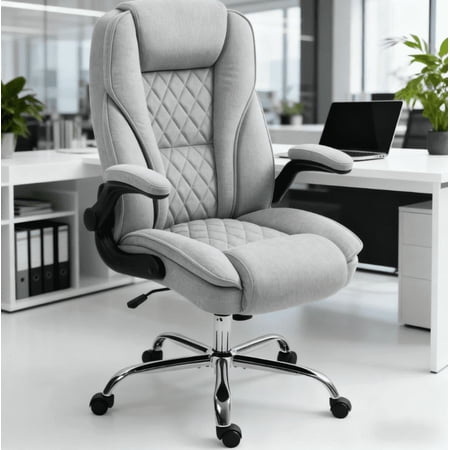
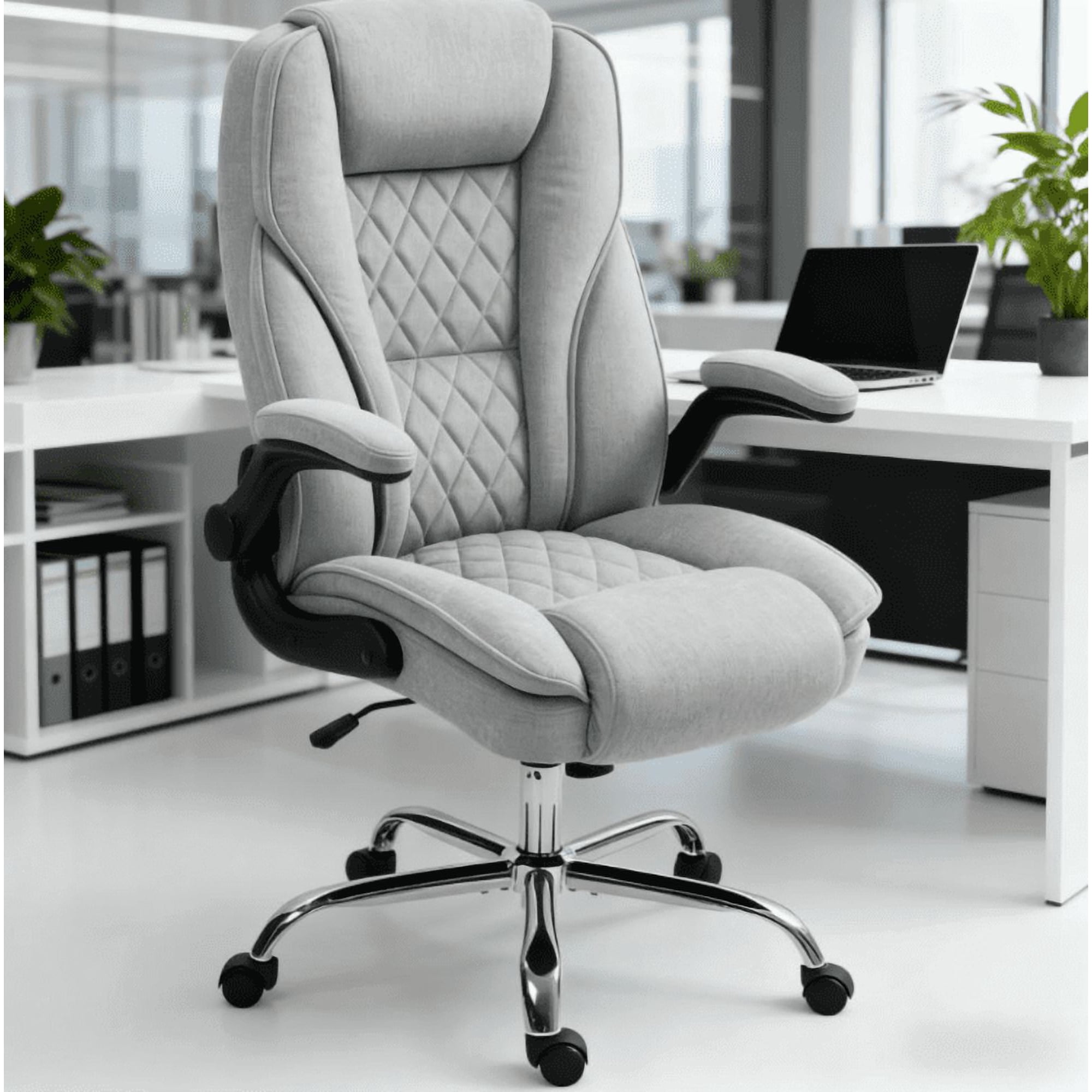
Finding the right office chair for scoliosis is not a luxury; it's a necessity for long-term health and comfort. Unlike general office chairs, those designed with scoliosis in mind prioritize adaptability. They act as a supportive shell that can be fine-tuned to accommodate an S-curve or a C-curve, providing support where you need it and relief where pressure typically builds.
Understanding the Challenge: Scoliosis affects an estimated 2-3% of the population, or approximately six to nine million people in the United States alone. For these individuals, prolonged sitting can increase spinal asymmetry and paraspinal muscle activity, leading to pain. A 2019 study in the journal "Spine" suggested that ergonomic interventions, including specialized seating, can significantly reduce pain scores for adults with degenerative scoliosis. Your chair is your primary tool in this daily management.
Beyond Lumbar Support: Key Ergonomic Features for Scoliosis
When shopping for an ergonomic chair for scoliosis, "lumbar support" is just the starting point. You need a system of adjustments that work in harmony. Here are the non-negotiable features to look for:
- Independent Lumbar Depth Adjustment: This is the most critical feature. Many chairs offer height-adjustable lumbar support, but for scoliosis, you also need depth adjustment. This allows the pad to move forward or backward to fill the void on the concave side of your curve, providing true, personalized support.
- Contoured or "Waterfall" Seat Edge: A seat with a waterfall front edge reduces pressure on the back of your thighs, improving blood circulation. For those with scoliosis, this can also help prevent your pelvis from tilting unevenly, promoting a more stable base.
- 4D Adjustable Armrests: Armrests that move up/down, forward/back, left/right, and pivot are essential. They allow you to support your arms in a position that doesn't rotate your shoulders or elevate one side, reducing strain on your upper back and neck.
- Seat Depth Adjustment (Slide): The ability to slide the seat pan forward or backward ensures your back is firmly against the backrest while your knees are at a comfortable 90-degree angle. This prevents slouching and maintains the natural curve of your lower spine.
- Synchronous Tilt Mechanism: This feature allows the backrest and seat to move in a coordinated ratio (often 2:1 or 3:1) as you recline. This dynamic movement supports your spine through a range of motion, reducing static loading on the discs and keeping your back supported even when leaning back.
Material Science: Choosing the Right Backrest
The material of the backrest plays a pivotal role in how well a chair conforms to your spine's unique shape.
🔹 High-End Mesh
Best for: Breathability and dynamic contouring. A premium mesh backrest, like those found on chairs from Haworth or Steelcase, stretches and conforms to the spine's shape. It provides even pressure distribution without hard spots. Look for mesh chairs with an adjustable lumbar "air cell" or a firm foam insert that can be positioned exactly where you need it.
🔹 Molded Foam
Best for: Targeted, firm support. High-density, molded foam backrests can be sculpted to provide specific support zones. However, because they are pre-shaped, they are less forgiving for atypical curves. If you choose foam, look for models with a separate, highly adjustable lumbar mechanism that moves independently of the main backrest.
The "Sit-Bone" Connection: Pelvic Support
Your pelvis is the foundation of your spine. If your pelvis is tilted or unevenly supported, it forces your entire spinal column into a compensatory curve, exacerbating scoliosis-related issues. A good chair promotes a neutral pelvic position.
Look for chairs with a seat pan that offers a slight downward tilt (negative tilt). This feature, often overlooked, can help keep your pelvis from rotating backward (posterior pelvic tilt), which flattens the natural lumbar curve and puts stress on the discs. Some advanced chairs even allow for independent left/right seat pan adjustment, but these are rare and found in high-end custom seating solutions. For most, focusing on a stable, non-slip seat cushion with medium-firm density is key. Think of it as building a level platform for your spine to sit upon.
Your 4-Step Process to Testing an Office Chair for Scoliosis
Don't just read reviews; put the chair to the test. Here’s a practical guide to use when you're trying out a potential chair:
Step 1: The 15-Minute "No-Pain" Test
Sit in the chair for at least 15 minutes without the "halo" of a new purchase. Set a timer. After 10 minutes, consciously assess your body. Are you fidgeting? Do you feel a hot spot or pressure point on one side of your back? A chair that causes discomfort within 15 minutes will be unbearable after 8 hours.
Step 2: The Adjustment Exploration
Can you reach all the levers and knobs while seated? Try adjusting the lumbar support. Move it up and down. Can you feel the pad make contact with the hollow of your curve? If it has depth adjustment, pull it forward. Does it fill the space without poking you? Try the armrests. Can you get them to a height where your shoulders are relaxed, not hunched?
Step 3: The Recline & Return
Lean back in the chair with your feet flat on the floor. Does the backrest move smoothly? Does it maintain contact with your spine, especially on the side where the curve is most prominent, or does it create a gap? A good chair will follow your movement. Release the recline. Does the chair return you to an upright position with equal pressure on both sides of your back?
Step 4: The "Typing" Simulation
Mimic typing on your laptop or an imaginary keyboard. As you reach for the keys, notice if your shoulders lift or if one arm feels like it's reaching further than the other. Adjust the armrests and seat depth to minimize this. The goal is to bring the work to you, not force you to reach for the work.
The Role of Posture and Micro-Movements
Even the best office chair for scoliosis isn't a magic bullet. Think of it as a high-performance tool, but you are still the craftsman. The chair's job is to facilitate healthy micro-movements. A dynamic chair with a good tilt mechanism encourages you to shift your weight and change positions naturally throughout the day. This movement is crucial because it pumps nutrients into the spinal discs and prevents muscles from becoming ischemic (lacking blood flow).
Combine your chair with a sit-to-stand desk if possible. Alternating between sitting and standing is the ultimate strategy for spinal health. When sitting, use a small footrest to promote better circulation. Remember, the best posture is your next posture.
Analogy for Support: Think of an office chair for scoliosis like a high-end road bike that's custom-fitted to a cyclist. A standard bike works, but a fitted one—with the seat at the perfect height, the handlebars adjusted just so—allows the cyclist to ride longer, with more power, and without pain. Your chair is your "fitted bike" for the workday.
Statistic: According to the American Chiropractic Association, 80% of the population will experience back pain at some point. For the scoliosis community, that risk is amplified by poor seating. A study published in the "Journal of Physical Therapy Science" found that an ergonomic chair with adjustable lumbar support significantly reduced pain and improved the angle of trunk rotation in patients with scoliosis after just 4 weeks of use.
Frequently Asked Questions About Office Chairs for Scoliosis
Conclusion: Your Path to a More Comfortable Workday
Selecting the right office chair for scoliosis is a deeply personal journey. There is no single "best" chair for everyone, because no two spinal curves are identical. Your focus should be on finding a chair that acts as a responsive partner to your body—one that offers a wide range of precise adjustments, particularly in the lumbar and pelvic regions.
Final Recommendations
Prioritize chairs with 4D armrests, independent seat depth, and most importantly, a lumbar support that adjusts in both height AND depth. This allows for the most personalized fit.
High-quality mesh back chairs offer excellent conformity and airflow. They are ideal if you tend to get warm or need a backrest that gently contours to your spine's shape.
Hybrid chairs with a mesh back and a well-cushioned foam seat offer a great compromise, providing the conforming support of mesh with the stability and comfort of a padded seat.
Remember to test your top choices using the 4-step process outlined above. Listen to your body; it will tell you which chair is the right fit. Investing in the right seating is one of the most powerful steps you can take to manage your scoliosis and ensure a productive, comfortable, and healthy career.