
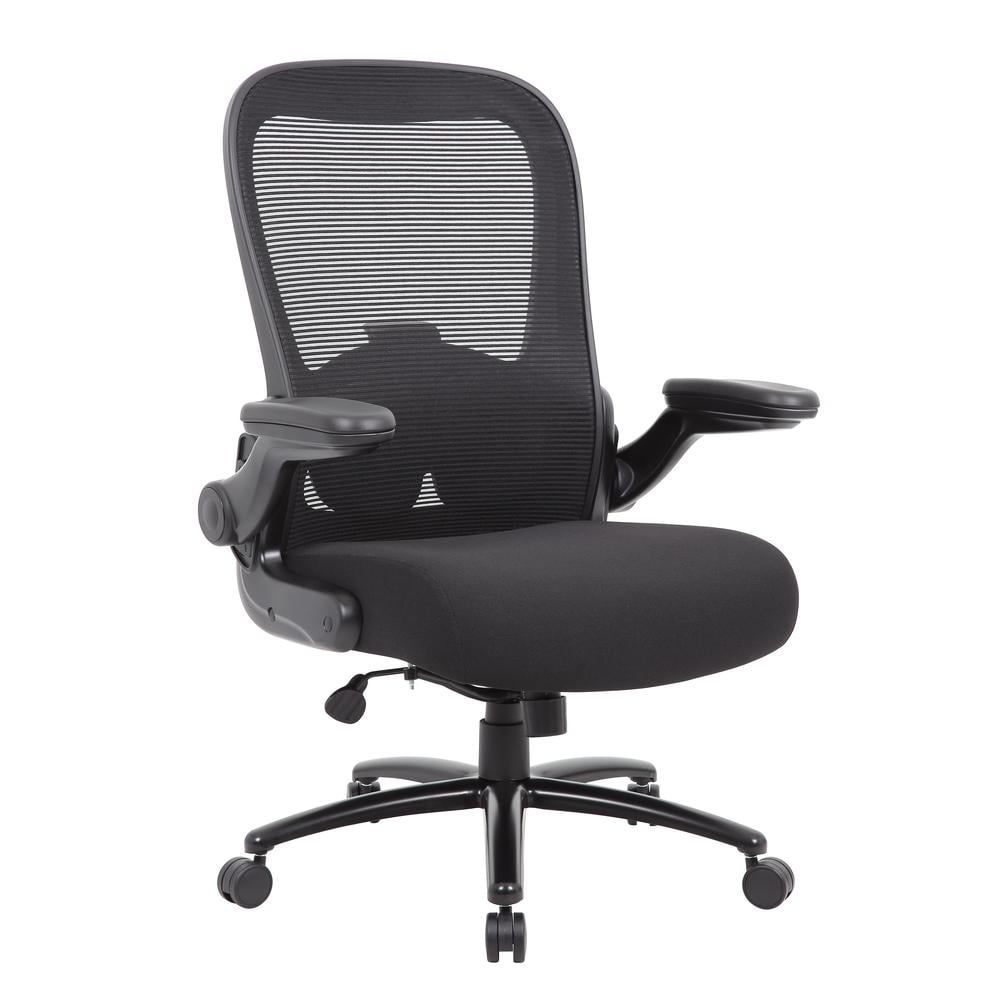
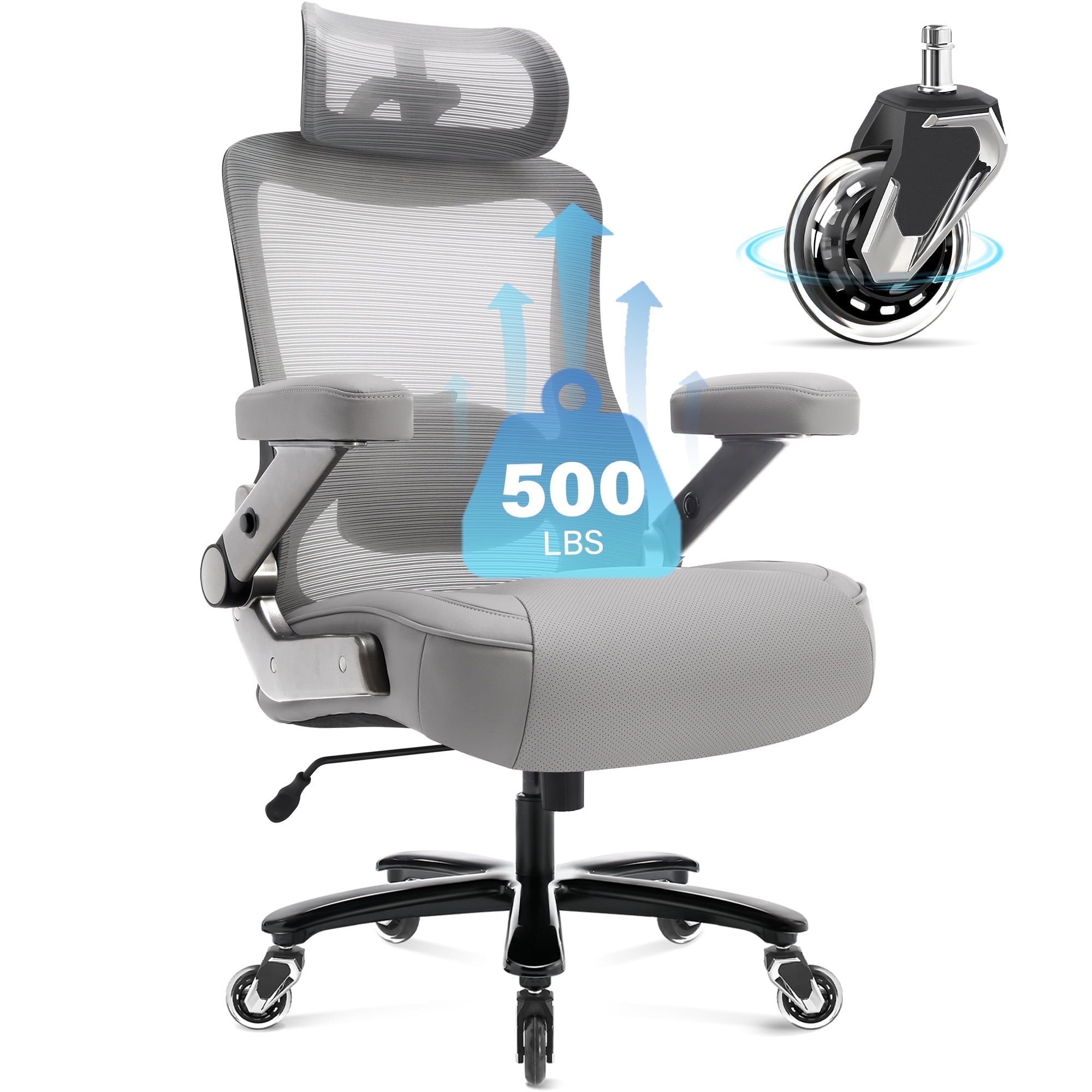
Finding the Right Office Chair for Big Guys: More Than Just Size
If you're a larger individual shopping for an office chair, you've probably experienced the frustration of standard chairs. The armrests dig into your sides. The seat feels like it's squeezing your hips. After a few months, the chair starts leaning, squeaking, or worse—the gas cylinder fails without warning.
Here's the reality: standard office chairs are designed for the "average" user weighing up to 250 pounds. If you weigh more than that—or if you're tall with a larger frame—you need equipment built differently. An office chair for big guys isn't just wider; it's fundamentally re-engineered with reinforced components, heavier-duty mechanisms, and materials that withstand higher stress loads.
The Safety Fact: According to the Bureau of Labor Statistics, chair failures cause thousands of workplace injuries annually. For individuals over 250 pounds, the risk of chair collapse increases by 340% when using standard-rated chairs. Investing in a proper heavy-duty chair eliminates this risk.
Think of it this way: would you put passenger car tires on a heavy-duty pickup truck? Of course not. The same principle applies here. Your office chair supports your body for 8+ hours daily—it needs to be rated for the job. This guide walks you through everything you need to know about selecting the perfect office chair for big guys, from weight ratings and seat dimensions to frame construction and long-term durability.
What Makes an Office Chair "Big Guy" Approved? 7 Critical Components
Not all "big and tall" chairs are created equal. Some manufacturers slap a "heavy-duty" label on a standard chair with slightly wider arms and call it done. True office chairs for big guys undergo complete structural reinforcement. Here are the seven components that separate genuine heavy-duty chairs from imposters:
1. The Frame: The Chair's Skeleton
The frame is the foundation. Standard chairs use plastic or thin-gauge metal. For big guys, you need:
- Reinforced steel frame – Minimum 14-gauge steel, preferably 12-gauge in high-stress areas
- Welded construction – Not just bolted or riveted; continuous welds at stress points
- Cross-bracing – Additional support bars under the seat pan to distribute weight
- Reinforced backrest connection – Heavy-duty hinges or brackets where backrest meets seat
Real-world example: A quality heavy-duty chair frame should feel solid when you rock it. If you can twist the backrest relative to the seat, that frame will fail eventually. Look for frames that feel like one solid piece.
2. The Gas Lift (Pneumatic Cylinder)
This is the most common failure point in chairs used by big guys. The gas lift is what lets you adjust height, and it's under constant pressure.
- Class 4 or Class 5 gas lift – These are industrial-grade ratings. Class 3 (standard) maxes at 250 lbs. Class 4 handles 330-400 lbs. Class 5 handles 400-500+ lbs.
- Steel piston construction – Not aluminum composite
- Oversized cylinder diameter – 2-inch diameter minimum for stability
- BIFMA tested certification – Look for testing verification
Gas Lift Class Breakdown
- Class 3: 220-250 lbs capacity – Standard office chairs (avoid for big guys)
- Class 4: 330-400 lbs capacity – Good for most big guys (200-350 lb range with safety margin)
- Class 5: 400-550+ lbs capacity – Recommended for 300+ lb individuals or maximum safety
- Industrial (Class 5+): 600-800 lbs capacity – Specialized heavy-duty applications
Pro Tip: Always choose one class higher than you think you need. If you weigh 280 lbs, get a Class 5 lift. The extra margin prevents failure and extends lifespan.
3. The Base (The Star-Shaped Component)
The base must support your weight plus the chair's weight, and withstand the stress of leaning and rolling. Plastic bases are dangerous for big guys.
- Nylon reinforced with fiberglass – High-strength polymer that won't crack
- Solid aluminum base – Premium option, heavier but virtually indestructible
- Steel-reinforced nylon – Good mid-range option
- Wider span – 28-30 inch base diameter for stability (standard is 25-27 inches)
Warning: Avoid chrome-plated plastic bases. They look like metal but are actually plastic underneath. If you tap it and it sounds hollow, it's plastic. These can crack catastrophically without warning.
4. The Casters (Wheels)
Standard casters flatten under higher weight, making the chair difficult to roll and putting stress on the caster stems.
- Hardened steel bearings – Not plastic bearings
- Larger wheel diameter – 2.5 to 3 inches (standard is 2 inches)
- Dual-wheel casters – Distribute weight across two wheels per caster
- Weight-rated caster stems – 200+ lbs per caster minimum
- Floor-appropriate wheels – Soft rubber for hard floors, hard nylon for carpet
5. Seat Dimensions and Cushioning
Comfort isn't just about padding—it's about proper support without pressure points. Here's what to look for:
Proper Dimensions for Big Guy Chairs
22" - 30"
(standard: 18-20")
20" - 24"
(standard: 17-19")
25" - 32"
(standard: 20-22")
22" - 28"
(adjustable preferred)
How to measure yourself: Sit on a flat surface. Measure across the widest part of your hips/thighs. Add 2-3 inches for comfort. For seat depth, measure from your back to the back of your knee, then subtract 1-2 inches—this prevents pressure behind the knees.
Cushioning material matters just as much as dimensions:
- High-density foam – Look for 2.5-3.5 lb density foam (standard is 1.8-2.2 lb). Higher density = longer life without flattening.
- Memory foam toppers – Good for pressure relief, but ensure the base foam is high-density
- Contoured seat design – Waterfall front edge reduces thigh pressure
- Reinforced seat edges – Prevents the "sliding off" feeling as foam breaks in
6. Upholstery Durability
Fabric durability is measured in "double rubs" (Wyzenbeek test). For big guys, upholstery faces more friction and stress.
- Commercial-grade fabric: 100,000+ double rubs – Heavy-duty use, lasts years
- Bonded leather: Look for 1.0+ mm thickness with reinforced stitching
- Top-grain leather: Premium option, breathes well, lasts decades with care
- Reinforced seams: Double-stitched at stress points, preferably with nylon thread
What to avoid: Thin bonded leather (under 0.8 mm) peels and cracks within 1-2 years under higher weight. Standard PU leather similarly degrades quickly.
7. Mechanism and Adjustability
Big guy chairs need mechanisms that support higher weight while maintaining full adjustability:
- Heavy-duty tilt mechanism – Reinforced springs and thicker steel plates
- Multi-position lock – Lets you recline safely at any angle
- Tilt tension adjustment – Must be strong enough to support your weight while leaning back
- Independent seat slider – Adjusts seat depth without affecting backrest position
Quick Reference: Weight Capacity by Chair Component
| Component | Standard Chair | Big Guy Chair (Good) | Big Guy Chair (Premium) |
|---|---|---|---|
| Overall Rating | 220-275 lbs | 350-400 lbs | 450-800 lbs |
| Gas Lift Class | Class 2-3 | Class 4 | Class 5 or Industrial |
| Base Material | Nylon (hollow) | Reinforced nylon | Aluminum / Steel |
| Frame Material | Plywood/plastic | 16-gauge steel | 12-14 gauge steel |
| Caster Type | Single plastic | Dual, reinforced | Heavy-duty dual, bearings |
Office Chair for Big Guys: Comparing Material Options
Different materials offer different benefits. Here's how leather, mesh, and fabric compare specifically for big guys:
Leather Heavy-Duty Chairs
✓ Advantages
- Most durable material when using top-grain leather
- Professional, executive appearance
- Molds to body shape over time
- Easy to clean (wipes down)
- No fabric pilling or snagging
✗ Disadvantages
- Can get hot during long sitting sessions
- Bonded leather peels quickly (avoid cheap leather)
- Heavier than other materials
- Higher initial cost for quality
- Requires conditioning to prevent drying
Mesh Heavy-Duty Chairs
✓ Advantages
- Excellent airflow—keeps you cool
- Modern, professional look
- Lightweight compared to leather
- Good lumbar support visibility
- No cracking or peeling issues
✗ Disadvantages
- Mesh can sag over time under higher weight
- Limited color options
- Harder to clean deeply
- Some find mesh uncomfortable against skin
- Weight capacity often lower than leather
Fabric Heavy-Duty Chairs
✓ Advantages
- Most breathable option (after mesh)
- Wide variety of colors and textures
- Soft, comfortable feel
- Good grip—less sliding
- Often most affordable option
✗ Disadvantages
- Stains easily—harder to clean
- Traps odors and allergens
- Can pill or wear thin over time
- Less durable than quality leather
- Professional appearance varies
Understanding Weight Ratings: What the Numbers Actually Mean
When you see "rated for 400 pounds," what does that actually guarantee? Here's how manufacturers determine these ratings and what they mean for you:
Not for big guys
Good for 220-280 lb users
Sweet spot for safety
Maximum reinforcement
How testing works: BIFMA (Business and Institutional Furniture Manufacturers Association) standards require chairs to withstand static loads 2.5x their rated capacity. So a 400 lb rated chair is tested with 1,000 lbs of static weight. However, dynamic use (sitting, leaning, moving) creates different stresses. Always choose a chair rated higher than your actual weight—not just equal to it.
Safety Margin Recommendation
If you weigh:
- 200-250 lbs → Choose chair rated for 300+ lbs (50 lb minimum margin)
- 250-300 lbs → Choose chair rated for 400+ lbs (100 lb margin)
- 300-350 lbs → Choose chair rated for 500+ lbs (150 lb margin)
- 350-400+ lbs → Choose chair rated for 600-800 lbs (200+ lb margin)
This margin accounts for dynamic forces when you sit down quickly, lean back suddenly, or shift weight—all of which momentarily exceed your static weight.
5 Warning Signs Your Office Chair Needs Replacement
Even the best heavy-duty chairs eventually wear out. Here are specific warning signs for big guys to watch for:
- The chair slowly sinks after you set the height. This indicates gas lift failure. Don't ignore it—a complete collapse can happen suddenly.
- You hear clicking or grinding when you swivel or recline. The mechanism's internal components are wearing out or breaking.
- The seat cushion feels like you're sitting on plywood. Once foam compresses beyond 75% of original thickness, it loses supportive properties.
- The chair wobbles even on flat floors. This could be base cracks, caster stem damage, or frame separation.
- Visible cracks in the base or armrests. Any crack in a load-bearing component is a failure waiting to happen.
Extending the Life of Your Heavy-Duty Chair
With proper maintenance, a quality office chair for big guys can last 5-10 years. Here's how to maximize its lifespan:
- Tighten all bolts every 6 months – Vibration from daily use loosens connections. Use thread-locker (Loctite) on critical bolts.
- Clean casters regularly – Hair and debris jam caster wheels, forcing you to drag instead of roll. Clean monthly.
- Avoid sitting on the edge of the seat – This stresses the front edge of the frame and cushion unevenly.
- Use a chair mat on carpet – Reduces rolling resistance, protecting casters and base.
- Condition leather every 3-6 months – Prevents drying and cracking.
- Don't exceed recline limits – Forcing the chair past its designed recline angle stresses the mechanism.
- Lubricate moving parts annually – Silicone spray on gas lift and mechanism keeps operation smooth.
Frequently Asked Questions About Office Chairs for Big Guys
Final Thoughts: Your Body Deserves Proper Support
Finding the right office chair for big guys isn't just about comfort—it's about safety, health, and long-term wellbeing. A chair that's too small or under-rated doesn't just cause discomfort; it creates pressure points, restricts circulation, and carries the risk of catastrophic failure.
Remember these key takeaways when shopping:
- Always choose a weight rating 50-100+ pounds above your actual weight – This safety margin accounts for dynamic forces and ensures longevity.
- Measure your body before you shop – Know your hip width, thigh length, and overall height to match chair dimensions.
- Verify the components – Look for Class 4-5 gas lifts, reinforced steel frames, and solid bases (aluminum or reinforced nylon).
- Don't compromise on adjustability – Lumbar support, armrests, and seat depth adjustments are just as important for big guys as anyone else.
- Consider it a long-term investment – Spending $500-800 on a chair that lasts 8-10 years costs less per year than replacing $200 chairs every 18 months.
The Bottom Line: You wouldn't buy shoes that are too small, so why sit in a chair that doesn't fit? Your office chair supports you through thousands of hours of work. Make sure it's built to handle the job. Take your time, check specifications carefully, and invest in quality. Your back—and your safety—will thank you.
Quick Selection Checklist
| Feature | Minimum Requirement | Recommended |
|---|---|---|
| Weight Capacity | 350 lbs | 400-500+ lbs |
| Seat Width | 22 inches | 24-28 inches |
| Gas Lift Class | Class 4 | Class 5 |
| Base Material | Reinforced nylon | Aluminum |
| Frame Material | 16-gauge steel | 12-14 gauge steel |
| Warranty | 3 years | 5-10 years |