
Why Choose an Ergonomic Office Chair Without Wheels?
Picture this: you're deep in a complex spreadsheet or sketching your next big idea. Every slight movement on a traditional rolling chair shifts your position, breaking your concentration. An ergonomic office chair no wheels solves this by providing a stable, anchored seating experience. It’s like the difference between working on a steady platform versus a moving one—your focus stays locked in.
The Stability Advantage: A study from Cornell University suggests that excessive movement and poor posture from unstable seating can increase muscle fatigue. A stationary base encourages a more active, yet stable, seated posture, potentially reducing fidget-driven distractions by over 30% for focus-intensive tasks.
Beyond focus, these chairs are a favorite for home offices with delicate hardwood floors, where wheels can cause scratches. They also offer a sleek, modern aesthetic, often featuring elegant sled bases or sleek glides that look cleaner than traditional caster wheels.
The Science of Stable Seating: More Than Just No Wheels
Choosing a stationary ergonomic chair isn't about sacrificing functionality. It's about prioritizing specific ergonomic wins that rolling chairs sometimes miss. Let's break down the core benefits and features unique to this category.
1. The "Grounding Effect" on Posture
When your chair doesn't roll, your body makes a subtle but important adjustment: you stop using your feet to constantly brace yourself. Instead, your core muscles engage more naturally to maintain balance. This active sitting approach can strengthen your back muscles over time. Think of it like a stability ball, but with proper lumbar support and a comfortable seat.
- Reduced Twisting: No wheels mean no unintentional swiveling, which can torque your spine.
- Improved Foot Placement: Your feet stay planted, promoting better circulation and a stable base for your whole body.
- Mind-Body Connection: The lack of movement can subconsciously signal your brain that it's time for deep, focused work.
2. Floor Protection and Workspace Harmony
For design-conscious professionals, a chair's impact on the room is crucial. Traditional wheels can be disastrous for:
- Hardwood and Laminate: Wheels trap dirt and act like sandpaper, wearing down finishes.
- Tile and Stone: Hard wheels can chip or crack grout over time.
- Thick Carpet: Wheels often sink in, making rolling difficult and uneven.
Stationary chairs use felt glides or smooth nylon bases that slide gently without abrading surfaces. They protect your flooring investment and eliminate the need for ugly, bulky chair mats.
3. Types of Non-Rolling Bases
Not all "no wheel" chairs are the same. Understanding the base type helps you choose the right one:
| Base Type | Description | Best For |
|---|---|---|
| Fixed Glides | Stationary nylon or felt pads attached to the base. Allows for slight scooting but no rolling. | Hard floors, low-pile carpet, users who want the option to shift slightly. |
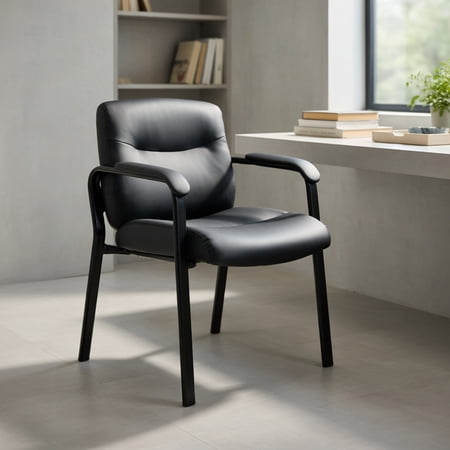
| Sled Base | A continuous metal loop that forms the legs. The chair does not roll at all; you must lift to move. | Modern aesthetics, maximum stability, users who never need to move their chair. |
| Retrofit Glides | Wheel replacements that turn any standard chair into a stationary one. | DIY enthusiasts, those who love their current chair but hate the wheels. |
4. Ergonomic Features: What to Look For
Just because it doesn't have wheels doesn't mean it skimps on ergonomics. A quality ergonomic office chair no wheels should include:
- Adjustable Lumbar Support: Non-negotiable. Look for both height and depth adjustment to fit your spine's natural curve.
- Seat Depth Adjustment: Ensures proper thigh support (2-3 finger gap between the seat edge and the back of your knee).
- Height-Adjustable Armrests (4D is a bonus): Allows you to rest arms comfortably, reducing shoulder strain.
- Synchro-Tilt Mechanism: Lets the chair recline while keeping your feet on the floor, which is excellent for dynamic sitting and taking pressure off your spine.
- Breathable Material: Mesh backs are ideal for airflow, while high-quality leather or fabric seats offer comfort.
According to ergonomist Dr. Alan Hedge, "The best chair is one you can adjust to fit your body and your task." A stationary chair with full adjustability fits this definition perfectly.
5. Who Benefits Most?
Material Choices for Stationary Ergonomic Chairs
The materials used in a non-rolling chair are just as important as its stability. Here’s a quick look at how material choices affect your experience.
✅ Mesh Backs
- Breathable, preventing sweat during long sits.
- Modern look, contours to back.
- Easy to clean.
🔄 Leather/Faux Leather
- Premium feel, easy to wipe clean.
- Can be warm; look for perforated options.
- Durable and professional.
✅ Fabric Upholstery
- Soft, warm, and available in many colors.
- Good breathability if not too thick.
- Often more affordable.
🔄 Metal Base (Sled/Glides)
- Durable, sleek, industrial look.
- Make sure glides are floor-appropriate (felt for hardwood).
- Very stable.
Quick Comparison: Rolling vs. Stationary Ergonomic Chairs
| Feature | Rolling Chair (Wheels) | Stationary Chair (No Wheels) |
|---|---|---|
| Mobility | Easy to move across room | Stays put; requires effort to move |
| Floor Protection | Can scratch hard floors; needs mat | Glides are gentle; no mat needed |
| Stability for Focus | Can drift during work | Rock-solid, enhances concentration |
| Posture Engagement | Passive sitting common | Encourages active core engagement |
| Best Use Case | Large offices, multi-tasking | Home offices, deep work, design |
Frequently Asked Questions About Ergonomic Chairs Without Wheels
Conclusion: Is a Stationary Ergonomic Chair Right for You?
An ergonomic office chair without wheels is a specialized tool for a specific need: unwavering stability. If you value focus, have delicate floors, or want to encourage a more active sitting posture, it's an investment that pays dividends in comfort and productivity.
Final Recommendation
Remember, the best chair is the one that fits your body and your work style. By choosing a stationary model, you're not losing mobility—you're gaining a foundation for better focus.