
Why a Dedicated Childrens Office Chair Matters for Your Child's Health
Think of a child's body like a young tree—it grows straight and strong only with the right support. Placing a child in an adult-sized office chair is like forcing that tree to grow around an obstacle. A proper childrens office chair is not a miniature version of an adult chair; it is a carefully designed tool that supports growing spines, encourages good posture, and makes long study sessions sustainable.
💡 Did you know? According to pediatric physical therapists, children spend an average of 7+ hours a week on homework by age 10. Without proper seating, they are at a 30% higher risk of developing back discomfort or poor postural habits that can persist into adulthood.
Unlike standard office seating, a quality kids desk chair features a seat depth suited for shorter femurs, a backrest that supports the entire back (including the shoulder blades), and a height range that allows feet to rest flat—a non-negotiable for stability and focus. When a child's feet dangle, blood flow reduces, and they unconsciously slouch to compensate.
The Science of Active Sitting: How Childrens Office Chairs Boost Concentration
Children are naturally fidgety—it's how their brains regulate alertness. Instead of fighting this, modern ergonomic chairs for kids incorporate the concept of "active sitting." This doesn't mean unstable chairs that tip, but designs that allow for micro-movements. A chair with a slight bounce or a dynamic seat pan allows a child to shift weight naturally without leaving the chair.
Research from the University of Cincinnati found that students in classrooms with flexible, ergonomic seating (including appropriately sized chairs) showed a 15% improvement in on-task behavior. The reason is simple: when the body is comfortable and supported, the brain allocates more energy to cognitive tasks like math problems or reading comprehension, rather than signaling discomfort.
🔵 90-90-90 Rule
A proper childrens office chair helps maintain the "90-90-90" position: feet flat on floor (90° at ankles), knees at 90°, and hips at 90°. This alignment minimizes spinal stress.
🟢 Dynamic Movement
Chairs with slight flexibility in the backrest or seat allow for fidgeting that actually resets attention spans, helping kids stay focused for 20-25 minute blocks.
🟠 Proportional Lumbar
Adult chairs often place lumbar support too high, pushing a child's shoulders forward. Kids-specific chairs support the lower back correctly.
Safety First: Materials and Construction in Childrens Desk Chairs
When shopping for a childrens computer chair, safety certifications are as important as comfort. Unlike adult furniture, kids' chairs should ideally meet stricter standards for stability and chemical emissions. Here's what to look for:
- Stability and Tip Resistance: A good childrens office chair has a wider base (often a five-star base made of nylon or metal) that prevents tipping, even when a child leans sideways. Avoid chairs with a narrow footprint.
- Non-Toxic Materials: Look for certifications like GREENGUARD Gold. This ensures the foam, fabric, and plastics emit low levels of volatile organic compounds (VOCs). Children breathe faster than adults, so indoor air quality matters more.
- Durable, Stain-Resistant Upholstery: Let's be realistic—kids spill snacks and drinks. Chairs with wipe-clean bonded leather, Crypton fabric, or machine-washable covers are practical. Mesh is breathable but can trap crumbs; if you choose mesh, ensure it's a tight weave.
- Smooth-Rolling Casters: For safety, casters should roll easily on carpets or hard floors but have a brake mechanism or be soft enough not to roll away too fast when the child sits down. Some chairs offer locking casters for stability.
🛡️ Pro Tip for Parents: If your child is under 8, consider a childrens office chair with locking wheels or a weighted base. This prevents the chair from rolling unexpectedly when they climb on or off, reducing the risk of falls.
Adjustability: The "Growing Pain" Solution for Kids Study Chairs
Buying a study chair for children is an investment. The best ones adapt like a chameleon, changing as your child grows from elementary school to middle school. Here are the critical adjustment points you must check:
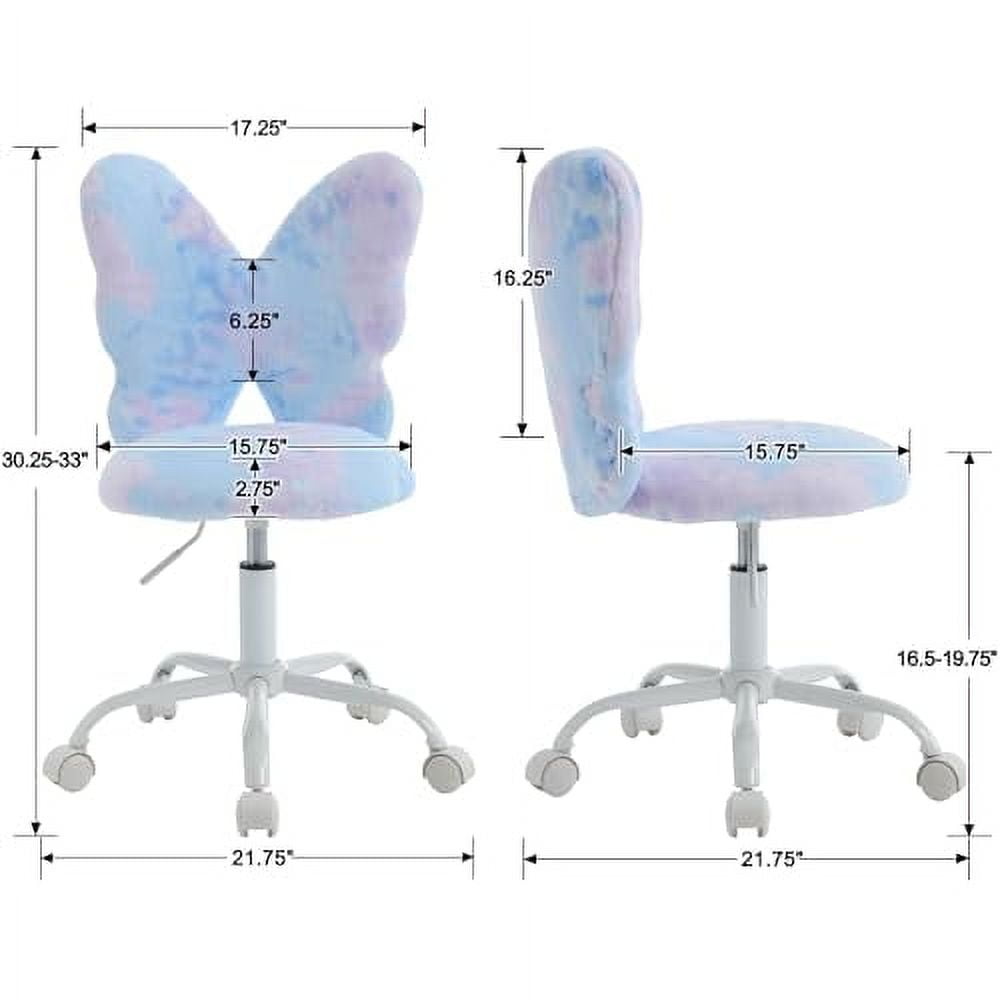
- Seat Height Range: This is non-negotiable. Measure from the floor to the back of your child's knee (when sitting). The chair should adjust so this measurement is the seat height. A good range is 14 to 20 inches to cover ages 6 to 14.
- Seat Depth (Pan Depth): An often-overlooked feature. When your child sits back against the backrest, there should be 2-4 inches (about 3 fingers width) between the back of their knee and the seat edge. Adjustable seat depth prevents pressure on the back of the thighs.
- Backrest Height: For younger kids, the backrest should support the entire back up to the shoulder blades. Adjustable backrests allow the chair to "grow" with the child's torso length.
- Armrest Adjustability (4D): Armrests should support the arms without lifting the shoulders. For kids who type, armrests can reduce strain on the neck. Look for height and width adjustment.
Think of these adjustments like tuning a musical instrument. A violin sounds terrible if it's the wrong size for the player; similarly, a child's posture suffers if the chair isn't tuned to their unique proportions.
Age-by-Age Guide to Choosing a Childrens Office Chair
Not all childrens office chairs are created equal for every age group. A chair perfect for a 6-year-old beginning reader might be too restrictive for a 12-year-old preteen. Here's a simple breakdown:
1 Ages 5-7: The Foundational Years
At this stage, the priority is stability and simplicity. Look for a childrens office chair that is lightweight but stable. Chairs with lockable casters prevent zooming around. A fixed backrest with minimal adjustments is okay, as long as the seat height is correct. Bright colors can make the chair inviting. Avoid complex pneumatic levers that a child might play with excessively.
2 Ages 8-10: The Homework Warriors
As homework load increases, so does sitting time. Now, you need a kids ergonomic chair with better lumbar support. Seat depth adjustment becomes crucial as growth spurts happen. Armrests can be introduced if they are adjustable. This is the age where a chair with a breathable back (mesh) or a flexible backrest that moves with the child is beneficial.
3 Ages 11-13: The Pre-Teen/Teen Transition
Children in this age group are often approaching adult height but still have proportionally shorter femurs. A high-quality childrens office chair with extensive adjustability (similar to a small adult task chair) is ideal. Look for features like adjustable lumbar, 3D or 4D armrests, and a weight capacity that accommodates their growing size. Style becomes important, so involve them in choosing the color.
Comparing Childrens Office Chair Materials: Which is Best?
| Material | Durability for Kids | Cleanability | Breathability | Best For |
|---|---|---|---|---|
| Mesh | Good (if high quality, can sag) | Moderate (can trap dust) | Excellent | Older kids (10+) who get warm easily |
| Fabric (Polyester) | Very Good (with tight weave) | Moderate (stain-resistant sprays help) | Good | General use, comfortable in all seasons |
| Bonded Leather | Fair (can peel over time) | Excellent (wipe clean) | Poor (can get sticky) | Younger kids who spill often; but beware of peeling after 2-3 years. |
| Premium Fabric (Crypton) | Excellent | Excellent (liquid-resistant) | Good | Messy kids, long-term investment |
Frequently Asked Questions About Childrens Office Chairs
Final Thoughts: Investing in Your Child's Posture and Productivity
Selecting the right childrens office chair is one of the most impactful purchases you can make for your child's study environment. It's not merely a piece of furniture; it's a foundation for healthy habits that will serve them through years of education and into their professional lives. By prioritizing adjustability, safety, and comfort, you're creating a space where they can thrive academically without compromising their physical well-being.
Quick Recap: Your Childrens Office Chair Checklist
- ✔️ Height Adjustable: Seat must allow feet flat on floor.
- ✔️ Depth Adjustable: Ensure 2-3 finger gap behind knees.
- ✔️ Safe Materials: Look for GREENGUARD Gold certification.
- ✔️ Stable Base: Five-star base for safety.
- ✔️ Washable/Wipeable: Because life with kids is messy.
Review our top-rated products above to find the perfect match for your child's needs.