

Why a Wooden Rolling Office Chair Deserves a Spot in Your Workspace
Imagine an office chair that doesn’t scream “corporate cubicle” but instead whispers timeless elegance. A wooden rolling office chair is exactly that—a piece of furniture that doubles as functional art. Unlike generic mesh or plastic chairs, a wooden chair brings warmth, character, and a connection to traditional craftsmanship. But it’s not just about looks: today’s wooden rolling chairs are engineered for mobility and comfort, with smooth-rolling casters and ergonomic contours that support you through long workdays.
Whether you're furnishing a home office, a executive suite, or a creative studio, the natural grain of wood adds a layer of sophistication that few materials can match. According to a 2023 survey by the American Home Furnishings Alliance, 68% of remote workers said they prefer furniture that blends aesthetic appeal with functionality—and wooden rolling chairs fit that bill perfectly.
The Anatomy of a Quality Wooden Rolling Office Chair
To choose the right wooden rolling chair, you need to understand its components. We break down the key parts that define durability, comfort, and style.
1. Wood Type: The Foundation of Strength and Beauty
Not all wood is created equal. Here are the most common types used in rolling office chairs:
- Oak: Known for its prominent grain and hardness. Oak chairs are extremely durable and can last a lifetime. They typically have a golden or medium-brown tone.
- Walnut: A premium choice with rich dark chocolate color. Walnut is slightly less hard than oak but offers stunning visual depth. Often found in high-end executive models.
- Beech: Very hard and resistant to wear. Beech wood has a fine, uniform texture and takes stains well, so you’ll find it in many mid-century modern designs.
- Cherry: Develops a beautiful reddish patina over time. Cherry is softer than oak but prized for its elegance. Perfect for traditional or Shaker-style chairs.
- Rubberwood: An eco-friendly option (harvested from latex-producing trees). It’s dense, stable, and cost-effective, often used in contemporary rolling chairs.
Pro tip: For a chair that will see daily use, choose oak, walnut, or beech. They resist dents and scratches better than softer woods.
2. Joinery and Construction: How It Holds Together
A wooden rolling chair endures twisting forces as you swivel and roll. The best chairs use mortise-and-tenon joints or dowel-reinforced corners, often combined with metal corner brackets. Avoid chairs that rely solely on glue or staples. Look for descriptions that mention “solid wood construction” (not veneer over particle board) and “reinforced joints.”
Did you know? A well-constructed wooden chair can support over 300 pounds. The frame’s integrity matters more than the wood species alone. Always check the weight capacity listed by the manufacturer.
3. The Rolling Mechanism: Casters and Base
The magic of a rolling wooden chair lies in its wheels and base. Most modern wooden chairs use a five-star metal or wooden base with casters. Key considerations:
- Caster material: Soft rubber or polyurethane wheels are quiet and floor-friendly. Hard plastic casters can scratch hardwood or tile.
- Caster type: Some chairs offer locking casters if you want stability when standing up. Others have dual-wheel casters for smoother movement on carpets.
- Base material: A wooden base looks gorgeous but must be thick and well-attached. Metal bases are often hidden under wood veneer for extra strength.
4. Ergonomics Meets Wood: Comfort Features
Gone are the days when wooden chairs meant a stiff, straight back. Today’s designs incorporate ergonomic elements:
- Contoured seat and backrest: Curved wooden panels that follow the body’s natural shape.
- Upholstered cushions: Removable or attached seat pads with foam or memory foam. Some chairs offer breathable fabric or leather cushions.
- Adjustable lumbar support: Hidden within the backrest or provided by a separate pillow.
- Tilt mechanism and swivel: Gas lift height adjustment and rocking function are now common in wooden executive chairs.
5. Style Spectrum: From Farmhouse to Futuristic
Wooden rolling chairs aren’t one-style-fits-all. Here’s a quick visual guide:
- Farmhouse / Rustic: Distressed wood, slat backs, often with a low, cozy profile. Pair with a reclaimed wood desk.
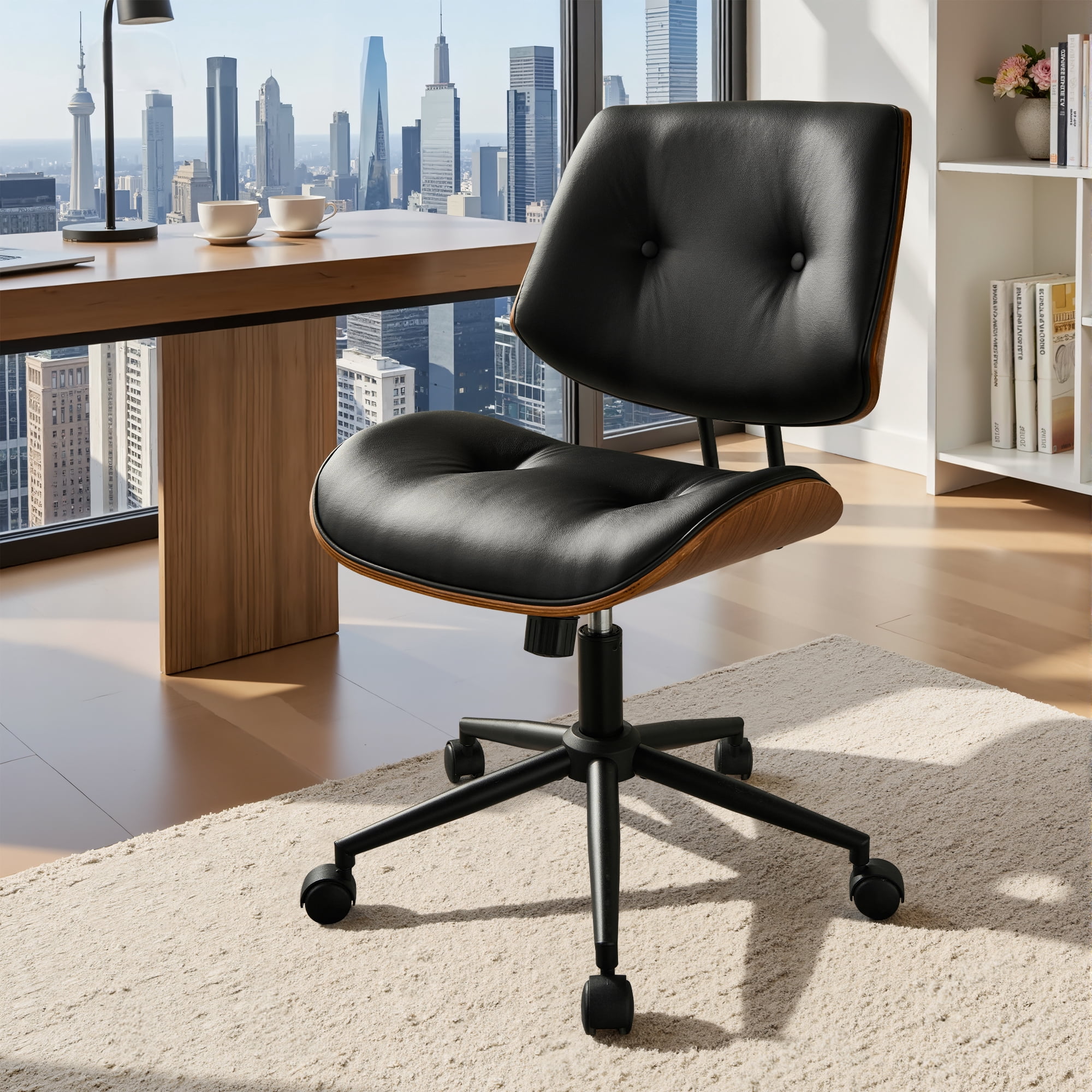
- Mid-Century Modern: Tapered legs, curved shells, walnut or teak finish. Iconic designs like the Eames desk chair inspire many models.
- Industrial: Wood combined with black metal frames and visible hardware. Often features a higher back and metal casters.
- Traditional / Executive: Dark wood, high back with leather upholstery, nailhead trim. Communicates authority and class.
- Scandinavian: Light woods like birch or ash, minimalistic silhouette, often with a wool or felt cushion.
Step-by-Step: How to Select Your Ideal Wooden Rolling Chair
Follow this simple 4-step process to narrow down your options:
- Measure your space: Note the height of your desk (seat height should be adjustable to match) and the floor area for rolling radius.
- Determine your primary use: If you sit 8+ hours, prioritize ergonomic cushions and lumbar support. For part-time use, style might take precedence.
- Choose wood & finish: Match with your existing furniture. Sample finishes online or order swatches if possible.
- Check caster compatibility: Ensure the casters are safe for your floor type (hardwood, carpet, tile). Many chairs let you swap casters easily.
Wood Comparison at a Glance
| Wood Type | Hardness | Grain | Common Style | Durability |
|---|---|---|---|---|
| Oak | Very hard | Prominent | Rustic, Traditional | Excellent |
| Walnut | Hard | Fine, straight | Mid-century, Executive | Excellent |
| Beech | Very hard | Fine, uniform | Modern, Scandinavian | Very good |
| Cherry | Medium | Smooth | Traditional, Shaker | Good |
| Rubberwood | Hard | Straight | Contemporary, Budget | Good |
Real-World Benefits: Why Users Love Wooden Rolling Chairs
Beyond aesthetics, here’s what actual owners report:
- Durability: “My oak rolling chair is 15 years old and still rock solid. I’ve only replaced the casters once.”
- Temperature comfort: Wood doesn’t get sticky in summer or icy in winter like leather or plastic.
- Easy to clean: A damp cloth removes dust. No fabric to stain.
- Unique style: “Clients always compliment my chair. It starts conversations.”
According to interior design blog Home Office Insider, wooden chairs have seen a 40% increase in online searches over the past two years, driven by the trend toward biophilic design—bringing natural elements indoors.
Frequently Asked Questions About Wooden Rolling Office Chairs
Conclusion: Roll into Style and Comfort
A wooden rolling office chair is more than a seat—it’s an investment in your workspace’s atmosphere and your personal comfort. By understanding wood types, construction quality, and ergonomic add-ons, you can find a chair that serves you beautifully for decades. Whether you lean toward the warmth of oak, the sophistication of walnut, or the clean lines of beech, there’s a wooden rolling chair waiting to complete your office.
Ready to browse? Check out our hand-picked selection above, featuring top-rated models from Walmart that combine classic aesthetics with smooth mobility. Your perfect chair is just a click away.