
The Critical Need for Properly Sized Seating
For individuals with larger body frames, a standard office chair isn't just uncomfortable—it can be a genuine health hazard. Sitting on a chair not designed for your weight or width is like wearing shoes two sizes too small. It leads to poor posture, reduced circulation, and chronic pain. Plus size office chairs are engineered specifically to address these issues, offering reinforced frames, wider seats, and higher weight capacities to ensure safety, comfort, and long-term well-being. This guide will walk you through everything you need to know to make a smart, lasting investment in your comfort.
Industry Data: According to the National Institute for Occupational Safety and Health (NIOSH), employees who use properly fitted ergonomic chairs report a 46% decrease in lower back pain. For plus-size individuals, using a chair with a weight capacity that exceeds their body weight by at least 20% is critical for safety and durability.
More Than Just a Number: Understanding Chair Construction
When shopping for a heavy-duty chair, the stated weight capacity is the headline, but the construction details are the story. A 400-pound capacity rating is meaningless if the chair is built with cheap materials. Here’s what you need to look for under the upholstery:
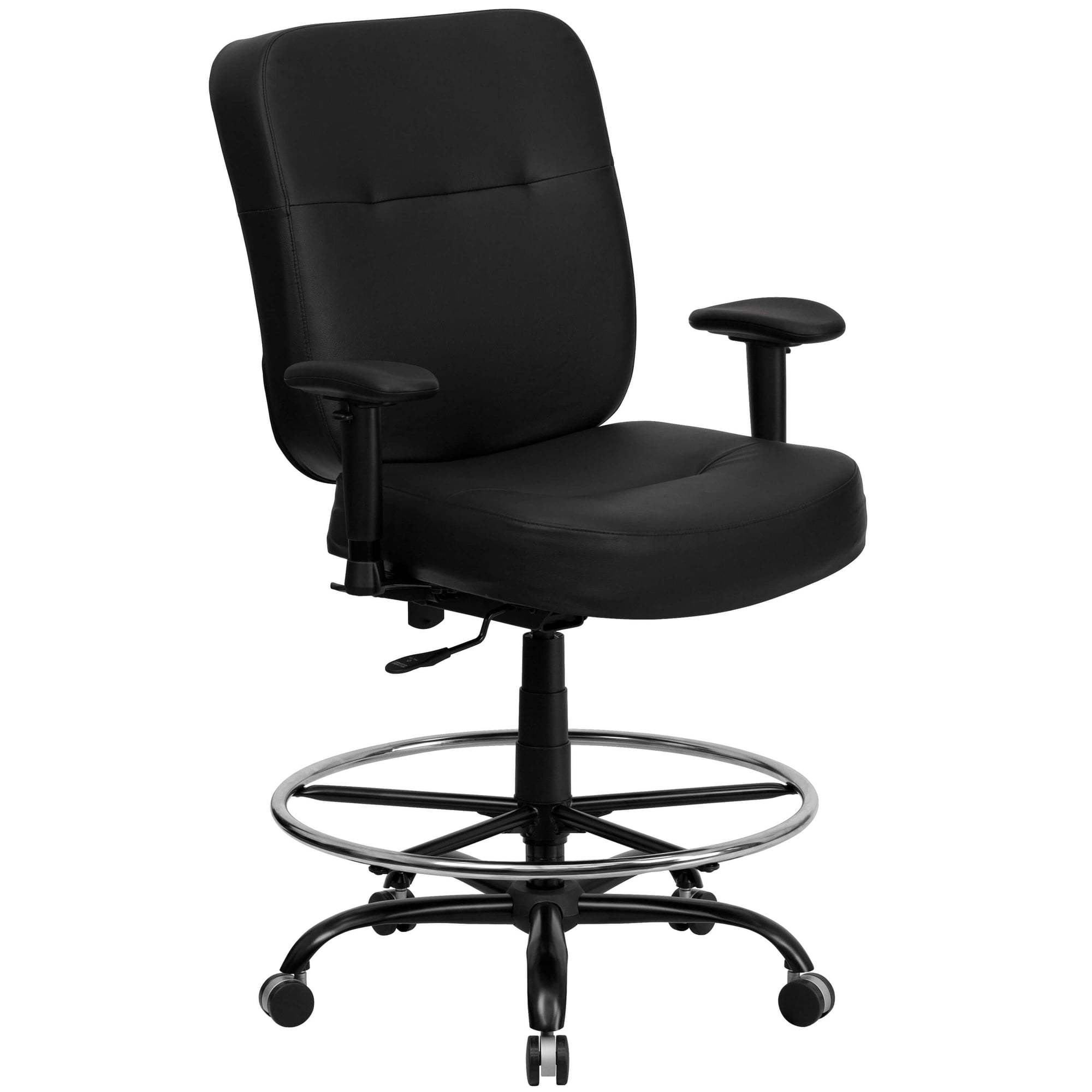
- The Skeleton: Reinforced Steel Frame: While many standard chairs use plastic or thin metal, a true plus-size chair must have a thick, all-steel frame. This is the foundation that prevents twisting and collapse. Look for manufacturers who explicitly mention a reinforced steel core.
- The Base: A Wide Aluminum or Nylon Footprint: The five-point base needs to be made of heavy-duty nylon or, ideally, die-cast aluminum. It should have a wider stance (over 28 inches) to provide stability and prevent tipping. Avoid flimsy plastic bases.
- The Lift: Class 4 or 5 Gas Cylinder: The gas lift mechanism is what holds you up. For plus-size chairs, a Class 4 or Class 5 gas cylinder is non-negotiable. These are industrial-grade and tested to handle constant, heavy use without failing.
- The Wheels: Hardwood Floor or Carpet Casters: The casters must also be heavy-duty. Standard casters can snap under extra weight. Look for metal-core casters with a durable tread. Many plus-size chairs offer different caster types depending on your floor surface.
Think of it like this: if a standard chair is a compact car, a plus-size chair is a heavy-duty pickup truck. Both will get you from point A to point B, but the truck is built with reinforced components to handle a much heavier load safely.
Ergonomics Tailored for Comfort and Support
Ergonomics isn't one-size-fits-all. A plus-size chair must adapt to a larger body to provide proper support. Here are the specific ergonomic features that matter most:
1. Seat Width and Depth
The seat pan is where your comfort journey begins. Standard chairs are often 19-20 inches wide, which can be restrictive. Plus size office chairs typically offer seat widths ranging from 22 to 30 inches. Depth is equally important. A seat that's too short won't support your thighs, while one that's too long can press against the back of your knees. Look for a chair with a waterfall edge to promote healthy circulation and a seat depth adjustment feature to find your perfect fit.
2. Robust Lumbar Support
Because a heavier user exerts more force on the chair back, the lumbar support mechanism needs to be more robust than standard. Look for chairs with separate, adjustable lumbar pads that can be moved both up and down and in and out. This ensures the support hits your lower back's natural curve, regardless of your height or torso length.
3. 4D Armrests with Metal Reinforcement
Armrests on cheap chairs are often the first thing to break. For a plus-size chair, armrests must be reinforced. Ideally, you want 4D armrests that adjust in height, width, depth, and pivot angle. This allows you to keep your shoulders relaxed and your elbows at a 90-degree angle, preventing neck and shoulder strain. Ensure the armrests are wide and padded for all-day comfort.
4. High-Back Support and Headrests
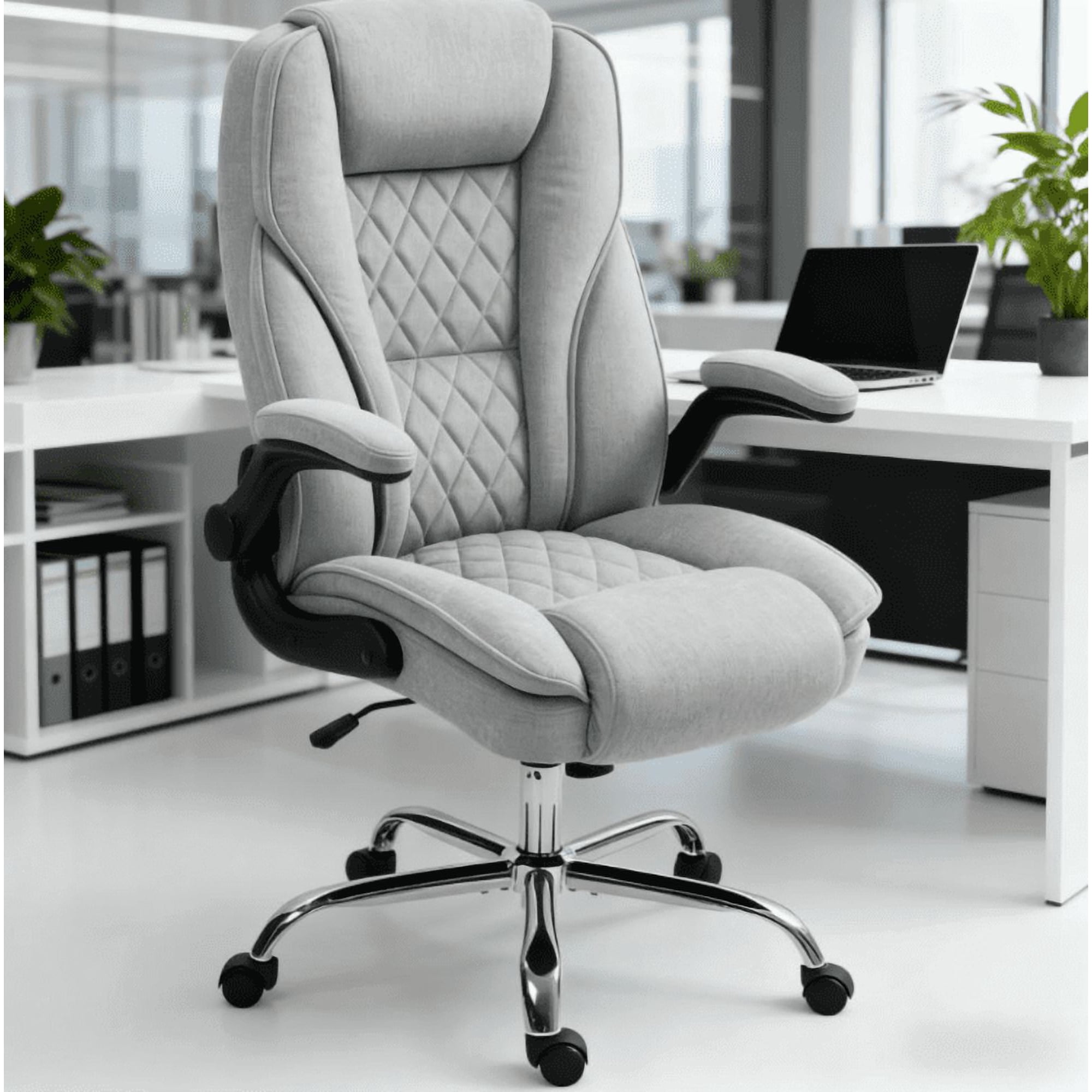
Many plus-size individuals are also tall. A high-back chair (over 30 inches) provides crucial support for the entire spine and shoulders. An adjustable headrest is a valuable addition for taller users, allowing them to rest their neck during micro-breaks without straining.
Material Matters: Leather vs. Mesh vs. Fabric
✅ Leather/Bonded Leather
- Pros: Extremely durable, easy to clean, looks professional, provides good support.
- Cons: Can get hot in summer, may require conditioning, can crack over many years if not maintained. High-quality genuine leather is best but pricier.
⚠️ High-Quality Mesh
- Pros: Excellent breathability, modern look, conforms to the body.
- Cons: Must be a very high-denier, reinforced mesh to prevent sagging. Cheaper mesh will stretch out over time with heavier use.
✅ Durable Fabric
- Pros: Soft, comfortable, available in many colors, often more breathable than leather.
- Cons: Can stain easily, may wear down faster than leather, can trap odors and allergens.
The Hidden Health Cost of an Ill-Fitting Chair
Choosing a standard chair when you need a plus-size option isn't just a matter of discomfort; it has serious health implications. Here’s what’s at stake:
- Musculoskeletal Disorders (MSDs): Without proper lumbar support, the spine is forced into unnatural positions, leading to chronic back pain, herniated discs, and sciatica. The risk is amplified for larger individuals due to increased pressure on the spinal column.
- Circulatory Problems: A seat pan that's too narrow or has a hard front edge can cut off circulation to the legs and feet, leading to numbness, swelling, and even deep vein thrombosis (DVT) in severe cases. The waterfall edge in plus-size chairs is critical here.
- Poor Posture and Fatigue: When a chair is unstable or too small, your body subconsciously works to maintain balance. This constant micro-tensing leads to muscle fatigue, reduced energy, and an inability to focus on work. A stable, supportive chair allows your body to relax and your mind to concentrate.
- Pressure Sores: Sitting for long periods on an inadequately padded or too-small seat can create painful pressure points, leading to skin irritation and sores. High-density, thick foam cushions are essential for distributing weight evenly.
Investing in a proper plus-size chair is an investment in your long-term health, preventing these issues before they start.
How to Properly Test and Adjust Your New Chair
Once you've purchased a chair, proper adjustment is key to unlocking its benefits. Follow this simple step-by-step guide:
- Set the Seat Height: Sit with your feet flat on the floor. Adjust the height so your thighs are parallel to the ground and your knees are at a 90-degree angle. Your hips should be slightly higher than your knees.
- Adjust the Seat Depth: Sit with your back against the backrest. There should be 2-4 fingers of space between the back of your knee and the edge of the seat. If the seat is too deep, shorten it; if too shallow, extend it.
- Dial in the Lumbar Support: Adjust the lumbar pad so it fits snugly into the curve of your lower back. It should provide firm, comfortable support without pushing you too far forward.
- Position the Armrests: Adjust the armrests so your shoulders are relaxed and your elbows form a 90-degree angle while typing. The armrests should just lightly touch your elbows.
- Test the Recline Tension: Adjust the tilt tension so you can lean back with moderate effort. The chair should support you as you recline, not snap back or fall back too easily.
Spend 15-20 minutes fine-tuning these settings. A perfectly adjusted chair feels like it was made for you.