

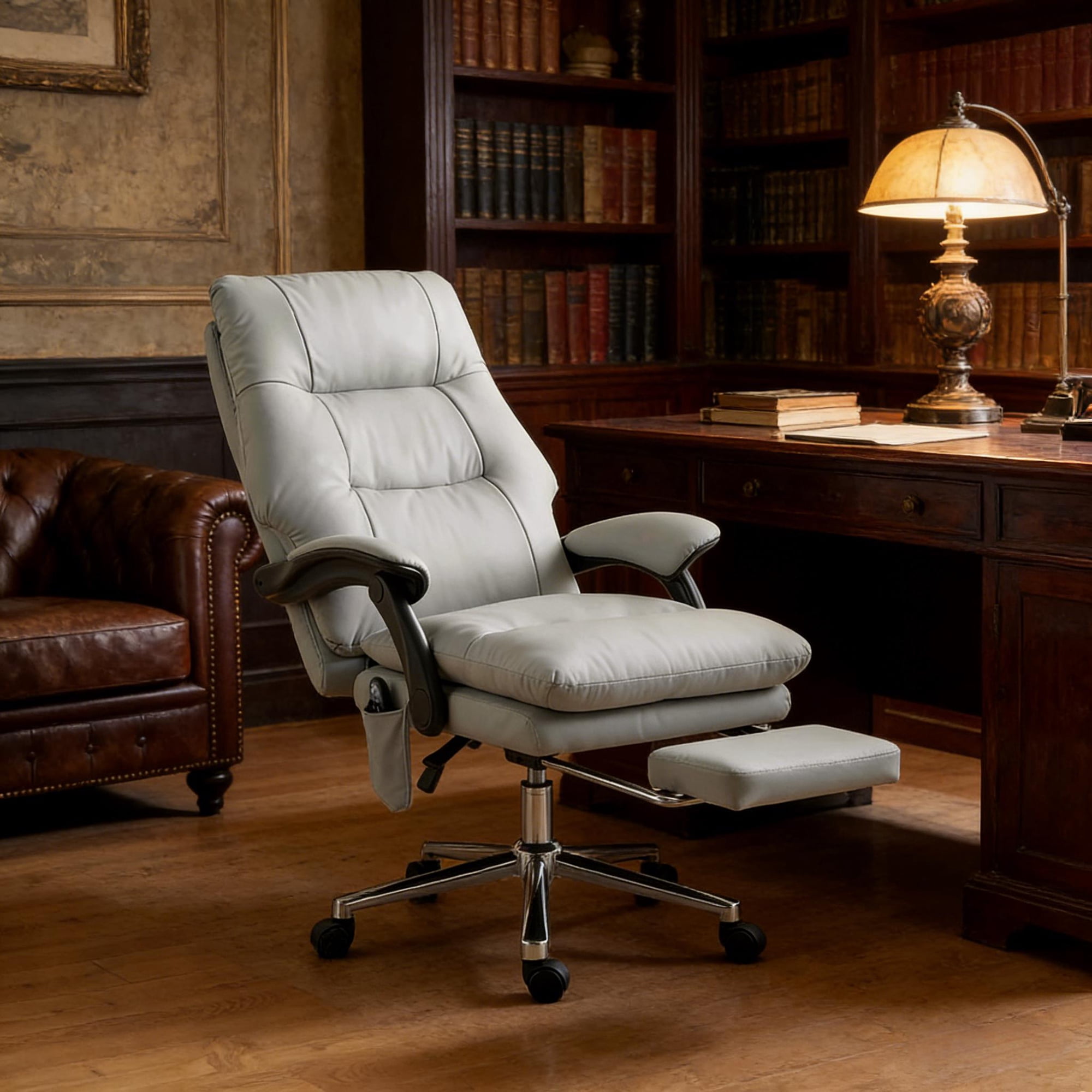


Why “Office Chair That Goes Higher” Matters for Your Health and Productivity
Imagine sitting in a chair that forces your knees above your hips or your shoulders to hunch just to reach your desk. That’s the reality for millions of tall professionals stuck with standard office chairs. The solution is simple yet transformative: an office chair that goes higher. These specialized chairs feature extended pneumatic cylinders that elevate the seat to accommodate taller statures, high desks, and sit-stand workstations. More than a luxury, they are an ergonomic necessity.
Ergonomic Insight: Research from the Human Factors and Ergonomics Society indicates that individuals using chairs with insufficient seat height are 58% more likely to report chronic neck and shoulder pain. Proper height alignment enables neutral posture, reducing fatigue and increasing focus by up to 35% during long workdays.
Who Benefits Most from High-Rise Office Chairs?
Whether you are tall, use a standing desk, or simply require a more customized fit, a chair with a higher seat height offers distinct advantages:
- Tall Professionals (6'2" and above): Standard chairs leave your thighs unsupported. A higher seat ensures your knees are at a 90-degree angle with feet flat.
- Sit-Stand Desk Users: Alternating between sitting and standing requires a chair that can rise to match the desk height when seated, preventing awkward reaching.
- Individuals with Long Femurs: Proper seat depth combined with higher height allows full thigh support without pressure behind the knees.
- Anyone with Hip or Knee Sensitivity: A higher seat reduces the angle of hip flexion, easing pressure on joints and improving circulation.
- Creative & Drafting Professionals: Many drafting tables and specialized workstations demand chairs with seat heights exceeding 25 inches.
What to Look For: Key Specifications of High-Height Office Chairs
When searching for the perfect office chair that goes higher, focus on these critical specifications to ensure both safety and ergonomic support.
⚡ Extended Pneumatic Cylinder: Look for chairs specifying cylinder lengths of 200mm, 300mm, or even custom 350mm lifts. The cylinder determines maximum seat height; standard is ~150mm, while tall cylinders provide 22–28 inch seat height ranges.
⚡ Reinforced 5-Star Base: Higher chairs shift the center of gravity. A wide base (27+ inches in diameter) made of heavy-gauge steel or reinforced nylon ensures stability even at maximum extension.
⚡ Weight Capacity & Construction: Chairs with higher lift mechanisms must support additional stress. Prioritize models rated for 300 lbs or more, with Class 4 or Class 5 gas lifts for durability.
⚡ Adjustable Armrests & Lumbar: As seat height changes, so do arm and back positions. 4D armrests and adjustable lumbar support maintain ergonomic alignment across different heights.
Height Comparison: Standard vs. High-Rise Office Chairs
Understanding the physical difference helps you gauge the right fit. Below is a quick reference based on user height and desk configuration.
| User Profile | Recommended Seat Height Range | Chair Features Needed |
|---|---|---|
| Petite to Average (5'0"–5'8") | 16" – 20" | Standard cylinder (150mm) sufficient |
| Tall (5'9"–6'2") | 19" – 23" | Extended cylinder (200mm), adjustable footrest optional |
| Extra Tall (6'3" and above) | 22" – 28" | Class 4/5 gas lift, 350mm+ cylinder, extra-wide base |
| Sit-Stand Desk / High Counter | 24" – 30" | Drafting stool or high-rise task chair with foot ring |
Material and Build Quality: Investing in Long-Term Comfort
Because chairs with extra height endure more torque and weight variations, material selection becomes crucial. Here’s how different materials affect longevity and function in high-rise models:
- Leather (Premium/Luxury): Excellent durability and professional aesthetics. Full-grain leather chairs with reinforced frames are ideal for executive high-rise setups, lasting 10+ years with conditioning.
- High-Performance Mesh: Breathable and lightweight, mesh chairs often feature robust frames and are popular for sit-stand desk environments where temperature regulation matters.
- Fabric with High-Density Foam: Provides plush comfort but ensure the foam is rated for heavy use (2.5–3.5 lbs density) to prevent sagging over time, especially with frequent height adjustments.
- Metal Frame vs. Nylon: Chairs that go higher should have metal or reinforced aluminum bases rather than standard nylon, as they offer superior stability at max height.
Ergonomic Alignment: How to Set Up Your High-Rise Chair Correctly
A chair with greater height adjustment is only effective if configured properly. Follow this step-by-step guide to dial in your perfect fit:
- Set the Seat Height: Adjust so your feet rest flat on the floor (or on a footrest) and your thighs are parallel to the ground. Your knees should be at or slightly below hip level.
- Adjust Lumbar Support: Position the lumbar curve to fit the natural inward curve of your lower back. This is non-negotiable for preventing back fatigue during long seated sessions.
- Set Armrest Height: With shoulders relaxed, your elbows should form a 90-degree angle, wrists straight while typing. Armrests should lightly contact your forearms without raising shoulders.
- Seat Depth: There should be 2–4 fingers’ width between the back of your knees and the seat edge. For tall users, look for chairs with adjustable seat depth (slide mechanism).
- Test Stability: At full height, gently rock side to side. Any wobble indicates insufficient base or cylinder quality—reconsider the chair.
By integrating these adjustments, a high-rise office chair becomes an active tool for maintaining spinal health and peak productivity.
Frequently Asked Questions About High-Seat Office Chairs
Conclusion: Elevate Your Workstation with the Right High-Rise Chair
Selecting an office chair that goes higher is a strategic move toward a healthier, more productive work life. Whether you’re tall, transitioning to a sit-stand desk, or simply value the flexibility of extensive height adjustments, these chairs offer unmatched ergonomic freedom. The right model combines a robust extended cylinder, a wide stable base, and comprehensive adjustments (lumbar, armrests, seat depth) to support your body through every task.
Invest time in measuring your desk height, understanding your body’s proportions, and prioritizing safety ratings. A quality high-rise chair is more than furniture—it’s an investment in your daily comfort and long-term musculoskeletal health. Use our product grid above to explore top-rated chairs that deliver both height and ergonomic excellence.
Final Recommendations by Scenario
| User Scenario | Recommended Chair Type | Non-Negotiable Features |
|---|---|---|
| Executive / Corner Office (Tall Leader) | High-back leather executive with extended cylinder | 350mm gas lift, 4D armrests, 400 lb weight capacity, 5-year warranty |
| Sit-Stand Desk Enthusiast | Mesh task chair with drafting stool capabilities | Foot ring, 28" max seat height, breathable back, seat slide mechanism |
| Big & Tall Users | Reinforced heavy-duty high-rise chair | Class 5 lift, steel base, wide seat (22+ inches), 500 lb capacity |
| Home Office / Small Space | Compact high-adjustment task chair | Space-saving base, 200mm cylinder, adjustable lumbar, quiet casters |