
Why Tall Professionals Need a Dedicated Comfortable Tall Office Chair
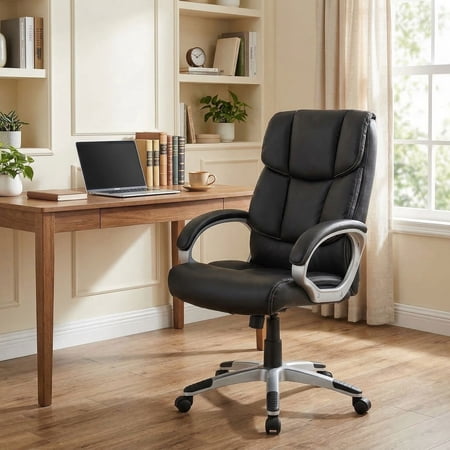
If you're 6'2" or taller, you've likely experienced the frustration of a standard office chair: the backrest ends mid-shoulder, the seat pan presses behind your knees, and the headrest — if it exists — jabs your neck. A comfortable tall office chair isn't a luxury; it's an ergonomic necessity. It's the difference between leaving work feeling energized versus nursing a stiff neck and aching lower back.
Ergonomic Insight: According to research from the Human Factors and Ergonomics Society, chairs designed for taller users reduce spinal compression by up to 35% compared to one-size-fits-all models. For tall executives spending 8+ hours seated, this translates to better focus and fewer sick days due to musculoskeletal discomfort.
What Exactly Defines a "Tall Office Chair"?
A tall office chair is engineered with extended dimensions: backrest height typically 22–26 inches (versus standard 18–20 inches), seat depth 18–21 inches, and a higher gas lift that allows the seat pan to rise to 22–24 inches. But true comfort goes beyond measurements. It's about how the chair adapts to your unique proportions.
Key Ergonomic Features for Ultimate Comfort in a Tall Chair
When shopping for a comfortable tall office chair, look beyond the "tall" label. Here are the non-negotiable features that separate a genuinely comfortable tall chair from a merely oversized one.
1. Extended Backrest with Adjustable Lumbar Support
Your spine is longer, so your support should be too. A quality tall chair has a backrest that cradles the entire thoracic and lumbar regions. The lumbar support must be vertically adjustable — ideally 4–6 inches of travel — to hit the natural curve of your lower back. Without this, you'll experience "gap loading" where the chair pushes on your mid-back but leaves your lumbar unsupported.
- Look for: Independent height and depth adjustment for the lumbar pad.
- Why it matters: Proper lumbar alignment reduces disc pressure by up to 40% (Cornell University ergonomics study).
- Bonus: Some high-end models offer inflatable lumbar for customized firmness.
2. Deeper and Wider Seat Cushion
A comfortable tall chair provides a seat pan that supports at least 80% of your thigh length. If the seat is too short, you'll perch on the edge, cutting circulation. Look for a seat depth of at least 18–20 inches with a waterfall edge to prevent pressure behind the knees. The cushion should be high-density foam (or a quality mesh) that doesn't bottom out after a few months.
- Seat width: For taller builds, a seat width of 20–22 inches offers room to shift position.
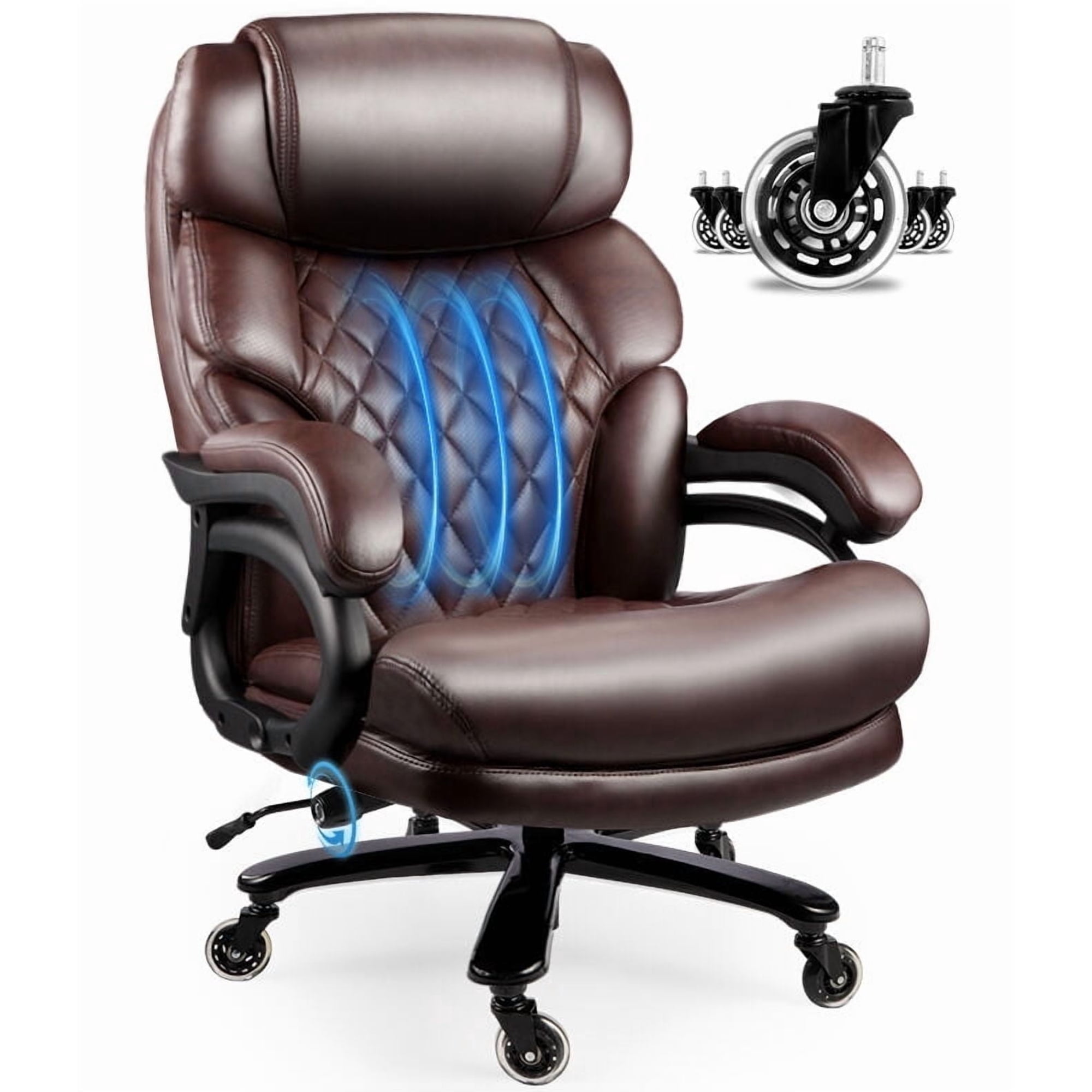
- Material matters: Breathable mesh or perforated leather helps regulate temperature — important for long sits.
3. Multi-Directional Headrest (Crucial for Tall Users)
Standard headrests often hit a tall person at the base of the skull, forcing the neck forward. A comfortable tall office chair must have a headrest that adjusts both height and angle. Ideally, it should pivot to support the natural curve of your cervical spine while reclining. This prevents "text neck" and upper trapezius fatigue.
- Pro tip: Test that the headrest can rise high enough to cradle the occipital bone (the back of your head) without pushing your chin down.
4. Extended Height Range Pneumatic Cylinder
Being tall often means you need the seat higher to get your thighs parallel to the floor (crucial for ergonomics). Standard cylinders top out at 20–21 inches. A tall chair should offer a seat height range from about 19 to 23 inches (or more). This allows you to sit with feet flat and knees at 90 degrees, regardless of your height.
- Class 4 gas lift: Look for a heavy-duty rating (Class 4 or 5) for stability and durability.
5. Recline Mechanism with Tension Control
A comfortable tall chair lets you lean back without feeling like you'll tip over. Look for a synchro-tilt or multi-position lock mechanism that allows you to recline while keeping your feet on the floor. The tilt tension should be adjustable to match your weight — heavier users need firmer resistance to recline smoothly.
6. 4D Adjustable Armrests
Tall individuals often have longer torsos and arms, so armrests need to move up, down, sideways, and pivot. Set them so your elbows rest at 90 degrees with shoulders relaxed. This prevents hunching and relieves neck tension.
Statistic: A survey by the Office Ergonomics Research Committee found that 73% of tall workers who switched to a properly fitted tall chair reported a significant reduction in upper back and neck pain within two weeks.
Material Considerations: Balancing Comfort and Durability for Tall Users
The material of your tall chair affects breathability, maintenance, and long-term comfort. Here's how they stack up for taller individuals who often generate more heat and put more stress on the chair.
High-End Mesh (e.g., 3D knitted)
- Breathability: Excellent for all-day comfort, no sweat buildup.
- Conformity: Stretches slightly to accommodate longer backs.
- Durability: Modern mesh resists sagging for 8–10 years.
- Best for: Warm climates, those who prefer a "suspended" feel.
Premium Leather / Bonded Leather
- Pros: Luxurious feel, easy to wipe clean, ages well.
- Cons: Can get sticky in summer; requires occasional conditioning.
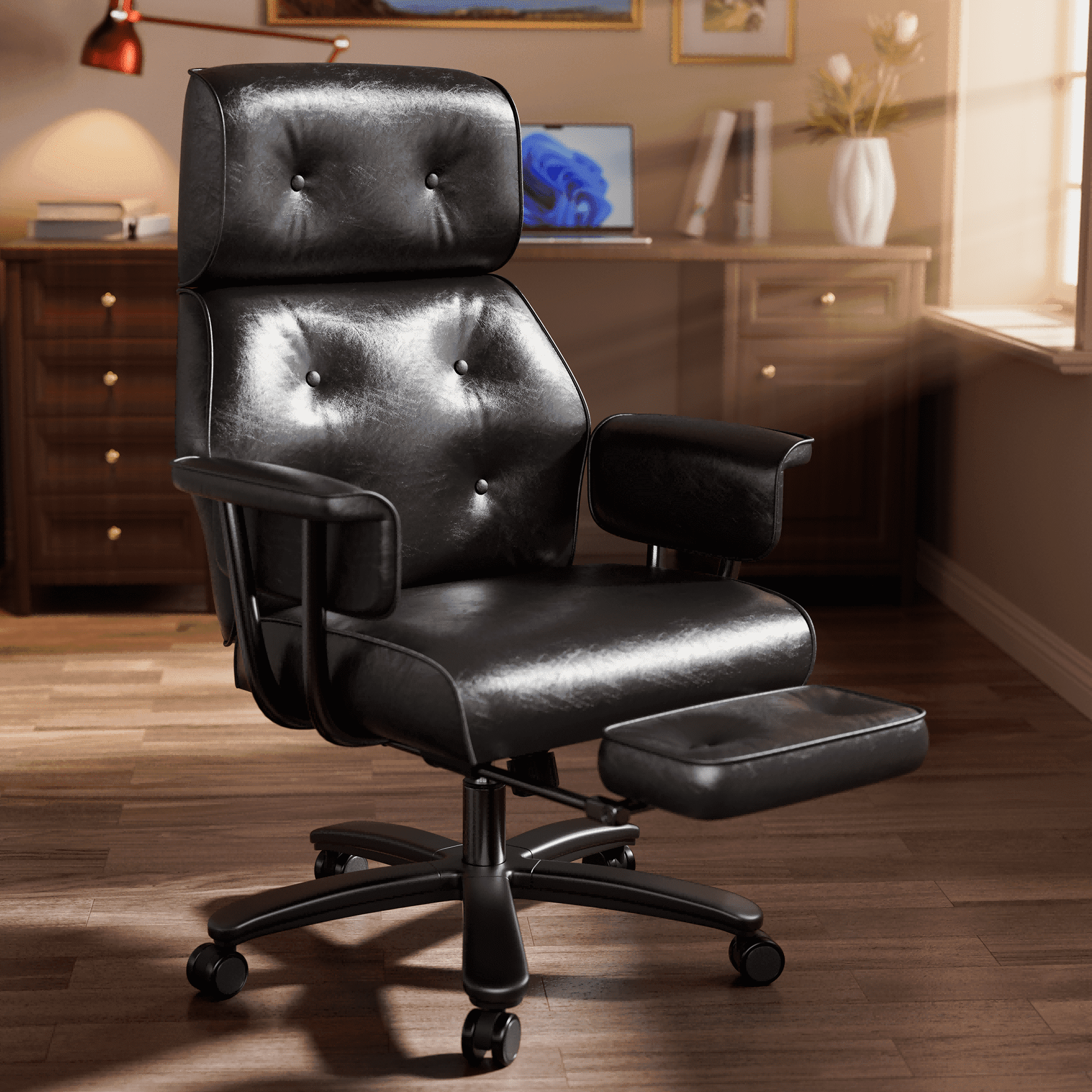
- Tall-specific: Ensure the leather is top-grain or corrected grain for flexibility — bonded leather may crack under taller frames over time.
High-Density Fabric
- Pros: Soft, warm, available in many colors; often more affordable.
- Cons: Can absorb spills and odors; may pill over time.
- Recommendation: Look for solution-dyed or stain-resistant fabric for longevity.
Combination (Mesh Back + Leather/Cushion Seat)
- Ideal compromise: Breathable back support + plush seat comfort.
- Tall-friendly: Many tall executive chairs use this combo to balance comfort and airflow.
Quick Comparison: Tall Chair Features vs. Standard Office Chair
| Feature | Standard Chair | Comfortable Tall Chair |
|---|---|---|
| Backrest Height | 18–21 inches | 22–27 inches |
| Seat Depth | 16–18 inches | 18–21 inches |
| Seat Height Range | 16–21 inches | 18–24 inches |
| Headrest Adjustment | Often fixed or minimal | 3D/4D (height & angle) |
| Lumbar Support | Fixed or small range | Extended vertical range (4"+), depth adjustable |
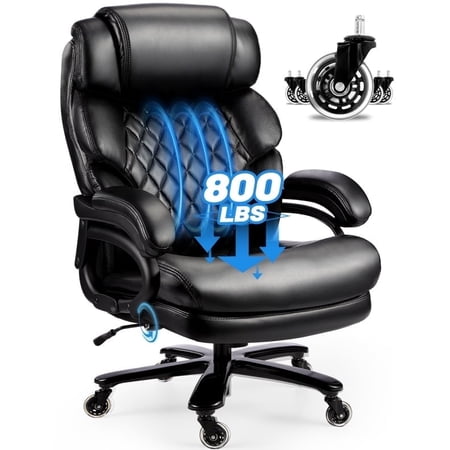
| Typical Weight Capacity | 250–275 lbs | 300–500 lbs |
Step-by-Step Guide: How to Choose Your Comfortable Tall Office Chair
Step 1: Measure Your Proportions
- Seat height needed: Measure from floor to the back of your knee while sitting (popliteal height). Add shoe allowance. This tells you minimum/maximum seat range.
- Backrest height: Measure from your seat bone to your shoulder tip. Add 2–4 inches for headroom.
- Seat depth: Measure from back of knee to hip. Subtract 1–2 inches to avoid pressure behind knees.
Step 2: Prioritize Adjustability Over Fixed "Tall" Size
A fixed tall chair may not fit every tall body. Look for chairs with adjustable lumbar height, seat depth slider, and armrests that move in all directions. This ensures a personalized fit.
Step 3: Consider Your Work Style
Step 4: Check Weight Capacity and Base Stability
For tall users, a 5-star aluminum or reinforced nylon base is a must. Casters should be suitable for your floor type (hardwood vs carpet). A chair rated for 350+ lbs will feel more solid even if you weigh less.
Frequently Asked Questions About Comfortable Tall Office Chairs
Conclusion: Invest in the Right Fit for Your Frame
A comfortable tall office chair is not just about added inches; it's about intelligent ergonomics that respect your body's proportions. By prioritizing adjustable lumbar, a deep seat, multi-directional headrest, and robust build, you're investing in years of pain-free productivity. Whether you opt for a breathable mesh design or a plush leather executive model, ensure it puts your spine in a neutral, supported posture. Your body will thank you at the end of every workday.