
Why Choose a Non-Swivel Office Chair?
In the world of office furniture, swivel chairs have long been the default choice. But for many professionals, the constant ability to rotate is not a feature—it's a distraction. A non-swivel office chair offers a return to simplicity and focus. It provides a stable, grounded seating experience that can enhance concentration, improve safety, and perfectly suit specific work environments. Think of it as the difference between driving a car with a loose steering wheel versus one with precise, direct control.
Industry Insight: Studies on workplace distraction suggest that reducing unnecessary movement can improve cognitive focus by up to 20%. A stationary chair eliminates the subconscious urge to fidget or spin, allowing for deeper engagement with tasks. For roles requiring precision, like drafting or technical support, a fixed chair is not a luxury—it's a necessity.
Key Advantages of a Fixed Seating Solution
📌 Unmatched Stability
Without a swivel mechanism, the chair's base provides a rock-solid foundation. This is particularly beneficial for individuals with balance issues, or for workstations where you need to lean or reach without the chair shifting unexpectedly.
🎯 Enhanced Focus
Removing the ability to spin eliminates a common source of distraction. Your body stays oriented towards your desk, monitor, or work area, promoting a more disciplined and attentive workflow.
🪑 Ideal for Specific Setups
Non-swivel chairs are the perfect companion for standing desks, drafting tables, and reception desks. They offer a comfortable perch without the "loose" feeling of a rolling, rotating stool.
💪 Simplified Durability
With fewer moving parts in the seat connection (no complex swivel plate), these chairs can often boast enhanced structural integrity and longevity, making them a reliable investment.
Common Use Cases for Non-Swivel Chairs
- Reception and Front Desk: Creates a professional, stationary greeting point. The stability projects a sense of calm and order.
- Standing Desk Workstations: A height-adjustable non-swivel stool allows for easy transitions between sitting and standing without the need for a chair that spins or rolls away.
- Drafting and Technical Work: For artists, architects, and engineers who need to lean across a large surface, a fixed chair provides the necessary stability for precise movements.
- Medical and Dental Offices: Practitioners often prefer stationary stools that offer stability and a fixed orientation while working on patients.
- Call Centers and Focused Work: For professionals whose work requires them to remain oriented towards a screen and keyboard, a non-swivel chair eliminates the temptation to turn away from their tasks.
What to Look for in a Quality Non-Swivel Chair
Selecting a non-swivel chair doesn't mean sacrificing ergonomics. In fact, with the right features, you can build a highly supportive and customized workstation. Here’s a checklist of critical features:
| Feature | Why It Matters | What to Look For |
|---|---|---|
| Pneumatic Height Adjustment | Essential for pairing the chair with desks of varying heights, ensuring your elbows and knees are at the correct 90-degree angle. | A reliable gas lift cylinder with a smooth, easy-to-use lever. |
| Contoured Seat Cushion | Even without swivel, you'll be sitting for hours. A well-designed seat with waterfall edge promotes circulation and comfort. | High-density foam, breathable fabric or mesh, and a seat depth that supports your thighs without pressing on the back of your knees. |
| Lumbar Support | Maintains the natural curve of your spine, preventing slouching and lower back fatigue during extended sitting periods. | Integrated or adjustable lumbar pad that fits the contour of your lower back. |
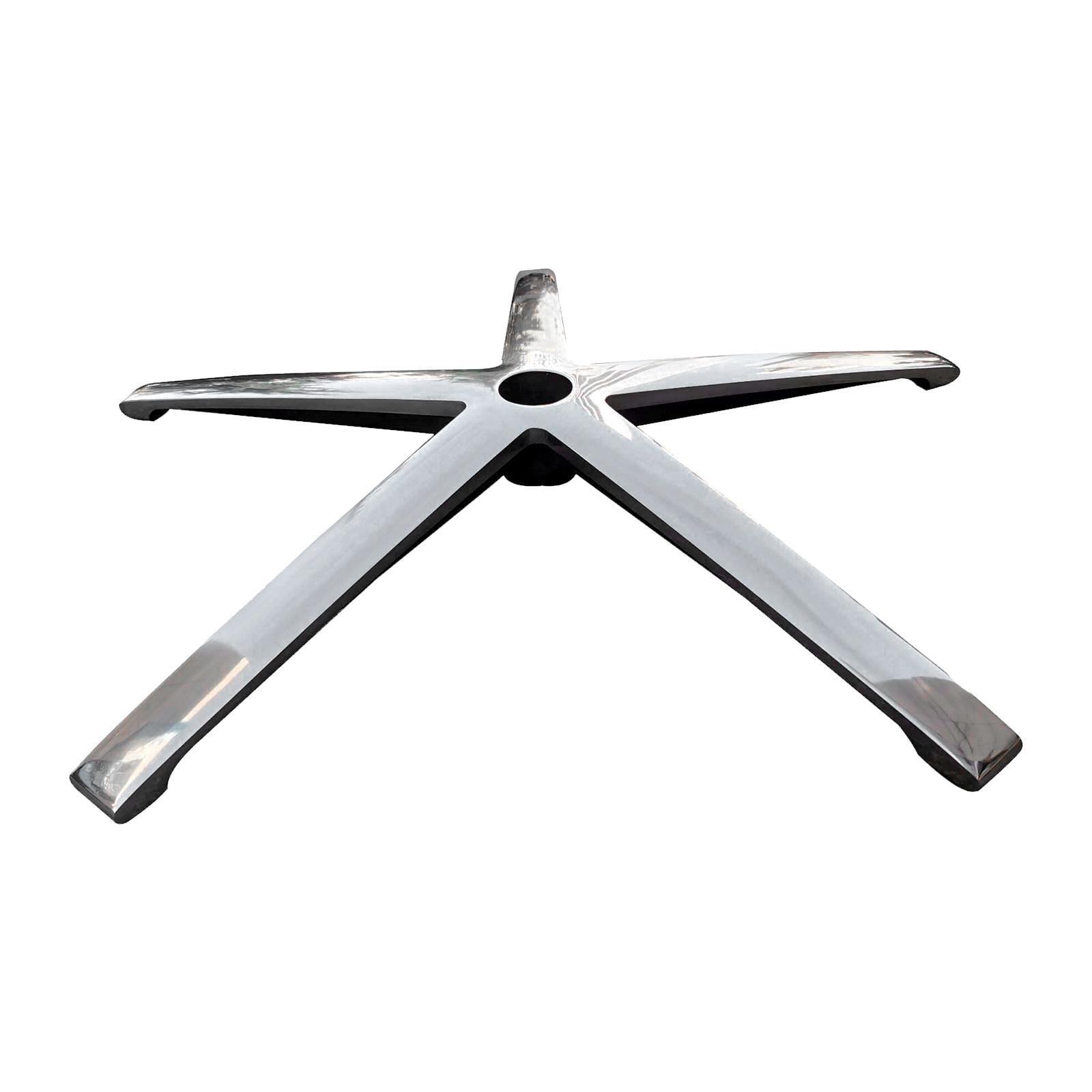
| Sturdy Base | The base is the foundation. A wider, well-constructed base adds to the overall stability of the chair. | Metal base (steel or aluminum) with a wide footprint for maximum stability. |
| Armrests (Optional) | Armrests can relieve shoulder and neck tension. On a non-swivel chair, they can also provide additional support for getting in and out of the seat. | Adjustable or fixed padded armrests that allow your shoulders to relax while your forearms rest comfortably. |
The Psychology of a Fixed Workstation
There is a psychological component to your workspace that is often overlooked. A swivel chair implies movement, openness, and a degree of informality. In contrast, a stationary office chair creates a defined, dedicated space. It anchors you to your work, signaling to your brain that it is time for focused, uninterrupted effort. This is particularly valuable in open-plan offices where visual and auditory distractions are high. By removing the option to easily turn away, you build a stronger mental barrier against interruptions, both from your environment and your own wandering tendencies.
Non-Swivel vs. Swivel: A Quick Comparison
| Characteristic | Non-Swivel Chair | Traditional Swivel Chair |
|---|---|---|
| Primary Benefit | Stability and focused orientation | Mobility and ease of access |
| Best Workspace | Reception, drafting, standing desks, fixed workstations | Collaborative offices, multi-monitor setups, dynamic work |
| Movement | No rotation; may still have height adjustment and tilt | Full 360-degree rotation, often with casters for rolling |
| Durability | Simpler mechanism can lead to increased longevity | More moving parts (swivel plate, casters) can wear over time |
| Ideal User | Individuals seeking minimal distraction, stability-conscious users | Collaborative workers, users who need to reach multiple areas |