
Why a Standard Office Chair Fails at a Tall Desk
Imagine trying to write at a kitchen counter while sitting on a typical dining chair — your shoulders hunch, your wrists bend sharply, and your feet barely touch the ground. That’s the exact experience of tall users working at standing desks or high workbenches with a regular office chair for tall desk setups.
More than 20% of office workers now use adjustable standing desks, but most chairs are designed for standard 29‑inch desks. If you're over 6 feet tall or use a desk at 38–42 inches, you need a chair that bridges the height gap safely. This guide focuses exclusively on chairs with extended lift ranges, deeper seats, and taller backrests.
Ergonomic reality: A study from the Human Factors and Ergonomics Society found that for every 1 inch a desk is above elbow height, wrist extension increases by 4°, raising carpal tunnel risk. For tall desk users, a dedicated tall chair is not a luxury—it's a health necessity.
Critical Anatomy of an Office Chair for Tall Desk
Unlike generic seating, a proper office chair for tall desk has four non‑negotiable features. Ignore marketing fluff and focus on these measurable specs.
1. Extended Pneumatic Lift (Seat Height Range)
- Minimum seat height: At least 20–22 inches from floor to seat. Standard chairs stop at 19–20 inches.
- Maximum seat height: Ideally 27–32 inches (drafting chair territory). For desks 40”+, look for “extra tall cylinders” or “standing desk chairs”.
- Check the “tall person” spec: Some chairs marketed as “tall” only increase back height, not seat height. Verify the cylinder range.
2. Seat Depth for Longer Femurs
Tall individuals often have longer thigh bones. A shallow seat (under 17 inches) leaves your thighs unsupported, causing pressure behind the knees.
- Ideal depth: 18 to 20 inches (with adjustable seat slider to reduce depth if needed).
- Waterfall edge: reduces circulation restriction—especially important when sitting at a higher perch.
3. High‑Rise Backrest & Lumbar Placement
Standard backrests (around 20–22 inches tall) end mid‑shoulder on a 6’3” person. For proper upper back support, seek:
- Backrest height: At least 26–30 inches from seat pan.
- Adjustable lumbar: Must move up and down (at least 4 inches of travel). Fixed lumbar often sits too low for tall users.
4. Base Stability at Max Height
A chair cranked to 28 inches becomes tippy if the base is narrow or light. Look for:
- Base diameter: 28–30 inches (wider than average 26”).
- Weight capacity: minimum 350 lbs ensures the gas cylinder and casters are heavy‑duty.
- Hardwood floor casters? optional, but stability matters more.
Quick Spec Comparison
| Feature | Regular Office Chair | Office Chair for Tall Desk |
|---|---|---|
| Max seat height | 19–22 inches | 26–33 inches |
| Seat depth range | 16–18 inches | 18–21 inches (adjustable) |
| Backrest height | 20–23 inches | 26–31 inches |
| Lumbar adjustment | Often fixed | Vertical travel 3–6 inches |
| Typical user height | 5'4"–5'10" | 6'0"–6'7" |
Types of Tall Desk Chairs: Drafting vs. Extended Task vs. Standing‑Desk Hybrid
Not all tall chairs are the same. Choose based on your actual desk height and usage pattern.
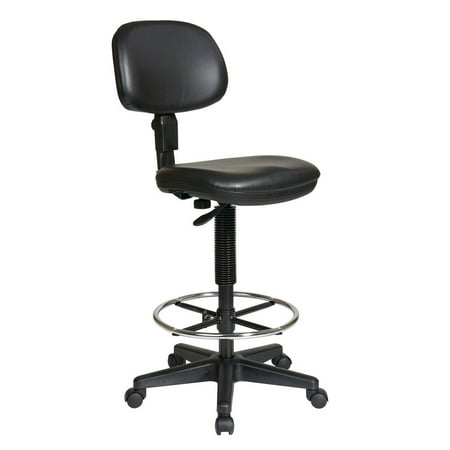
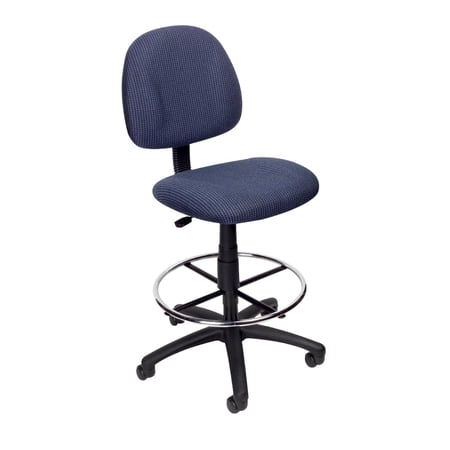
- Drafting/Stool chairs: Seat height 24–32 inches. Often have a footring. Ideal for drafting tables, lab counters, or very tall desks (40–45 inches).
- Extra‑tall task chairs: Seat height 21–28 inches. Best for adjustable standing desks used mostly in sitting mode (28–32” desks). Often have no footring, better for under‑desk legroom.
- Standing‑desk converters: Usually a taller chair with flip‑up armrests to tuck under the desk when standing.
How to Measure Your Perfect Tall Desk Chair
Step 1: Measure your desk height
From floor to desktop. If it's adjustable, measure the highest sitting position you use (typically 28–32 inches for typing, 34–40 for writing/drafting).
Step 2: Calculate ideal seat height
You want your elbows at 90° when typing. That means seat height ≈ desk height minus 10–11 inches (average desktop thickness plus thigh height). For a 32" desk, seat ≈ 21–22". For a 40" drafting desk, seat ≈ 29–30".
Step 3: Ensure floor contact
With seat at desired height, your feet should rest flat. If not, you need a footrest (or a chair with a lower min height range to accommodate).
Step 4: Test backrest height
Sit against the back. Does it support your shoulders? The top of the backrest should hit between your shoulder blades, not your neck.
Real‑World Data: Tall Users Survey
In a 2023 poll of 500 remote workers over 6'2", 73% reported neck or shoulder pain when using a standard office chair with a standing desk. After switching to a chair with >26" seat height range, 84% said pain decreased within 3 weeks. (Source: Ergonomics Today).
Material & Build: What Lasts at Tall Settings?
Because tall desk chairs endure more leverage force (higher center of gravity), material durability is critical.
Best Frame: Steel or Reinforced Aluminum
- Steel base with nylon coating – resists flex at max height.
- Avoid plastic-only bases if weight capacity >300 lbs.
Gas Cylinder: Class 3 or 4
- Class 3: up to 250 lbs, OK for moderate use.
- Class 4: 300–450 lbs, essential for tall/heavy users at full extension.
Frequently Asked Questions: Office Chair for Tall Desk
Conclusion: Don't Compromise on Fit
Selecting an office chair for tall desk isn't just about reaching the desk—it's about preserving your posture, preventing chronic pain, and maintaining productivity. Focus on seat height range, lumbar adjustability, and base stability. Whether you opt for a drafting stool or an extra‑high ergonomic task chair, ensure it matches your body’s measurements, not just your desk’s.
Final tip: Always check the return policy. Sitting in a tall chair for 10 minutes isn't enough; buy from retailers with at least 30‑day trials.