
Why Your Office Chair is Begging for a Lumbar Pad
Imagine trying to hold a heavy book in front of you with just your arm muscles. After a few minutes, your arm starts to shake, and the pain becomes unbearable. That's exactly what your lower back muscles go through when you sit in an office chair without proper lumbar support. They are constantly working, fighting gravity to keep your spine in a healthy position.
A lumbar pad for an office chair acts like a reliable friend who comes along and holds that book for you. It takes the load off your muscles, allowing them to relax. It fills the gap between the curve of your lower back and the flat surface of your chair, preventing the slouching that leads to back pain, fatigue, and long-term spinal issues. For the millions of people working desk jobs, this simple tool is not just an accessory; it's a necessity for long-term health and daily comfort.
Decoding the Perfect Support: A Buyer's Framework
Walking into the world of lumbar supports can feel overwhelming. There are different shapes, materials, and straps. To simplify your search, think of it as a three-step framework: Material, Shape, and Adjustability. Mastering these three elements will lead you to your perfect match.
1. The Material Matrix: Comfort vs. Climate
The material of your lumbar pad dictates not only how it feels but also how it performs over an 8-hour workday. It's the foundation of your support.
- Memory Foam: Think of this as the "custom mold" option. It responds to your body heat, slowly conforming to the unique shape of your back. This provides excellent pressure distribution and a cozy, hugged feeling. It's perfect if you sit still for long periods and want maximum comfort. However, it can retain heat, so it's not the best for hot climates or if you tend to run warm.
- Ventilated Mesh: This is the "cool breeze" option. Mesh pads are designed for airflow. They prevent heat buildup and keep your back cool and dry. The support is often firmer and more consistent. This is the go-to choice for warmer offices or for people who prioritize breathability above all else. It's like the difference between a thick winter blanket and a lightweight summer sheet.
- Gel-Infused Foam: This is the "best of both worlds" hybrid. It takes the conforming comfort of memory foam but infuses it with cooling gel beads to combat heat retention. It offers the pressure relief of foam with the temperature regulation of mesh. It's often a premium choice for those who want comfort without the sweat.
2. The Shape Spectrum: Flat vs. Contoured
Just as chairs come in different shapes, so do lumbar pads. The shape determines how the pad interacts with your spine and the chair's backrest.
- Flat/Rectangular Pads: These are the universal adapters. They provide a general, cushioned support across a wider area. They are excellent for chairs with a flat back or for users who prefer a more subtle, less aggressive push into their back. It's like adding a soft cushion to a firm seat.
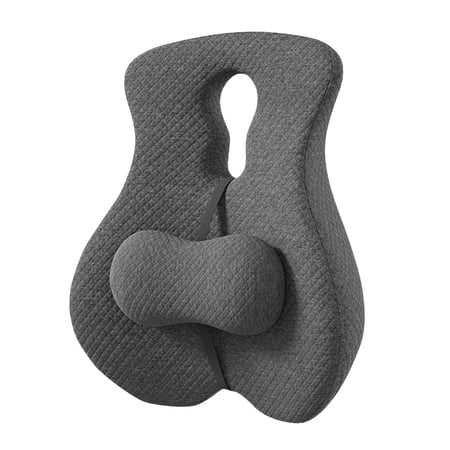
- Contoured/Ergonomic Pads: These are designed with a specific spinal curve in mind. They often feature a raised center that fits precisely into the hollow of your lower back, with wings on the sides for lateral stability. This "wraparound" feeling actively guides your spine into correct alignment. It provides more targeted, orthopedic-style support. It's like the difference between a generic shoe insole and one custom-molded for your foot's arch.
3. The Adjustment Angle: Fixed vs. Strapped
How the pad attaches to your chair is crucial. A pad that slips and slides is worse than no pad at all, as it causes constant fidgeting.
- Non-Slip Backing: Many pads use a rubberized or grippy material on the back. These are simple and effective, relying on friction to stay in place against the chair's mesh or fabric. They are great if you don't move around much in your seat.
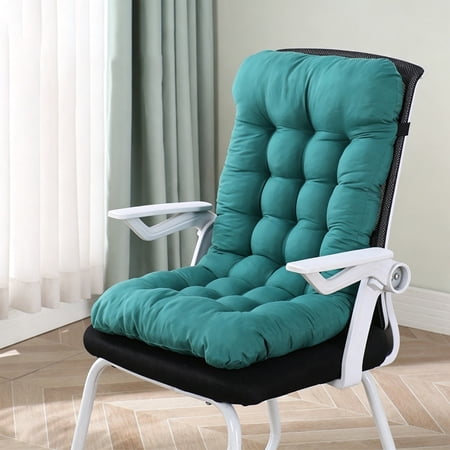
- Elastic Straps: This is the most secure method. Pads with one or two adjustable straps can be tightly fastened around any chair back, ensuring zero movement. This is essential for executive chairs with smooth leather backs where non-slip pads just won't stick. Straps offer the most control over the exact vertical positioning of the pad.
By considering these three factors—Material, Shape, and Adjustability—you move from guessing to choosing. A memory foam, contoured pad with straps is a vastly different product than a mesh, flat, non-slip pad. Knowing the difference is the key to a happy back.
Beyond the Pad: Maximizing Your Ergonomic Setup
A lumbar pad is a powerful tool, but it's most effective when it's part of a holistic ergonomic setup. Think of your chair and workspace as a system.
- Foot Flat, Knees Level: Ensure your feet are flat on the floor and your knees are at a 90-degree angle. This provides a stable base for your whole body and takes pressure off your lower back. If your feet don't reach, a footrest is a must.
- Eye-Level Screen: The top of your monitor should be at or slightly below eye level. This prevents you from craning your neck forward, which creates a chain reaction of poor posture all the way down to your lower back. A lumbar pad can't fix a neck that's bent forward for 8 hours.
- The 90-90-90 Rule: This is a simple checklist. Aim for 90 degrees at your ankles (feet flat), 90 degrees at your knees, and 90 degrees at your hips. A good lumbar pad helps maintain that crucial 90-degree angle at the hips by preventing you from sliding into a slouch.
Integrating a lumbar pad into a well-organized desk is like putting premium fuel in a finely tuned engine. Everything runs smoother, lasts longer, and performs better.
Real-World Impact: What the Data Says
The benefits of lumbar support aren't just anecdotal. Ergonomic research consistently highlights its importance. A study published in the journal 'Spine' found that using a lumbar support can reduce intradiscal pressure (the pressure on your spinal discs) by up to 40% compared to sitting without support. Furthermore, a survey by the American Chiropractic Association revealed that 72% of office workers who added a lumbar support to their chair reported a significant decrease in daily lower back discomfort within two weeks. It's not just about comfort; it's about measurable, physical relief. Investing $30 to $60 in a quality lumbar pad is one of the highest-ROI health investments a desk worker can make.
Frequently Asked Questions About Lumbar Pads
Conclusion: Your Back's Best Friend Awaits
Your office chair is likely the piece of furniture you use most, yet it's often the most neglected. A simple, well-chosen lumbar pad for an office chair is the simplest and most effective upgrade you can make for your daily comfort and long-term spinal health. It's an investment that pays dividends in focus, energy, and a pain-free workday. By understanding the materials, shapes, and how to fit it into your overall workspace, you're not just buying a cushion—you're engineering a healthier, more productive version of yourself. Don't wait for the ache to become a chronic problem. Find the support your back has been asking for.