
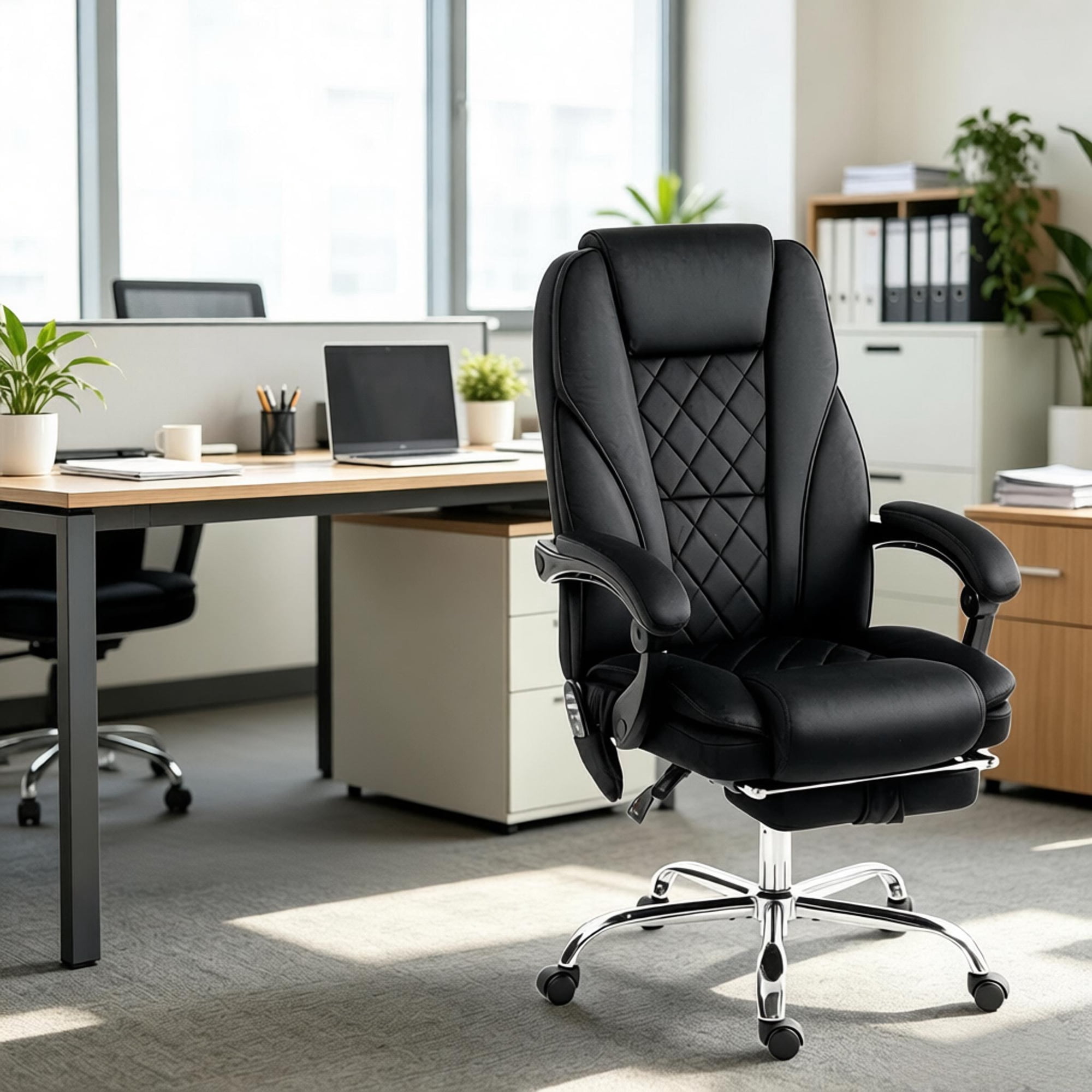
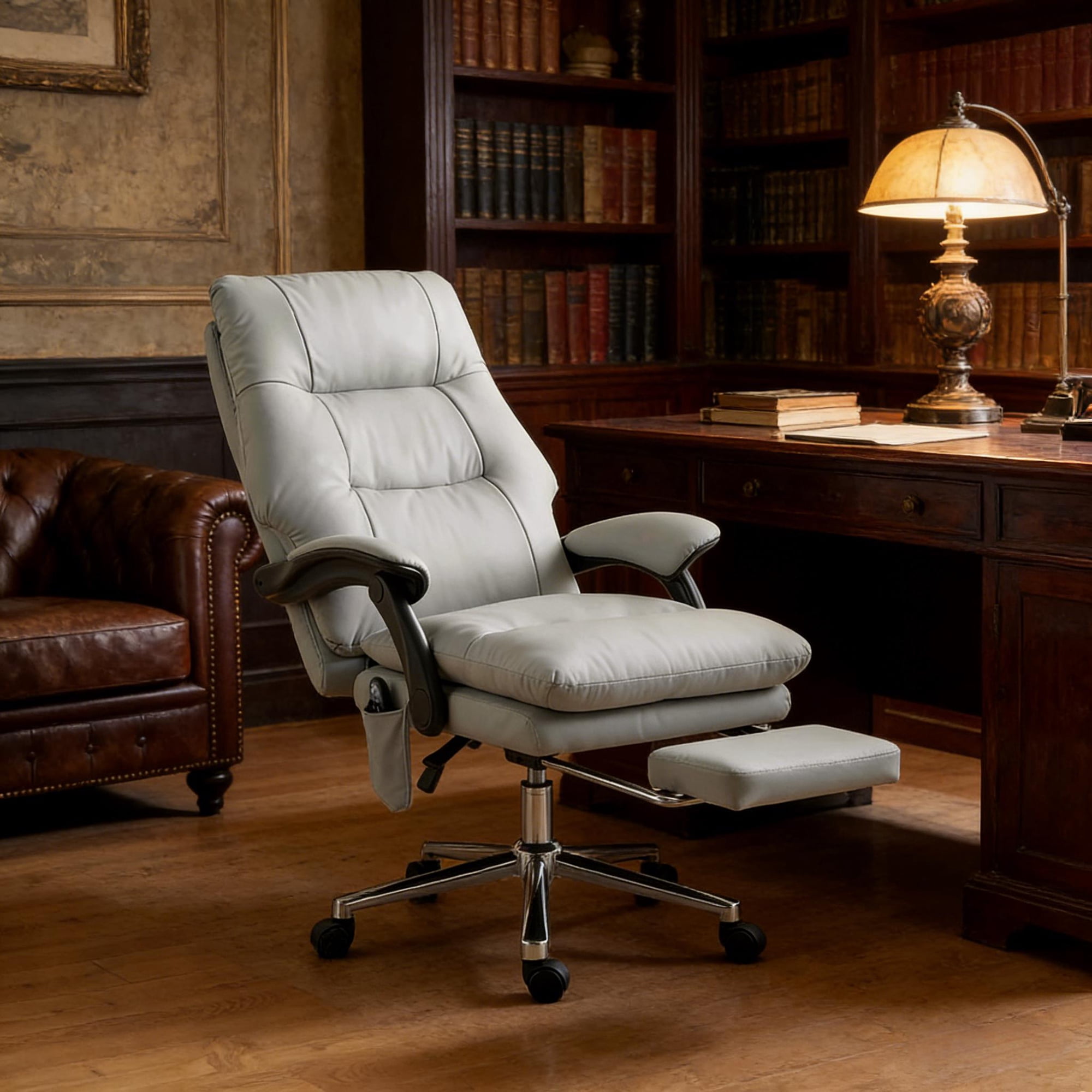
Why Standard Office Chairs Fail — And Why You Need a Giant
If you're over 6'2" or carry a muscular build, you've likely experienced the frustration of squeezing into a "one-size-fits-all" office chair. Armrests dig into your hips, the seat pan feels like a child's stool, and you constantly worry about the mechanism giving out. A giant office chair isn't just a bigger version of a regular chair; it's a completely re-engineered seating solution. Think of it as the difference between a compact car and a heavy-duty pickup truck — both get you from A to B, but only one is built for serious loads and long-haul comfort.
According to ergonomic studies, over 40% of office workers who need extended seating report discomfort due to inadequate chair dimensions. For executives spending 8+ hours at their desk, a giant office chair provides the foundation for better posture, improved circulation, and lasting durability. In this guide, we'll explore the engineering, materials, and features that define a true giant office chair, helping you invest in a throne that supports your success.
Anatomy of a Giant Office Chair: What Makes It Different?
Unlike standard executive chairs, giant office chairs are built from the ground up with reinforced components. Here are the critical differences you must examine before purchasing.
1. Frame Construction: The Skeleton Matters
The frame is the backbone. Standard chairs often use nylon or thin-gauge steel that flexes under heavy loads. A true giant office chair relies on:
- Full steel frame: Minimum 14-gauge welded steel for the seat and backrest. No plastic brackets.
- Reinforced pivot points: Heavy-duty steel plates at the recline mechanism, often rated for 500+ continuous cycles.
- Industrial-grade gas lift: Class 4 or 5 lift (certified by BIFMA) that supports up to 500 lbs without sagging.
Pro tip: Look for chairs certified by BIFMA X5.1 (office seating standard). This ensures the frame has passed rigorous durability and safety tests for heavy-duty use.
2. Seat Dimensions: Room to Breathe
Generous proportions define a giant chair. Here's a comparison to guide you:
- Seat width: Standard = 19-20 inches; Giant = 22-28 inches (allows thighs to rest without compression).
- Seat depth: Standard = 17-19 inches; Giant = 20-24 inches (with adjustment slider to fit long femurs).
- Backrest height: Standard = 20-22 inches; Giant = 26-32 inches (supports entire back including shoulders).
Extra width also means the armrests are spaced farther apart — typically 22 inches between armrests, preventing shoulder hunching.
3. Weight Capacity & Stability
Don't rely on vague marketing. Legitimate giant office chairs publish their weight limit. For safety and longevity, follow this rule of thumb:
Stability also comes from the base. A giant chair must have a 28-30 inch diameter aluminum or steel base (not 26" plastic) and dual-wheel casters (3-inch minimum) to roll smoothly under load.
4. Upholstery & Cushioning: The "Long Haul" Factor
Thin foam compresses quickly under higher weight, leading to "bottoming out." Premium giant chairs use:
- High-density foam: At least 2.5 lb density (compare to cheap 1.8 lb). Often a cold-cured foam that retains shape.
- Reinforced stitching: Double-stitched seams, especially at stress points like armrest mounts.
- Material choice: Top-grain leather or heavy-duty fabric (minimum 100,000 double rubs). Avoid bonded leather — it cracks under pressure.
Some giant chairs also feature cooling gel layers to combat heat buildup, a common issue with larger bodies in leather seats.
5. Ergonomic Adjustments Tailored for Larger Frames
Giant chairs must offer a wider range of adjustment to accommodate diverse body types. Essential features:
- Seat depth slider: 2-3 inches of travel to support thighs properly.
- Lumbar support: Height-adjustable (up to 4 inches) and depth-adjustable to fill the spinal curve.
- 4D armrests: Height, width, angle, and pivot. Width adjustment is critical for broad shoulders.
- Tilt tension: Must be adjustable with a heavy-duty spring to allow reclining without feeling like you're fighting the chair.
A study by the Human Factors and Ergonomics Society found that proper lumbar support in a correctly sized chair reduces spinal disc pressure by up to 35% — a huge benefit for those with higher body mass.
6. Mobility and Floor Protection
Moving a 400 lb person + chair requires heavy-duty casters. Look for:
- Dual-wheel casters (often 3" diameter) to distribute weight and roll smoothly on carpets.
- Hardwood-floor casters (soft rubber) if you have delicate flooring — but ensure they're rated for the weight.
- Caster material: Polyurethane offers a balance of durability and floor protection.
Some giant chairs come with braked casters that lock when weight is applied — a safety feature if you tend to push back forcefully.
Who Exactly Needs a Giant Office Chair? (It’s Not Just Weight)
While weight capacity is the headline, several other profiles benefit from a giant chair:
- The Tall Executive: If you're 6'4" or taller, standard backrests hit your mid-back. A giant chair with a 30"+ back supports your shoulders and neck.
- The Broad-Shouldered Leader: Even at moderate weight, wide shoulders need armrests that adjust outward. Giant chairs provide that lateral space.
- The "Sitter Who Moves": If you frequently shift positions, cross your legs, or sit sideways during calls, the extra width prevents you from constantly readjusting.
- Post-Surgery or Joint Issues: A larger, plusher seat reduces pressure on hips and tailbone for those with medical conditions.
Real-World Data: Why Size Matters
According to the National Institute for Occupational Safety and Health (NIOSH), workers in ill-fitting chairs report 52% more lower back pain. For employees over 250 lbs, the rate of chair-related injuries is three times higher when using standard-duty seating. Investing in a giant office chair isn't a luxury; it's a preventive health measure. A 2022 survey by the Ergonomics Trends Report indicated that 73% of big and tall users experienced significant pain reduction after switching to a properly sized chair.
Frequently Asked Questions About Giant Office Chairs
Conclusion: Invest in a Chair That Matches Your Stature
A giant office chair is more than a piece of furniture — it's a statement that you refuse to compromise on comfort, health, and professionalism. Whether you're a CEO closing deals, a developer immersed in code, or a creative director brainstorming, your chair should support your body without creaking, wobbling, or wearing out. By prioritizing a steel frame, high weight capacity, generous dimensions, and full adjustability, you'll choose a chair that lasts a decade and keeps you pain-free. Use this guide to compare models, read reviews, and if possible, test the seat depth and width. Your back — and your productivity — will thank you.