
The Science Behind Ergonomic Office Chair Kneeling Designs
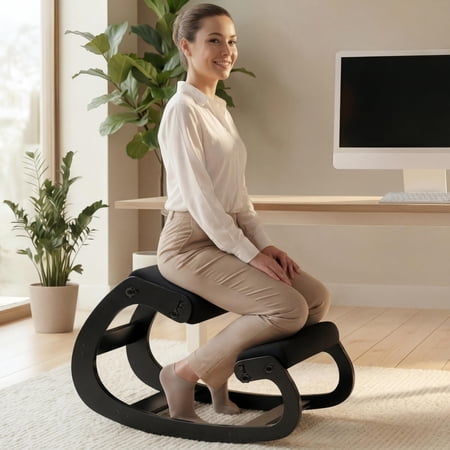
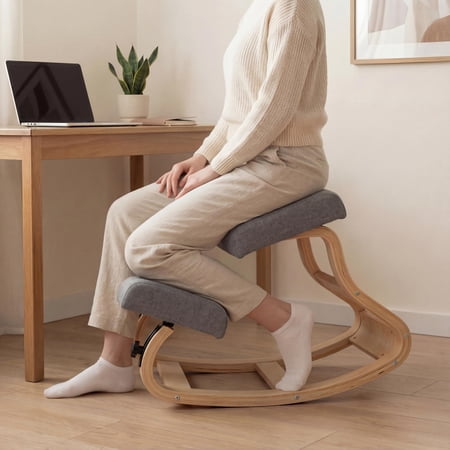
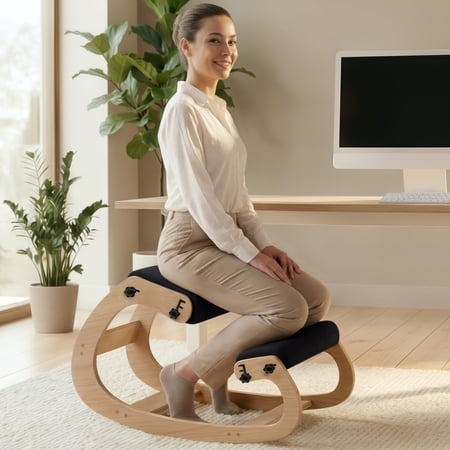
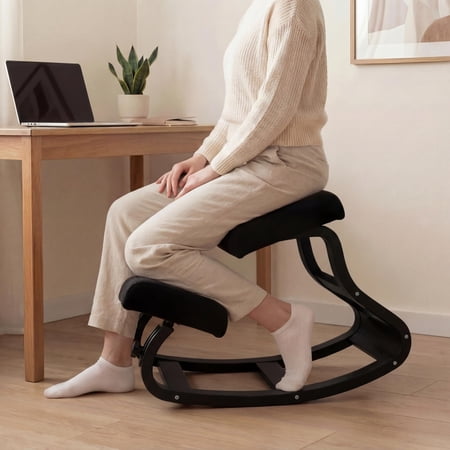
Imagine sitting in a chair that feels less like a throne and more like a yoga pose that's exactly what an ergonomic office chair kneeling offers. Unlike conventional chairs that encourage slouching and promote a 90-degree angle at the hips, kneeling chairs reinvent the very concept of sitting by redistributing your body weight and opening up your hip angle to approximately 130 degrees.
Ergonomic Insight: Research from Cornell University's Department of Ergonomics suggests that the ideal sitting posture involves an open angle of 120-135 degrees between the torso and thighs. Traditional chairs force a 90-degree angle, which increases spinal disc pressure by up to 40% compared to more open positions. Kneeling chairs naturally achieve this optimal angle.
How Kneeling Chairs Transform Your Sitting Experience
The ergonomic office chair kneeling concept works on a brilliantly simple principle: instead of sitting with your legs hanging down, you kneel on padded supports while your buttocks rest on a forward-sloping seat. This position shifts your center of gravity forward, automatically engaging your core muscles to maintain balance. Think of it as the difference between passively slumping on a couch versus actively holding a gentle yoga pose.
Optimal Sitting Angle Comparison
Traditional Chair
High spinal pressure
Kneeling Chair
Optimal spinal alignment
The Biomechanical Advantages
When you sit in a conventional office chair, your body fights against gravity. Your lower back muscles constantly work to keep you upright, leading to fatigue and eventually, slouching. An ergonomic kneeling chair changes this dynamic entirely:
- Reduced spinal compression - The open hip angle decreases pressure on lumbar discs by approximately 35% compared to standard office seating
- Automatic posture correction - The forward-tilting seat makes slouching impossible without sliding forward, training your body into proper alignment
- Core muscle engagement - Your abdominal and back muscles remain lightly active throughout the day, preventing the muscle atrophy associated with prolonged passive sitting
- Improved breathing - The open chest position allows for deeper, more efficient breathing, increasing oxygen flow to your brain
- Better circulation - Unlike chairs that cut off circulation behind the knees, kneeling chairs eliminate pressure on the popliteal vein
Who Benefits Most from Kneeling Office Chairs?
While an ergonomic office chair kneeling design can benefit almost anyone, certain individuals find them particularly transformative:
Desk Workers with Back Pain
Those suffering from chronic lower back pain often experience significant relief as the chair maintains the spine's natural curvature.
Professionals Seeking Better Posture
If you've been told to "sit up straight" your entire life, a kneeling chair makes proper posture the default position.
People Experiencing Afternoon Fatigue
The active sitting component keeps energy levels higher throughout the day by preventing the slump that leads to drowsiness.
Creative Professionals
The slight mobility and active position can enhance focus and creative thinking by improving blood flow and oxygen to the brain.
Kneeling Chair vs. Traditional Office Chair: A Detailed Comparison
Understanding the differences between an ergonomic office chair kneeling design and conventional seating helps you make an informed decision. Each has its place in a well-equipped office, but they serve different primary purposes.
Traditional Ergonomic Chair
- Sitting Angle: 90 degrees at hips and knees
- Muscle Activity: Passive sitting, minimal core engagement
- Spinal Load: Higher pressure on lumbar discs
- Movement: Encourages occasional position changes
- Learning Curve: Familiar to most users
- Best For: Long periods of focused work, meetings
Kneeling Ergonomic Chair
- Sitting Angle: 130 degrees open angle
- Muscle Activity: Active sitting, core engaged
- Spinal Load: Reduced lumbar pressure
- Movement: Natural rocking motion encouraged
- Learning Curve: 1-2 weeks adaptation period
- Best For: Posture correction, back pain relief
The Pros and Cons of Kneeling Chairs
✅ Advantages of Kneeling Chairs
- Superior posture alignment - Maintains the spine's natural S-curve without conscious effort
- Reduced back pain - Many users report immediate reduction in lower back discomfort
- Core strengthening - Light continuous muscle engagement tones abdominal and back muscles
- Improved breathing - Open chest position allows for fuller lung expansion
- Enhanced focus - Active sitting can increase alertness and concentration
- Compact design - Generally smaller footprint than traditional executive chairs
- No armrest dependency - Encourages better shoulder positioning
❌ Limitations to Consider
- Adaptation period required - Initial discomfort as muscles adjust
- Knee and shin pressure - Can be uncomfortable for those with knee issues
- Limited movement range - Less ability to shift positions dramatically
- Not ideal for all tasks - May feel restrictive during long meetings
- Difficult to cross legs - The design prevents leg crossing
- Getting up requires effort - The kneeling position takes a moment to exit
- Style considerations - Unique look may not suit all office aesthetics
How to Choose the Perfect Ergonomic Kneeling Chair
Selecting the right ergonomic office chair kneeling model involves more than just picking the best-rated option. Your body dimensions, work habits, and specific comfort needs all play crucial roles in finding your perfect match.
Key Features to Evaluate
| Feature | Why It Matters | What to Look For |
|---|---|---|
| Knee Pad Cushioning | Directly affects comfort during extended use | High-density foam at least 2 inches thick, contoured shape, breathable cover |
| Seat Padding | Supports your buttocks and distributes weight | Memory foam or multi-layer foam with proper density, waterfall front edge |
| Adjustability Range | Ensures proper fit for your specific body dimensions | Height adjustment (at least 4-6 inches), knee pad distance adjustment, tilt tension control |
| Frame Material & Construction | Determines durability and weight capacity | Steel or reinforced aluminum frame, powder-coated finish, solid welds |
| Base Stability | Prevents tipping during movement | Wide five-point base, non-slip feet or locking casters, low center of gravity |
| Weight Capacity | Safety and longevity consideration | Minimum 250 pounds, higher if needed for your body type |
Step-by-Step Selection Guide
Step 1: Measure Your Body Dimensions
Before shopping, measure your:
- Lower leg length - From floor to the back of your knee when sitting
- Thigh length - From the back of your knee to your hip joint
- Overall height and weight - For proper sizing and weight capacity
Write these measurements down and compare them to the chair's specifications. A chair that's too small will cause knee discomfort; one that's too large won't provide proper support.
Step 2: Consider Your Work Style
Think about how you actually work:
- Do you move frequently? Look for models with casters or glides
- Do you take phone calls? Consider how easily you can stand up and sit down
- Do you shift positions often? Chairs with tilt mechanisms offer more variety
- What's your typical work duration? Longer sessions demand better cushioning
Step 3: Assess Your Physical Condition
Be honest about any physical limitations:
- Knee issues? Look for extra-thick padding and adjustable knee supports
- Back problems? Prioritize models with good lumbar support features
- Limited mobility? Consider how easily you can enter and exit the chair
- Pregnancy? Consult your healthcare provider before using kneeling chairs
Step 4: Test Before You Commit
Pro Tip: If possible, visit a showroom to test kneeling chairs. Sit in each for at least 10-15 minutes. Pay attention to pressure points on your knees and shins, the comfort of the seat, and how natural the position feels. If buying online, choose retailers with generous return policies.
Transitioning to a Kneeling Chair: A Practical Guide
Switching to an ergonomic office chair kneeling design is like starting a new exercise routine your body needs time to adapt. Follow this timeline for a smooth transition that maximizes benefits while minimizing discomfort.
The 3-Week Adaptation Plan
Week 1: Introduction Phase
- Use the kneeling chair for 30-45 minutes at a time, 2-3 times per day
- Alternate with your regular chair between sessions
- Focus on maintaining proper posture, not duration
- Expect some mild discomfort in your legs and core as muscles activate
- Adjust the chair frequently to find your optimal position
Week 2: Building Endurance
- Extend sessions to 1-2 hours at a time
- You might use the chair for half your workday
- Notice how your posture improves even in traditional chairs
- Your legs should feel stronger and more comfortable
- Experiment with the chair's tilt and movement features
Week 3: Full Integration
- Most users can now use the kneeling chair for full workdays
- You may still want breaks, but they're for variety, not relief
- Back pain should be significantly reduced or eliminated
- Core muscles feel engaged but not fatigued
- The position feels natural, even comfortable
Common Challenges and Solutions
| Challenge | Likely Cause | Solution |
|---|---|---|
| Knee pain after 30 minutes | Knee pads too hard or positioned incorrectly | Add extra padding, adjust knee pad distance, ensure weight is on shins not knees |
| Feeling unstable or tippy | Center of gravity too high or base too narrow | Lower the chair, check that both knee pads contact evenly, consider floor mat for stability |
| Numbness in feet | Pressure on nerves behind knees or poor circulation | Adjust so shins bear weight, not feet; take standing breaks; check if chair is too high |
| Lower back still hurts | Chair not adjusted to your body or pre-existing condition | Re-measure and readjust, consider lumbar support add-on, consult healthcare provider |
| Difficulty getting up | Mobility limitations or chair too low | Raise chair height slightly, use arm support nearby, practice the exit motion |
Frequently Asked Questions About Ergonomic Kneeling Chairs
Conclusion: Is a Kneeling Chair Right for You?
An ergonomic office chair kneeling design represents a fundamental shift in how we approach seated work. Instead of fighting against our body's natural design, these chairs work with it, promoting the spinal alignment and muscle engagement that humans evolved for but modern sedentary lifestyles have suppressed.
Making Your Decision
Consider a kneeling chair if:
- You experience chronic lower back pain from traditional office chairs
- You've been told you have poor posture and want to correct it
- You feel fatigued and sluggish after hours of sitting
- You're willing to invest 1-2 weeks in adaptation
- You have no significant knee problems
You might prefer traditional chairs if:
- You have existing knee conditions or limited mobility
- You need to frequently cross your legs while working
- You're not prepared for an adjustment period
- Your office has strict aesthetic requirements
The Balanced Approach: Many ergonomic experts recommend owning both a quality kneeling chair and a traditional ergonomic chair. Alternating between them throughout the day provides the benefits of both: the active posture and core engagement of the kneeling chair combined with the familiarity and variety of traditional seating. This "dynamic sitting" approach may offer the best of both worlds.
Remember that no single chair works perfectly for everyone. Your body is unique, and your comfort should be the ultimate guide. Whether you choose a kneeling chair, a traditional ergonomic chair, or a combination of both, the most important factor is that your seating supports your health, productivity, and long-term wellbeing.