
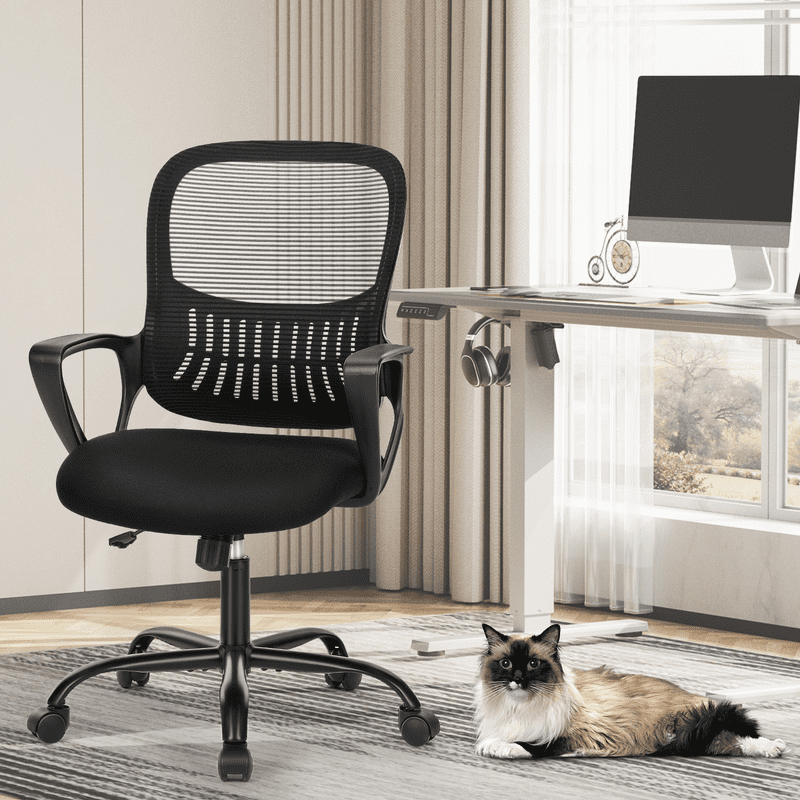
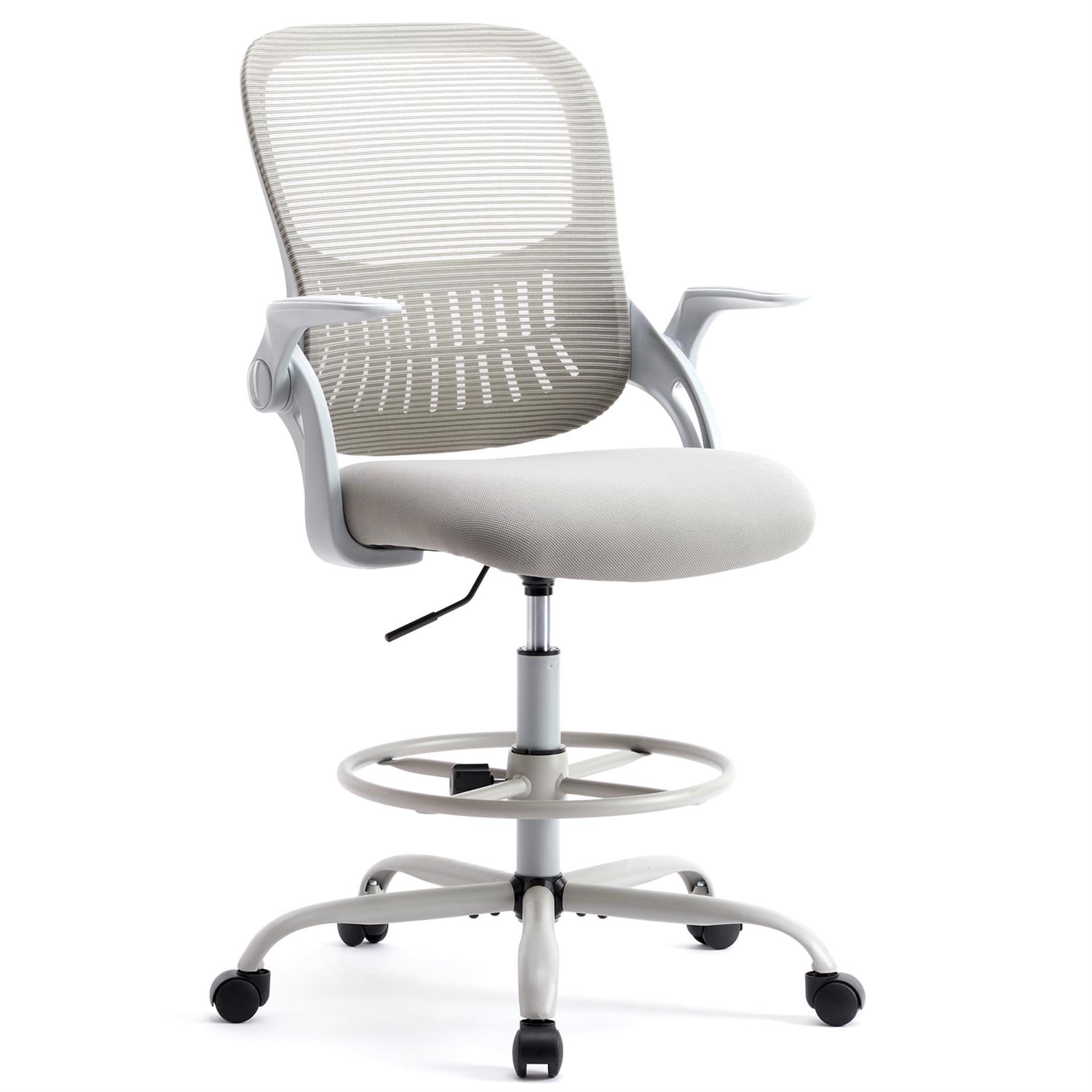
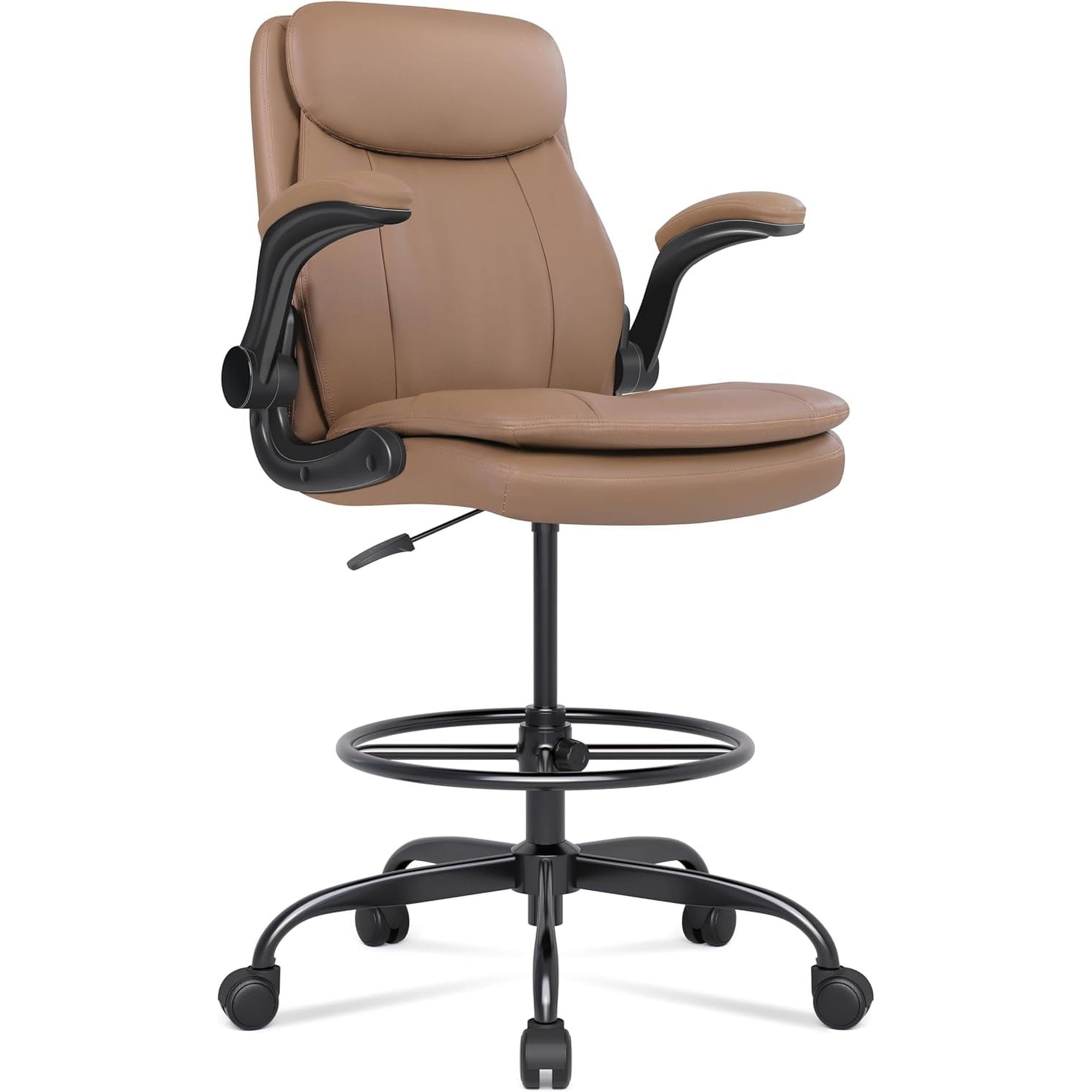
The Overlooked Challenge: Seating at Counter Height for Heavy Individuals
Imagine a sturdy ship’s captain’s chair, but raised to meet a tall laboratory bench or a modern kitchen island. That’s the essence of a counter height office chair for heavy person. Unlike standard task chairs, these seats are built on a taller cylinder—typically 24 to 29 inches from floor to seat—to pair with desks that stand 36 to 42 inches high. For a heavier individual, this isn't just about reaching the keyboard; it’s about finding a chair that won’t wobble, sink, or wear out under increased load at an elevated center of gravity. According to ergonomic data from the National Institute for Occupational Safety and Health (NIOSH), the forces on a chair’s mechanism increase exponentially with height, making robust construction non-negotiable for safety and long-term comfort.
Why this matters: A standard office chair used at a counter height desk forces your elbows to flare out and your shoulders to hunch. For a heavy person, the instability of an over-extended lift can lead to dangerous tipping. A dedicated heavy-duty counter height chair provides a wider footprint, a thicker gauge steel frame, and a class 4 or 5 gas lift—the same technology used in industrial shop stools—to keep you firmly planted.
Anatomy of a Heavy-Duty Counter Height Chair: Beyond the Basics
While a standard chair might have a few levers, a counter height office chair for heavy person is an engineering puzzle. Let’s break down the critical components that separate a temporary stool from a long-term seating investment.
1. The Foundation: Base & Casters
• Base Material: Look for a base made of nylon with steel reinforcement or, ideally, polished aluminum. These materials resist cracking and bending under heavy loads, unlike cheap plastic bases that can snap. The base should have a span of at least 28 inches to provide a stable footprint at height.
• Caster Rating: Dual-wheel casters are standard, but for heavy persons, you need heavy-duty casters rated for your floor type (hardwood vs. carpet). Some chairs offer "hard floor" casters made of softer polyurethane to prevent dents, while still supporting 400+ lbs. If the chair wobbles on its wheels, the casters are the first suspect.
2. The Spine: Gas Lift Mechanism (Class 4 & 5)
The gas cylinder is the most stressed component. For a chair that rises to counter height, you cannot use a class 2 or 3 lift. Insist on:
• Class 4 Lift: Suitable for users up to 400 lbs. These have thicker cylinder walls and heavier hydraulic fluid.
• Class 5 Lift: The gold standard for users over 400 lbs. These are often found in industrial shop chairs and are certified by BIFMA (Business and Institutional Furniture Manufacturers Association) for extreme durability. They ensure the chair won't sink slowly throughout the day.
3. The Platform: Seat Construction
A wider seat is a given, but what’s inside matters more. High-density foam (typically 2.5 to 3.0 lbs per cubic foot) resists compression and "bottoming out." Some premium models use a suspension system—a web of elastic bands beneath the foam—that distributes weight evenly, reducing pressure points on the thighs and hips. For counter height use, a seat depth of 20 to 22 inches is common, allowing for proper thigh support without cutting off circulation behind the knees.
4. The Essential Safety Feature: Adjustable Footring
This is arguably the most important feature for a tall chair. Since your feet may not reach the floor, a 360-degree rotating footring provides a stable place to rest your feet. This:
• Reduces pressure on the backs of your thighs (improving blood flow).
• Provides leverage to adjust your sitting position.
• Prevents you from dangling your legs, which strains the lower back. Look for footrings that are themselves height-adjustable and have a non-slip surface.
Think of it this way: using a standard task chair at a high desk is like driving a compact car on a rocky mountain trail. A counter height office chair for heavy person is the heavy-duty 4x4 truck—built with a reinforced chassis, higher ground clearance (the lift), and all-terrain tires (casters) to handle the job safely.
Quick Comparison: Standard Task Chair vs. Heavy-Duty Counter Height Chair
| Feature | Standard Task Chair | Heavy-Duty Counter Height Chair |
|---|---|---|
| Seat Height Range | 16" – 21" | 24" – 29" (or higher) |
| Gas Lift Class | Class 2 or 3 | Class 4 or 5 (Reinforced) |
| Base Diameter | 24" – 26" | 28" – 30" (Wider for stability) |
| Foot Support | Floor only | Adjustable footring (essential) |
| Typical Weight Capacity | Up to 250 lbs | 350 – 750+ lbs |
Material Considerations for Longevity
✅ Recommended Materials
- Upholstery: Commercial-grade fabric (abrasion-resistant) or heavy-duty vinyl (easy to clean).
- Frame: Steel-reinforced or aluminum base.
- Padding: High-resilience cold foam.
- Gas Lift: BIFMA-rated Class 4/5.
❌ Materials to Avoid
- Upholstery: Thin bonded leather (cracks and peels).
- Base: 100% nylon (flexes over time).
- Padding: Low-density poly-foam (flattens quickly).
- Castors: Single-wheel hard plastic (damages floors).
Ergonomic Adjustments: What to Look For
When you’re elevated, small adjustments have a big impact. Prioritize these features:
- Seat Depth Adjustment (Slider): Crucial for fitting different thigh lengths. It ensures the seat pan supports your legs without pressing behind your knees.
- Backrest Angle & Tension: A synchro-tilt mechanism that allows the seat and back to move together keeps you supported while leaning back. For heavy persons, the tilt tension must be strong enough to prevent sudden reclines.
- Adjustable Lumbar Support: Even at counter height, lower back support is vital. Look for height-adjustable lumbar pads to match the curve of your spine.
- Armrests (Optional but Helpful): If you use armrests, ensure they are width and height adjustable so they can slide under the counter surface. Fixed arms might not fit.
Frequently Asked Questions: Counter Height Chairs for Heavy People
Final Verdict: Invest in Stability, Comfort, and Safety
Choosing a counter height office chair for heavy person is not a decision to take lightly. It’s a purchase that affects your physical well-being, your productivity, and your safety. A cheap, under-spec'd chair at this height is an accident waiting to happen. By focusing on the core components—the gas lift class, the base width, the presence of a footring, and the foam density—you’re investing in a tool that will serve you for years.
Our recommendation is to prioritize chairs with clear BIFMA certification and weight ratings that exceed your current weight by at least 50 lbs. This buffer ensures that the chair operates within its safety margins, providing you with a stable, wobble-free platform whether you're at a standing desk, a laboratory counter, or a home bar. Pair that with the adjustable features we’ve discussed, and you’ll have a seating solution that doesn’t compromise on comfort or durability.