
Finding the Perfect Fit: Why Big and Tall Mesh Office Chairs Matter
If you're a larger individual, you know the struggle of squeezing into standard office chairs that pinch, creak, and leave you sweaty by mid-afternoon. A big and tall mesh office chair is not just a larger version of a regular chair; it's an engineering solution designed to distribute weight evenly, provide targeted support, and keep you cool. Imagine a chair that feels like a breathable, firm handshake around your back—supportive yet airy. That's what quality mesh offers, especially when paired with a reinforced frame. According to ergonomic studies, proper seating can reduce lower back strain by up to 40% for larger users, directly impacting focus and reducing fatigue.
Key Insight: Nearly 50% of office workers who identify as big and tall report chronic back or hip pain linked to inadequate seating. Upgrading to a chair with a weight capacity 100–150 lbs above your weight ensures the chair maintains integrity over years of use.
What Sets Big and Tall Mesh Chairs Apart? A Detailed Look
Unlike standard executive chairs that rely on thick padding, mesh chairs use tensioned fabric to cradle your shape. For big and tall users, this means no more "bottoming out" the foam. Here’s a breakdown of the critical components that make these chairs a game-changer.
1. Reinforced Frame & Base: The Skeleton of Safety
The foundation of any heavy-duty chair is its frame. Look for chairs with a steel-reinforced frame (not just plastic) and a heavy-duty nylon or aluminum base. The base should have a wide footprint (at least 28 inches) for stability. A common mistake is focusing only on the seat, but the base and gas lift cylinder are what prevent catastrophic failure. Always check that the gas lift is Class 4 or 5, designed for higher weights.
- Steel frame construction: prevents twisting and adds years to lifespan.
- Wider base (28-30 inches): ensures the chair doesn't tip during leaning.
- Dual-wheel casters (heavy-duty): roll smoothly under higher loads without breaking.
2. The Mesh Back: Breathability Meets Ergonomic Support
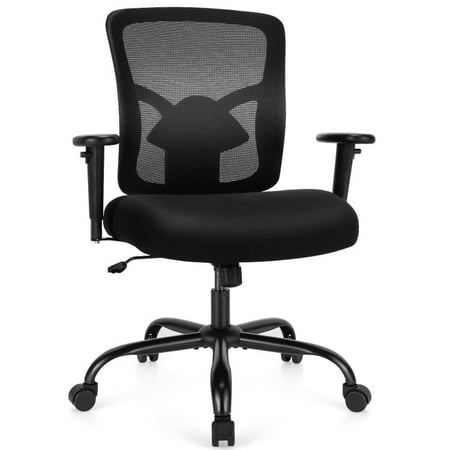
Mesh is ideal for larger bodies because it conforms without creating pressure points. Premium big and tall mesh chairs use a "hammock effect" – the mesh stretches slightly to support the natural S-curve of your spine. This is especially beneficial for those who tend to run warm. Unlike leather, mesh allows air to circulate, reducing sweat accumulation. Look for chairs with integrated lumbar support that can be adjusted in height and depth to fit your specific curve.
3. Seat Dimensions & Cushioning: More Than Just Width
A standard office chair seat is about 19-20 inches wide. For big and tall chairs, you'll want a seat width of at least 22 inches, and often up to 24-26 inches. Seat depth is equally important – too short and your thighs lack support; too long and it presses behind your knees. Look for a seat depth of 19-21 inches. The cushion should be high-density foam (at least 3 inches thick) to prevent the "hard bottom" feeling after an hour. Some chairs even offer a waterfall edge to promote circulation.
4. Adjustment Capabilities: Customizing Your Fit
A big and tall mesh chair must offer extensive adjustments. The more you can tweak, the better the ergonomic fit. Here's a checklist of essential adjustments:
- Seat height adjustment: wide range (18-22 inches from floor) to accommodate taller users and varied desk heights.
- Tilt tension and lock: must be strong enough to support heavier weights without snapping back.
- Adjustable armrests (3D or 4D): height, width, and pivot adjustments prevent shoulder strain.
- Lumbar support adjustment: both height and depth are crucial.
- Headrest adjustment (if included): height and angle adjustability to support the neck for users over 6 feet.
Mesh vs. Leather: A Quick Comparison for Big and Tall Users
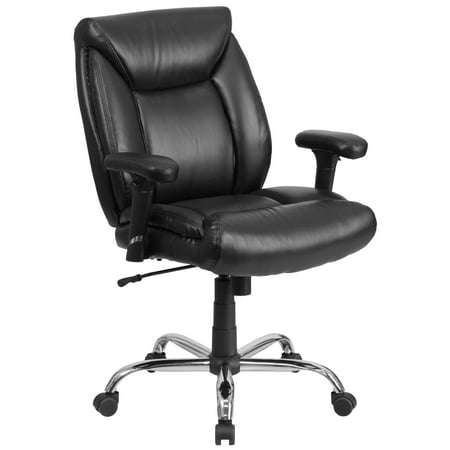
While leather exudes luxury, mesh is often the more practical choice for larger individuals. Leather can trap heat and may crack over time under higher weight due to constant friction. Mesh, on the other hand, is like a running shoe for your office – it's flexible, breathable, and forgiving. However, some users prefer a combination: a mesh back with a cushioned fabric or bonded leather seat. This hybrid approach offers the breathability of mesh with the plush feel of a padded seat. According to user reviews, mesh-back chairs with high-density foam seats are the top choice for those who sit 8+ hours daily.
5. Weight Capacity: Reading Beyond the Label
Manufacturers list weight capacities, but it's wise to look for chairs tested by independent labs like BIFMA (Business and Institutional Furniture Manufacturers Association). A chair rated for 400 lbs by BIFMA has undergone rigorous testing. Don't just meet the number – exceed it by 50-100 lbs for a safety margin. This ensures the tilt mechanism and gas lift won't fail prematurely. For example, if you weigh 300 lbs, choose a chair rated for at least 400 lbs.
No More Heat Build-up
Mesh promotes airflow, keeping you cool during marathon work sessions.
Tailored Lumbar Support
Adjustable mesh backs target the exact curve of your spine.
Robust Durability
Steel frames and reinforced components last years longer.
Wider Seating Area
Eliminates the feeling of being squeezed into a standard chair.
Step-by-Step Guide to Choosing Your Big and Tall Mesh Chair
Step 1: Measure Your Space and Yourself
Measure your desk height, the width of your current chair space, and your own dimensions (seat width needed, height from floor to knee). This ensures the new chair will fit physically and proportionally.
Step 2: Prioritize the Frame and Mechanism
Narrow down chairs with all-metal frame components and a Class 4 or 5 gas lift. Check the warranty on these parts – 10 years is ideal.
Step 3: Evaluate the Mesh Tension
If possible, test the chair or read reviews about the mesh firmness. It should be firm enough to support but have a slight give. Loose mesh will sag.
Step 4: Check Armrest and Lumbar Adjustability
Ensure armrests can be widened enough for your shoulders and that lumbar support hits your lower back correctly. Look for metal-reinforced armrests, as plastic can snap under pressure.
Step 5: Consider the Casters and Floor Type
For carpet, standard casters work; for hardwood, you'll need soft rubber casters to avoid scratches. Many heavy-duty chairs come with dual-wheel casters that distribute weight better.