
The Rising Appeal of Stationary Office Chairs: Style Meets Functionality
In the world of office furniture, wheels have long been considered a standard feature—almost a given. But imagine this: you've just invested in beautiful hardwood floors for your home office, or perhaps you're designing a sleek reception area where chairs need to stay perfectly placed. Suddenly, those standard casters become less of a convenience and more of a liability. This is where the stylish office chair no wheels enters the spotlight, offering a sophisticated alternative that's gaining traction among design-conscious professionals and homeowners alike.
Why "No Wheels" Doesn't Mean "No Movement"
The misconception about stationary chairs is that they confine you to one spot. However, modern designs often incorporate 360-degree swivel mechanisms on fixed bases, giving you rotational freedom without the rolling. It's like the difference between a car that drives and one that simply turns in place—both offer mobility, just in different forms. According to interior design trends tracked in 2023, searches for stationary office chairs increased by 47% as more professionals began working from home and became conscious of floor protection and aesthetic cohesion.
Think of a stylish office chair without wheels as the "little black dress" of office furniture—timeless, versatile, and always appropriate. Whether your workspace leans toward minimalist Scandinavian designs, rich mid-century modern aesthetics, or industrial chic, there's a stationary chair that anchors the room without the visual clutter of casters. These chairs communicate intentionality; they say, "This space was designed, not just assembled."
Understanding the Stylish Stationary Office Chair Ecosystem
Before diving into specific recommendations, it's essential to understand that "stylish office chair no wheels" encompasses several distinct categories. Each serves different purposes and suits different work styles. Let's explore the landscape of stationary seating.
1. The Four Pillars of Stationary Office Chair Design
Pedestal Base Chairs
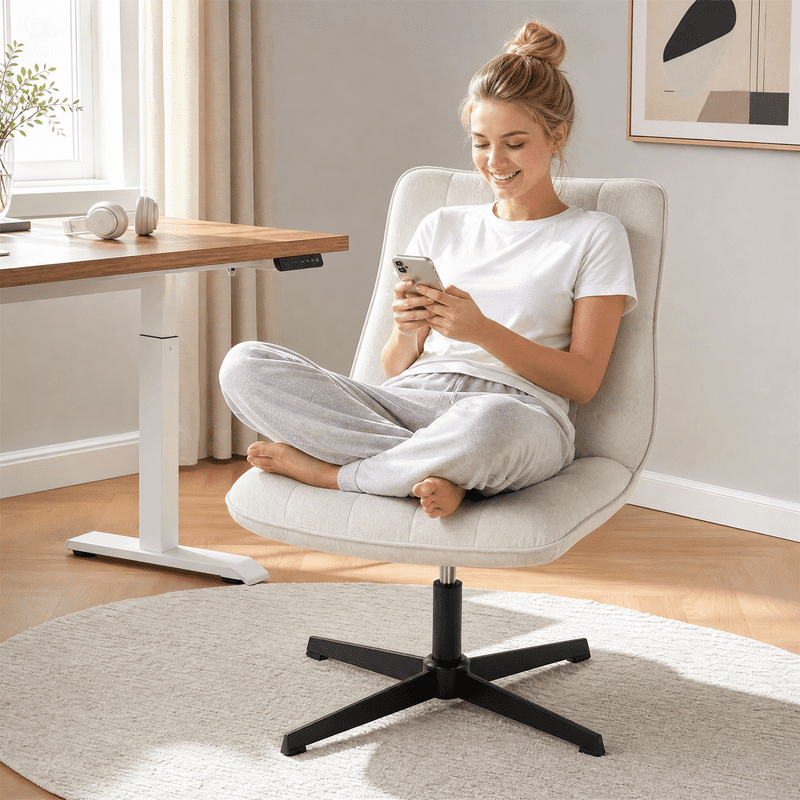
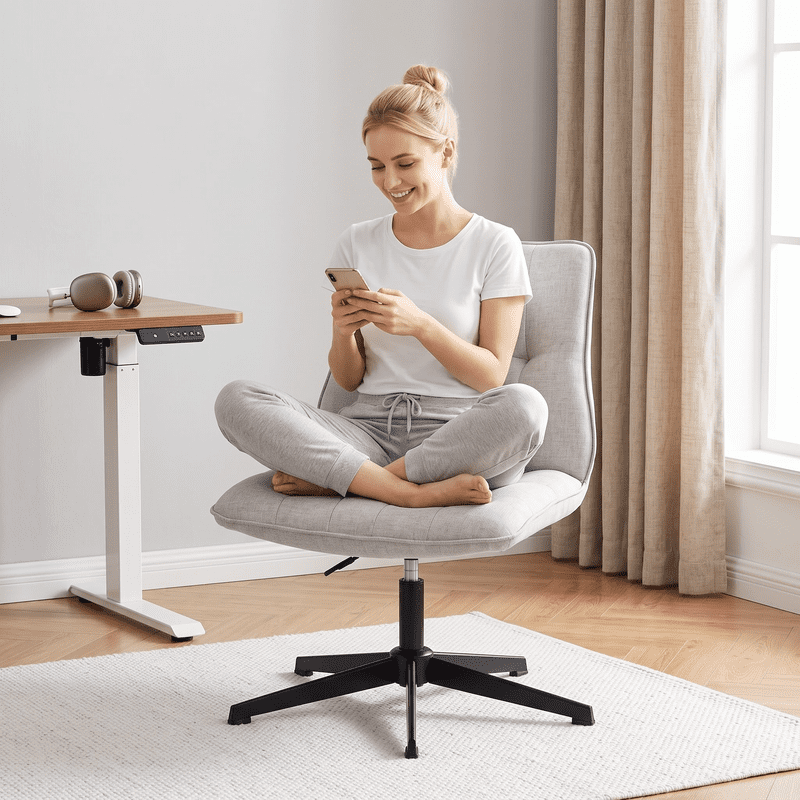
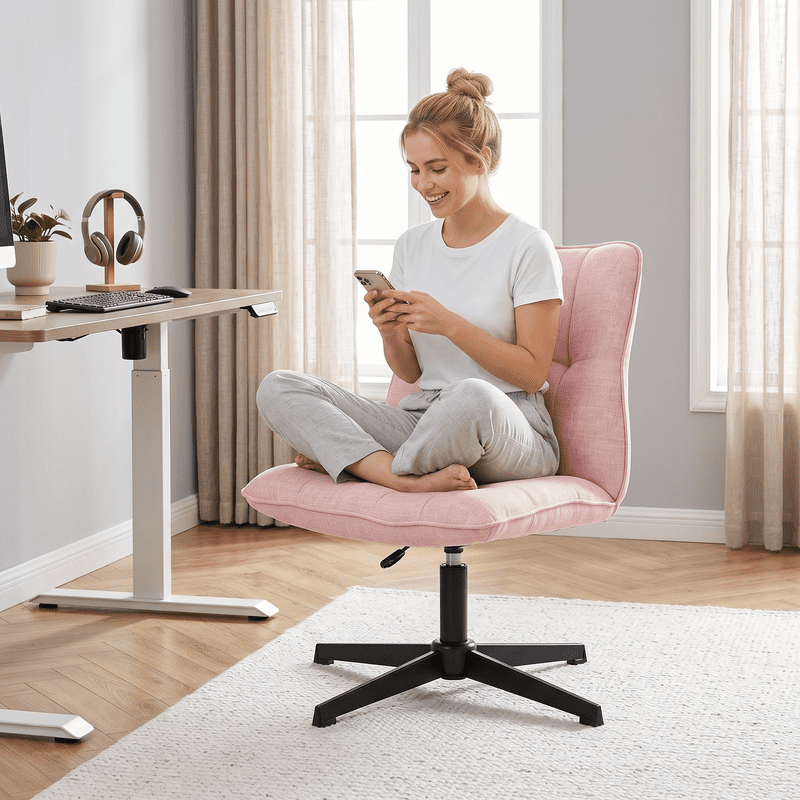
These feature a single central column attached to a wide, stable base. They often swivel 360 degrees and may include height adjustment, all without a single wheel. The base is typically weighted for stability.
Sled Base Chairs
Characterized by a continuous metal frame that forms both the legs and the back support, sled base chairs offer a modern, streamlined look. They don't swivel but provide excellent stability and a distinctive aesthetic.
Four-Legged Classics
Think of traditional dining chairs elevated to office standards. These feature four independent legs, often with crossbars for stability, and can range from rustic wood to polished chrome with upholstered seats.
Swivel Gliders
A hybrid category where the chair swivels on a fixed base but also includes a gentle gliding mechanism. This provides subtle movement for those who like to rock slightly while maintaining a stationary position.
2. Material Matters: What Makes a Stationary Chair "Stylish"?
The style factor in a no-wheel office chair comes down to three critical elements: silhouette, material, and finish. Unlike rolling chairs that often prioritize function over form, stationary chairs borrow design languages from the world of interior furniture.
- Velvet and Chenille: These plush fabrics add texture and warmth to an office, available in jewel tones like emerald, sapphire, and burgundy for a luxurious feel.
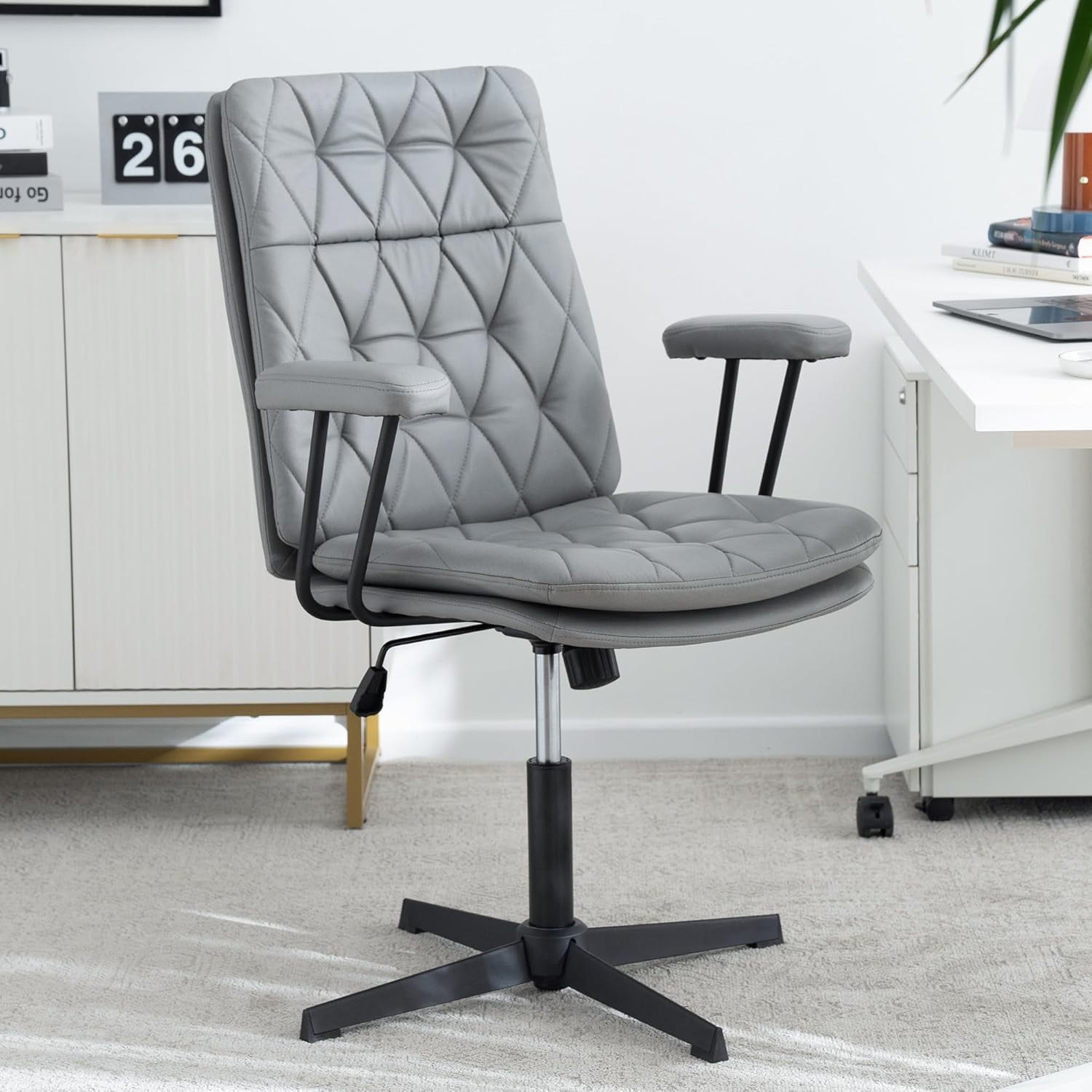
- Leather and Faux Leather: Provide a classic executive appearance with easy cleaning. Look for top-grain leather in traditional brown or modern blush and gray tones.
- Wood Accents: Walnut, oak, and maple legs or frames bring organic warmth and complement wooden desks beautifully.
- Metal Finishes: Brushed brass, matte black, and polished chrome bases add contemporary edge and industrial sophistication.
- Mixed Materials: The most stylish chairs combine elements—think velvet seat with brass legs, or leather cushion on a walnut frame.
3. Where Stationary Chairs Excel: Perfect Placement Guide
Understanding where a stylish office chair no wheels performs best helps you make the right choice for your specific environment.
Hardwood Floor Protection
If you've ever watched an inexpensive rolling chair slowly scratch and dull your beautiful hardwood floors, you understand the appeal of stationary chairs. Even with "floor-friendly" casters, over time, debris gets caught in wheels and acts like sandpaper. Stationary chairs with felt glides or wide feet distribute weight evenly and protect flooring investments. According to floor manufacturers, stationary chairs can extend the life of hardwood finishes by up to 60% compared to rolling chairs, even those with soft casters.
Reception Areas and Client Spaces
In professional settings where chairs need to remain orderly, stationary designs are essential. Imagine a waiting room where chairs slowly migrate across the floor throughout the day—it looks unprofessional and requires constant rearrangement. Fixed-base chairs maintain their positions while still offering comfort and style. Hotels, medical offices, and law firms increasingly specify stationary seating for this very reason.
The Writing Desk Renaissance
With the resurgence of analog activities like journaling, letter writing, and sketching, dedicated writing desks have returned to popularity. These spaces call for chairs that complement rather than compete with the desk's aesthetic. A delicate writing desk paired with a bulky rolling task chair creates visual dissonance. A graceful stationary chair, however, completes the picture harmoniously.
4. Ergonomics Without Wheels: Is It Possible?
A common concern about stylish office chairs without wheels is whether they can provide adequate ergonomic support for full-time work. The answer is a qualified yes—with important caveats. Here's what to look for:
Essential Ergonomic Features for Stationary Chairs
| Feature | Why It Matters | What to Look For |
|---|---|---|
| Seat Height Adjustability | Ensures feet rest flat on floor, thighs parallel to ground | Gas lift mechanism (even on stationary bases) or fixed height that matches your desk |
| Lumbar Support | Prevents lower back fatigue during long sitting sessions | Built-in curved backrest or separate lumbar cushion that maintains position |
| Seat Depth | Allows proper circulation behind knees (2-3 finger gap) | Waterfall edge design and appropriate seat depth for your leg length |
| Backrest Angle | Supports natural spine curvature and allows position changes | Slightly reclined backrest (100-110 degrees) or adjustable recline mechanism |
| Cushion Density | Prevents "bottoming out" and maintains support over time | High-density foam (2.5-3.0 lb density) that retains shape |
Ergonomic Reality Check: A study published in the Journal of Ergonomics found that while rolling chairs offer movement flexibility, stationary chairs with proper lumbar support and seat contouring can provide equal comfort for desk workers who don't require frequent repositioning across the workspace. The key is matching the chair to your work style—if you constantly reach for files or equipment around your desk, a swivel function (without wheels) may be sufficient.
5. Style Categories: Finding Your Aesthetic Match
Let's explore the most popular style categories for stationary office chairs, complete with defining characteristics and ideal settings.
Mid-Century Modern Revival
The mid-century modern aesthetic has dominated interior design for years, and stationary office chairs are perfect vehicles for this look. Characterized by clean lines, organic curves, and tapered wooden legs, these chairs often feature upholstered seats and backs in wool, tweed, or leather. They work beautifully in spaces with wooden desks, geometric patterns, and warm color palettes.
Scandinavian Minimalism
Nordic design principles emphasize simplicity, functionality, and beauty. Scandinavian-style stationary chairs feature pale woods (birch, ash), light-colored upholstery, and understated silhouettes. They're ideal for small spaces because their visual lightness prevents the room from feeling crowded. Many incorporate ergonomic curves while maintaining clean aesthetics.
Industrial Chic
For loft-style offices or creative workspaces, industrial stationary chairs combine metal frames with leather or canvas seats. Think exposed rivets, matte black steel, and utilitarian forms. These chairs add edge to a space and pair well with concrete floors, exposed brick, and large windows. Despite their rugged appearance, many include surprisingly comfortable cushioning.
Hollywood Regency Glamour
If your style runs toward drama and luxury, Hollywood Regency stationary chairs deliver. Velvet upholstery in rich colors, tufted backs, gold or brass legs, and curved silhouettes create seating that makes a statement. These are perfect for executive offices, home styling studios, or any space where confidence is key.
Contemporary Eclectic
Perhaps the broadest category, contemporary eclectic chairs mix elements from various styles. You might find a chair with a sleek modern silhouette upholstered in a bold pattern, or a classic wingback shape updated with bright colors. These chairs work well when you want to inject personality into a neutral office scheme.
6. Practical Considerations Before Purchasing
Before falling in love with a particular stylish office chair no wheels, consider these practical factors:
Desk Height Compatibility
Standard desk height is 29-30 inches. If your stationary chair has adjustable height, you're safe. If it's fixed-height, measure carefully. The ideal position allows your elbows to rest at 90 degrees when typing and your feet to rest flat. For writing desks, which are often slightly lower (28-29 inches), a lower chair may be appropriate.
Floor Surface and Glides
Consider what type of floor the chair will rest on. Hard floors need felt or nylon glides that won't scratch. Carpets need wider feet or glides that won't sink into the pile. Some stationary chairs come with interchangeable glides; others may require aftermarket solutions.
Mobility Needs Assessment
Be honest about how much you move during your workday. If you frequently swivel between monitors, reach for reference materials, or turn to speak with colleagues, a swivel-base stationary chair is essential. If you sit facing one direction for hours, a fixed four-leg design may suffice. For those who need occasional repositioning, consider a lightweight chair that's easy to lift and move when necessary.
Weight Capacity and Durability
Stationary chairs should specify weight limits just like rolling chairs. Look for reinforced frames, particularly in the joints where legs meet the seat. For four-leg designs, corner blocks (wooden reinforcements in the joints) indicate better construction. For pedestal bases, check the stability—the base should be wide enough to prevent tipping when you lean.
7. Maintenance and Longevity
One advantage of stylish stationary chairs is their often-simplified maintenance. Without wheels and complex mechanisms, there's less to break. However, different materials require different care:
- Upholstery Care: Vacuum fabric chairs weekly to prevent dust buildup. For spills, blot immediately—never rub. Professional cleaning annually extends life.
- Leather Maintenance: Wipe with a dry cloth weekly. Apply leather conditioner every 6-12 months to prevent drying and cracking.
- Wood Care: Dust wooden legs regularly. Use furniture polish occasionally, avoiding silicone-based products that can build up.
- Metal Finishes: Wipe with a damp cloth and dry immediately. Avoid abrasive cleaners that can scratch finishes.
- Mechanism Check: For swivel bases, listen for squeaks and apply silicone lubricant if needed. Tighten any loose bolts annually.
With proper care, a quality stationary office chair should last 10-15 years—often longer than rolling chairs with more moving parts.
8. The Environmental Angle
Sustainability-minded professionals appreciate that stationary chairs without wheels often have a smaller environmental footprint. Fewer materials (no casters, simpler mechanisms) mean less resource consumption. Additionally, the longevity factor means fewer chairs end up in landfills. Many stylish stationary chairs are also easier to reupholster when styles change or fabrics wear, further extending their useful life. According to the Sustainable Furnishings Council, choosing furniture with longer lifecycles and repairability can reduce a home office's carbon footprint by up to 30% over a decade.
Frequently Asked Questions About Stylish Office Chairs Without Wheels
Conclusion: Making the Right Choice for Your Space and Style
The world of stylish office chairs without wheels offers far more variety and sophistication than many professionals realize. From protecting cherished hardwood floors to making a design statement that rolling chairs simply can't match, stationary seating deserves serious consideration for any office—whether corporate or home-based.
As you evaluate options, remember that "stylish" doesn't have to mean sacrificing comfort, and "stationary" doesn't mean static. Modern designs incorporate swivel mechanisms, gentle glides, and ergonomic features that rival their rolling counterparts. The key is understanding your specific needs: How many hours will you sit daily? What's your floor type? Does your desk allow for fixed-height seating? What aesthetic speaks to your professional identity?
Final Thought: The best office chair isn't necessarily the one with the most wheels or the highest price tag. It's the chair that disappears beneath you—the one that supports your body so well you forget you're sitting, and complements your space so perfectly you can't imagine the room without it. For many, that ideal chair has no wheels at all.
Whether you're drawn to the clean lines of Scandinavian design, the warmth of mid-century wood, or the glamour of velvet tufting, there's a stationary chair waiting to become the anchor of your workspace. Take your time, test when possible, and choose a chair that will serve both your body and your space for years to come.