
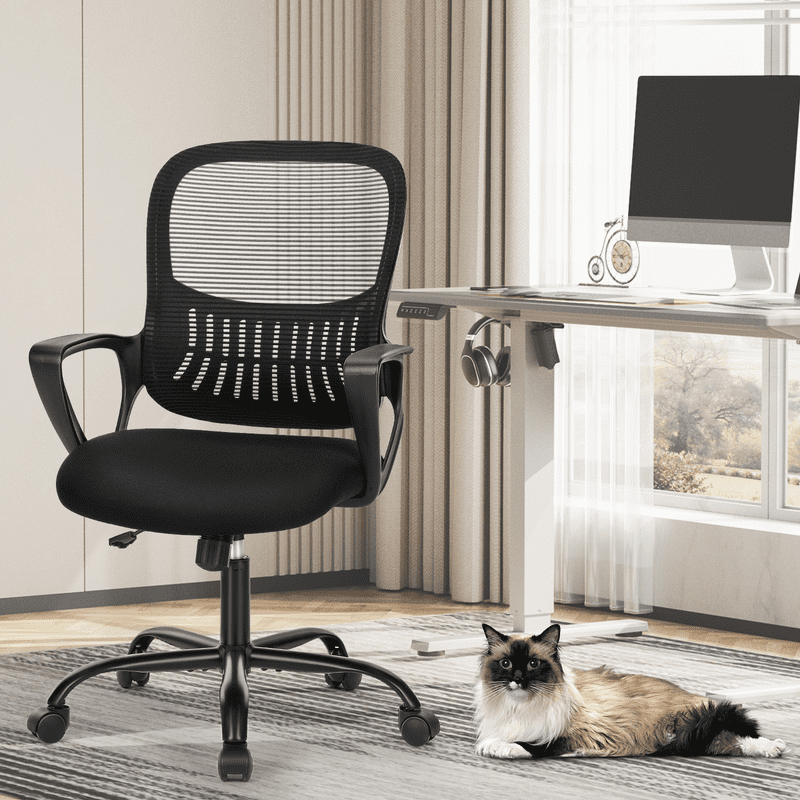

Why Choose a Standing Height Office Chair?
If you've recently switched to a standing desk or are working with a high countertop, a standing height office chair, often called a drafting chair or tall stool, is an essential piece of equipment. These chairs are uniquely designed to bridge the gap between sitting and standing, offering you the flexibility to change postures throughout your workday.
Did You Know? Studies show that alternating between sitting and standing throughout the day can boost energy levels by up to 25% and significantly reduce the risk of back pain associated with prolonged sitting. A standing height chair is your tool for this dynamic workflow.
Key Features of Standing Height Office Chairs
Standing height chairs are more than just tall chairs. They come equipped with specific features to support your unique workstation and body.
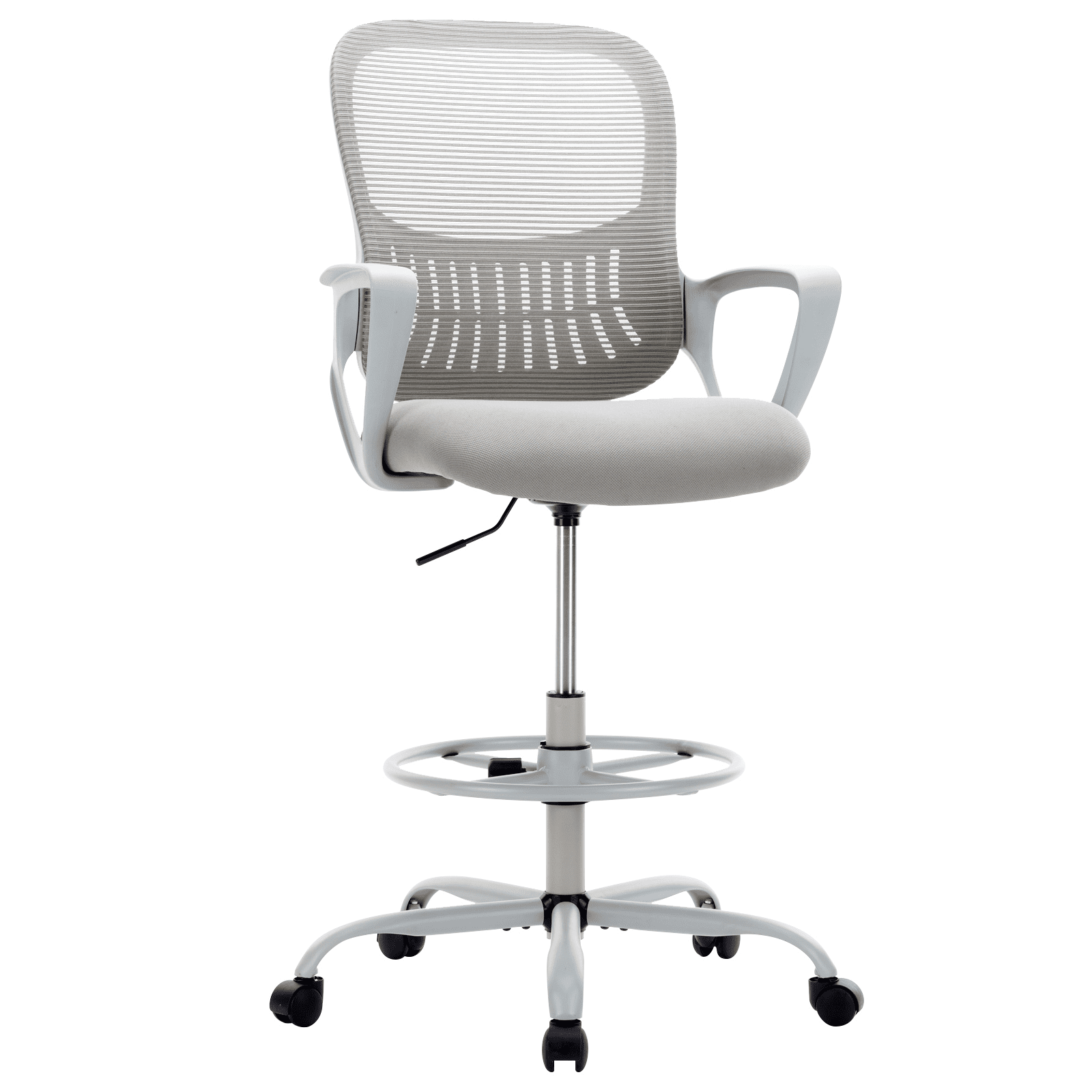
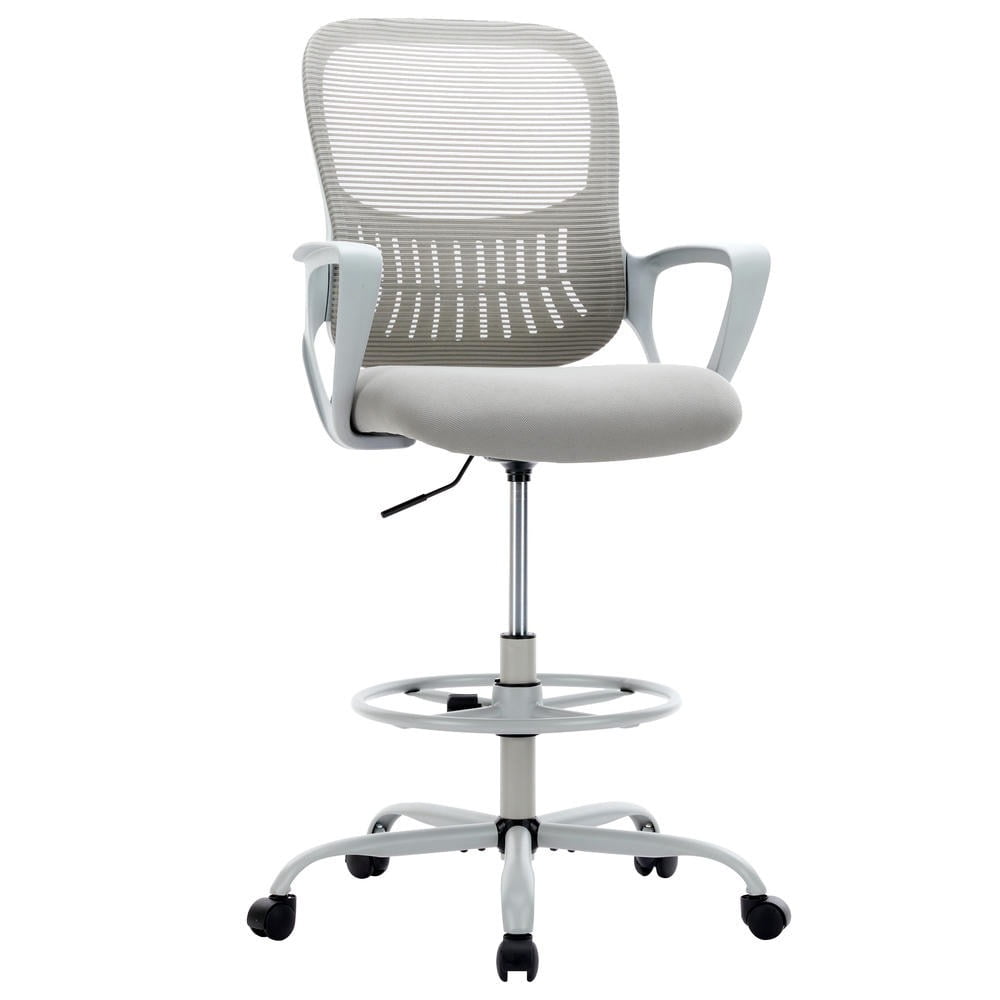
- Extended Height Range: The hallmark of a standing height chair is its pneumatic lift that allows for seat heights between 20 and 32 inches, positioning you comfortably in front of a standing desk.
- Footrest Ring: A circular ring or footrest bar is a crucial feature. It allows your feet to rest naturally, taking pressure off your lower back and legs, especially since your feet won't touch the floor at this height.
- Compact & Lightweight: Many models are designed with a smaller footprint or are easy to move, making them perfect for dynamic, multi-purpose office spaces.
- Ergonomic Support: Look for features like adjustable lumbar support, a contoured seat, and padded armrests for maximum comfort, even during long work sessions.
Choosing the Right Chair for Your Workspace
Selecting the ideal standing height office chair involves considering your desk's height, your own body, and how you plan to use it. Here's a quick guide:
| Consideration | Why It Matters | What to Look For |
|---|---|---|
| Desk Height | Your chair must adjust to a height where your elbows are at a 90-degree angle to the desk surface. | Check the chair's maximum seat height. It should exceed your desk height by at least 6-8 inches. |
| Footrest Ring | Essential for comfortable leg positioning and reducing lower back strain. | Look for adjustable footrest rings that can be positioned to fit your leg length perfectly. |
| Seat Comfort | You'll likely be alternating between sitting and standing, but the sitting time can still be long. | High-density foam, waterfall seat edge, and contoured seat are important for pressure distribution. |
| Mobility | Easily glide from your desk to another part of the room without having to stand up. | Dual-wheel casters that are smooth-rolling and designed for your floor type (carpet or hardwood). |
| Weight Capacity | Ensures durability and safety for daily use. | Look for a chair with a weight capacity that comfortably exceeds your weight. A minimum of 250 lbs is recommended. |
The Health Benefits of a Standing Height Chair
While a standing desk promotes movement, a standing height chair offers the perfect counterbalance. Here's how it can benefit your health:
Improved Posture
Designed to promote a tall, upright posture, preventing the slouching that's common with traditional chairs at high desks.
Reduced Back Pain
Proper foot and leg support reduces pressure on the lumbar spine, a common area of pain for tall and standing-desk users.
Better Circulation
The footrest ring helps keep your legs at a healthy angle, promoting good blood flow and reducing the risk of varicose veins.
Increased Energy
By making it easier to alternate between sitting and standing, you keep your body active and your mind engaged, combating the afternoon slump.
Types of Standing Height Office Chairs
Not all standing height chairs are created equal. There are several types, each suited to different needs and working styles. Understanding the differences will help you make the right choice.
1. Standard Drafting Stools
These are the most common type of standing height chairs. They feature a simple, functional design with a focus on height adjustability and a footrest ring. They are great for general use with any high work surface.
- Best for: General use with standing desks, drafting tables, and high counters.
- Key Features: Pneumatic height adjustment, circular footrest ring, padded seat, and usually a backrest.
2. Ergonomic Standing Chairs
This category includes chairs designed with advanced ergonomic principles. They often feature adjustable lumbar support, tilting seats, and more complex backrests to provide dynamic support for your spine while sitting at height.
- Best for: Users who spend significant time seated at their standing desk and need maximum back support.
- Key Features: 4D or 3D adjustable armrests, lumbar support with depth adjustment, and synchro-tilt mechanisms.
3. Kneeling Chairs (for standing desks)
A kneeling chair may not have a backrest, but it encourages a forward-leaning posture that opens the hip angle, which can be beneficial for those who alternate between standing and sitting. Many modern kneeling chairs are designed to be used with standing desks to promote an active sitting posture.
- Best for: Users seeking an active sitting experience and better hip alignment.
- Key Features: Forward-leaning design, wide knee pads, and a sleek, modern aesthetic.
4. Saddle Stools
Saddle stools mimic the position of sitting on a horse, opening up the hips and aligning the spine naturally. They are often used in medical and hair-dressing settings but are becoming popular in offices as an active seating option.
- Best for: Users who prefer a dynamic, posture-correcting seating position and don't need a high backrest.
- Key Features: Saddle-shaped seat, height adjustability, and a gas lift mechanism.
How to Set Up Your Standing Desk and Chair
Even the best standing height office chair won't work well if it's not set up correctly. Follow this step-by-step guide to ensure a perfect ergonomic fit.
1 Adjust the Desk Height
Stand in front of your desk. Your elbows should be at a 90-degree angle, with your forearms parallel to the floor. This is your ideal standing desk height. Remember this setting or mark it on your desk.
2 Raise the Chair
Adjust the pneumatic lift of your standing height chair until the seat is at a height where your elbows are at that same 90-degree angle when you are seated. This ensures your wrists stay straight when typing.
3 Position Your Feet
Place your feet on the footrest ring. Your knees should be slightly lower than your hips. If the footrest ring is adjustable, move it so that your legs are at a comfortable angle.
4 Fine-Tune the Backrest
Adjust the lumbar support to fit the curve of your lower back. The backrest should support your spine's natural S-curve, especially the lordotic curve in your lower back.
5 Test the Setup
Sit for 10-15 minutes. Check for any pressure points, discomfort, or tension in your shoulders or neck. Make minor adjustments as needed.
FAQs About Standing Height Office Chairs
Conclusion & Final Recommendations
Choosing the right standing height office chair is a crucial decision for anyone embracing a dynamic, standing-desk lifestyle. It is not merely a seat; it is a tool that promotes better posture, enhanced comfort, and increased productivity throughout your workday.
Investing in a quality chair with the right features—like a proper footrest ring, ergonomic back support, and a wide height adjustment range—will pay dividends in your long-term health and work efficiency. Remember to consider your desk height, your own body, and the type of support you need.
Ready to upgrade your workspace? Explore our top picks above to find the perfect standing height office chair that fits your style and budget. Your back (and your team) will thank you.