
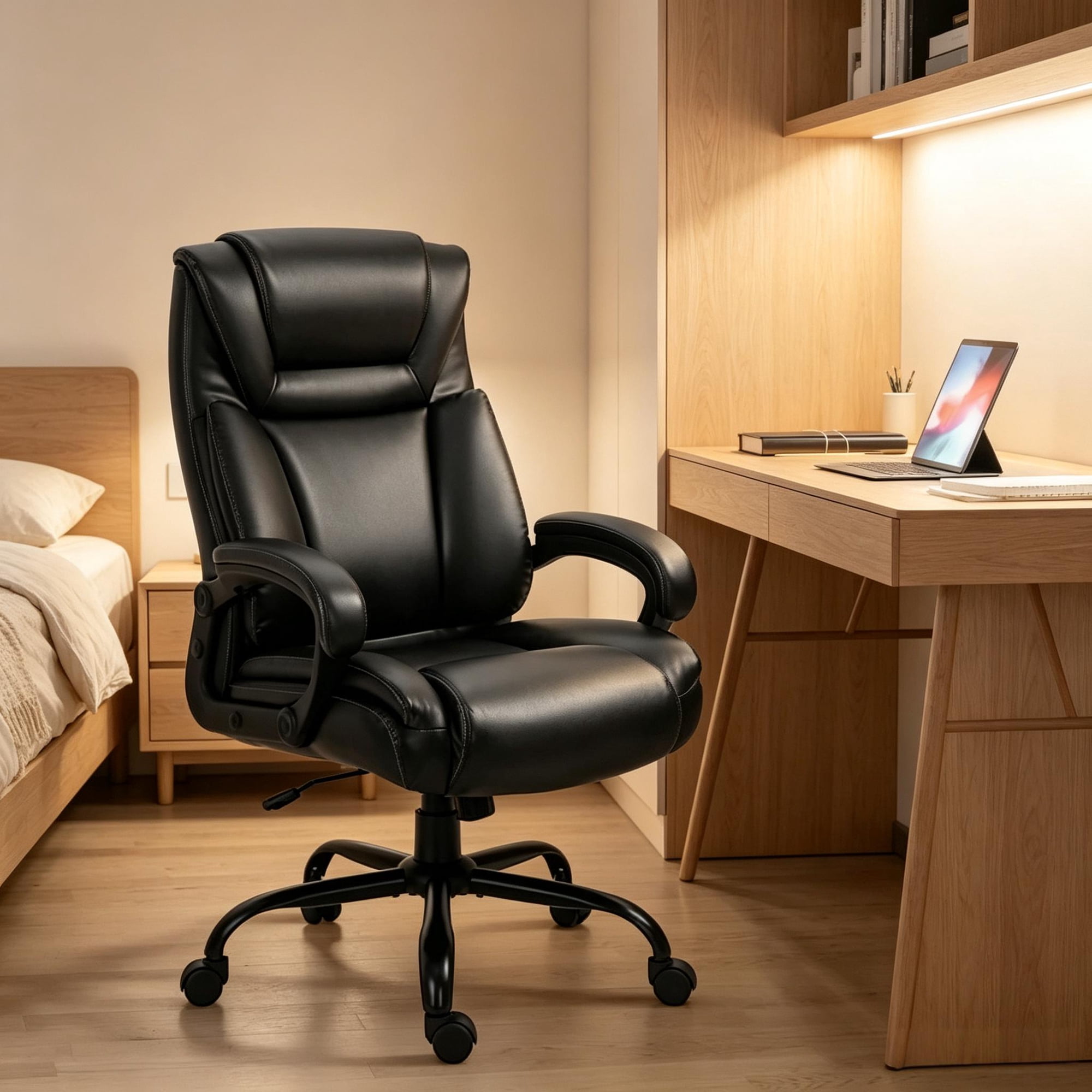
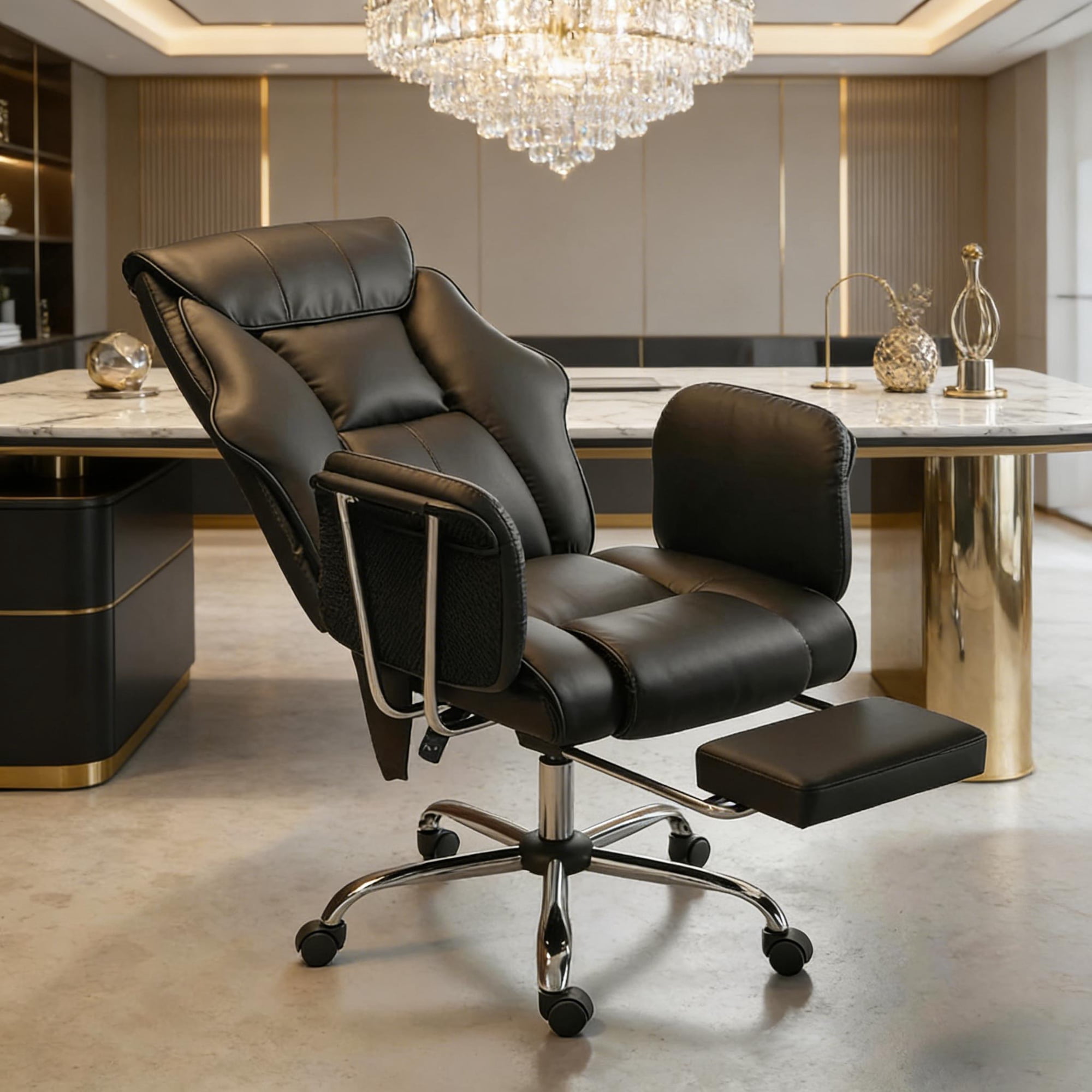
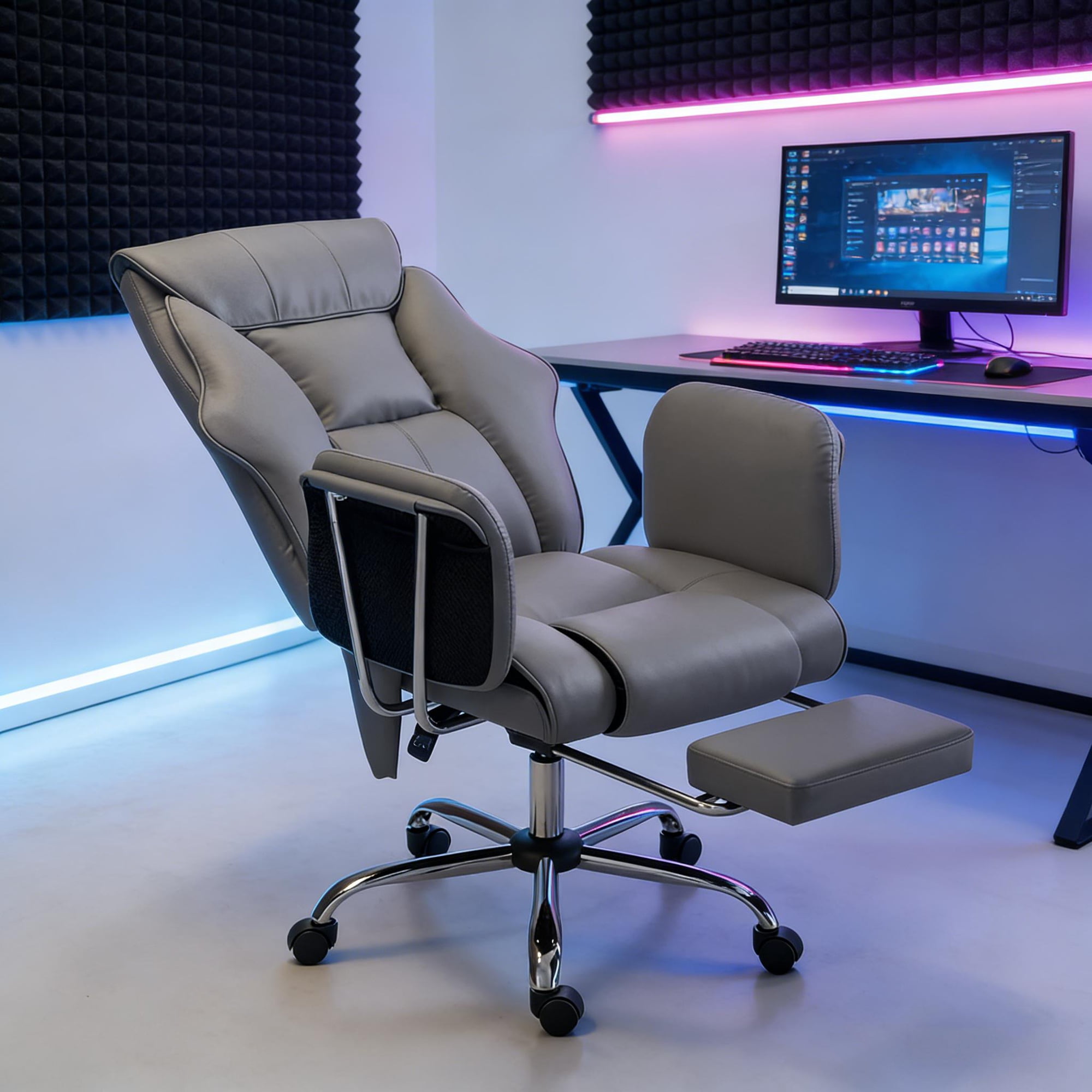
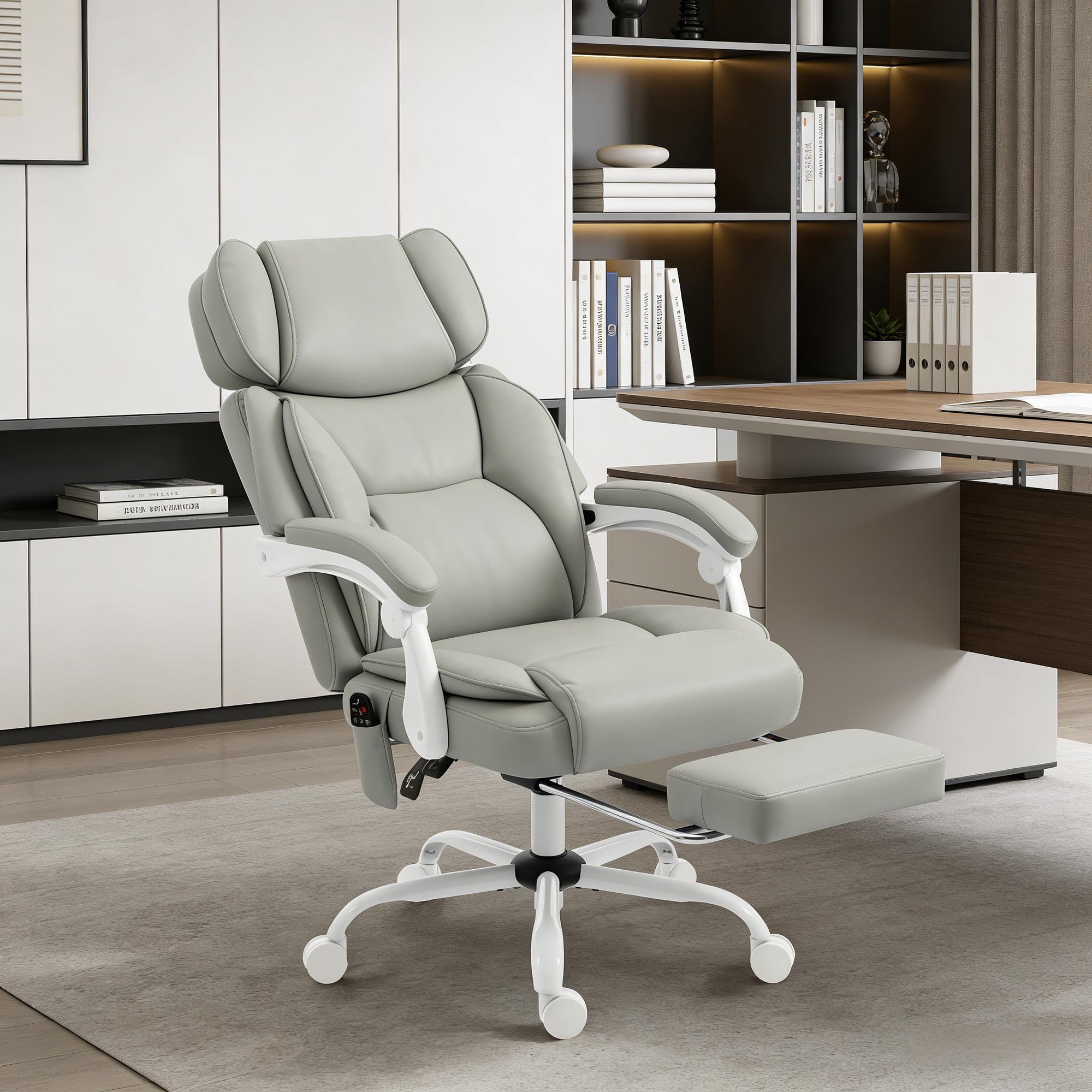
Why Choose an Office Chair That Raises High?
For many users, a standard office chair simply doesn't cut it. If you're over 6 feet tall, using a standing desk, or need a specific seat height due to workbench or counter, you need a chair with extended lift. An office chair that raises high features a longer pneumatic cylinder (class 3 or 4), robust base, and often a taller backrest to support your full spine. It bridges the gap between conventional seating and elevated workspaces, giving you ergonomic comfort at any height.
Ergonomics data: According to the Human Factors and Ergonomics Society, optimal seat height for tall individuals (6'3"+) often exceeds 22 inches. Standard chairs max out at 20–21 inches, forcing knees above hips — a posture linked to lower back strain. A high-rise chair restores the 90-90-90 position (feet flat, knees at 90°, hips at 90°).
Who Needs a High-Lift Office Chair?
- Tall professionals (6'2" and above): Standard chairs leave thighs unsupported and cause slouching. A chair with max height of 26"–28" allows proper alignment.
- Standing desk users: Sit-stand converters or full standing desks often require a perching height of 25"–30". A high-rise chair pairs perfectly with a footrest for active sitting.
- Drafting / industrial workstations: Elevated desks, lab benches, or drafting tables need chairs with extended lift and often a foot ring.
- People with knee or hip issues: Sometimes a higher seat reduces flexion and makes standing up easier.
Anatomy of a Safe High-Rise Office Chair
Not every chair that goes high is safe. Key components differentiate a quality high-lift chair from a wobbly hazard:
| Component | Standard chair | Chair that raises high (quality) |
|---|---|---|
| Gas lift class | Class 2 or 3 (up to 21") | Class 4 or heavy-duty (up to 28") |
| Base material | Nylon or thin metal | Reinforced steel or extra-wide aluminum base |
| Caster type | Standard 2" casters | Larger 3" dual-wheel or locking casters for stability at height |
| Backrest height | 20"–22" | 24"–28" with adjustable lumbar |
| BIFMA certification | Often yes | Must have (ensures stability at max extension) |
Key Benefits of an Extra-Tall Office Chair
- Spinal alignment: Prevents hunching by allowing proper thigh support and eye level with monitor.
- Versatility: One chair can serve both standard desk height and standing desk height when you want to perch.
- Longevity: Heavy-duty cylinders and wider bases often mean overall better construction, lasting 8–12 years.
- Blood flow: Reduced pressure behind knees compared to sitting too low.
What to Look for When Buying (Safety First)
1. Check the lift range specifications
Look for "seat height range" explicitly stated. For a true high-rise, minimum should be 18"–19" low, maximum 26"–28". Avoid chairs that claim "high rise" but only go to 23".
2. Verify the gas lift class
Class 3 supports up to 260 lbs typically; class 4 supports up to 330 lbs or more. For extended height, class 4 is recommended. Some manufacturers use SGS or TUV certified cylinders.
3. Examine the base footprint
A wider base (27"–28" diameter) prevents tipping when the chair is raised. Look for aluminum or steel, not thin plastic.
4. Assess the backrest height
If you are tall, ensure the backrest supports your shoulders. Minimum backrest height of 24" is ideal. Adjustable lumbar is a plus.
5. Casters for stability
At max height, locking casters or brake casters provide extra safety. Larger casters roll better over carpets.
Real-World Applications: Beyond Just Tall People
• Standing desk synergy: Many ergonomists recommend perching (sitting at bar height) for short periods to reduce fatigue. A chair that raises high to 27" allows you to switch between standing and perching without adjusting your desk.
• Medical and laboratory settings: Phlebotomists, dentists, and lab techs often work at elevated counters. A high-rise chair with a foot ring is a game changer.
• Home offices with non-standard desks: Some custom or vintage desks are higher than normal. Instead of replacing the desk, a high-lift chair solves the ergonomic mismatch.
• Industrial / warehouse offices: Raised platforms or control stations often require seating at 28"–30". Purpose-built high-rise chairs meet these needs safely.
Common Myths About Extra-High Chairs
- Myth: They're all wobbly. Fact: A well-built chair with a wide base and class 4 cylinder is as stable as a standard chair. Wobble comes from poor construction, not height alone.
- Myth: You need a footrest. Fact: If you use a high-rise chair at a standard desk, your feet may not touch the floor — but that's the point. For standing desks, you often perch with feet on a footrest or the chair's foot ring.
- Myth: Only for very tall men. Fact: Women over 5'10" also benefit, plus anyone using standing desks or elevated workstations.
Frequently Asked Questions About Office Chairs That Raise High
Conclusion: Elevate Your Seating Experience
Choosing an office chair that raises high is not just about reaching the top shelf—it's about aligning your body with your work surface, whether you're tall, using a standing desk, or working in a specialized environment. Prioritize safety by looking for BIFMA certification, a wide base, and a heavy-duty gas lift. Pair it with a footrest if needed, and enjoy the flexibility of adjusting your seat from standard to standing height in seconds. The right high-rise chair pays dividends in comfort, productivity, and long-term spinal health.
Final recommendation
For most tall users and standing desk enthusiasts, we recommend chairs with seat height range 19"–27" or wider, class 4 lift, aluminum base, and adjustable lumbar. The products shown above meet these criteria—check the latest deals and user reviews.