
Your Go-To Office Chair Store: What to Look For and Why It Matters
Walking into an office chair store — whether physical or virtual — can feel overwhelming. Rows of levers, different materials, and price tags ranging from "budget-friendly" to "investment piece." But here's the truth: a great office chair store isn't just a place that sells chairs. It's a resource that helps you match your body, work habits, and space to the right seat. Think of it like a tailor for your posture. In this guide, we'll explore how to choose from the vast selection of an office chair store, what features separate a mediocre chair from a long-term companion, and how to avoid common buying pitfalls.
1. The Anatomy of a Smart Office Chair Store Purchase
Imagine shopping for running shoes. You wouldn't grab the first pair without knowing if you need stability, cushioning, or arch support. The same logic applies to an office chair store visit. According to a 2023 survey by the American Posture Institute, 72% of office workers who bought chairs without consulting a size guide ended up with discomfort within six months. A reliable store (online or offline) provides clear specifications:
- Seat width and depth: crucial for thigh support without pressure behind the knees.
- Backrest height: should at least cover your shoulder blades.
- Weight capacity: look for a safety margin (e.g., if you weigh 200 lbs, choose a chair rated 250+ lbs).
- Adjustability range: seat height, armrest width/height, tilt tension, lumbar depth.
A quality store will also offer filter options for these specs. If you're browsing a site like GoodOfficeChairs, you're essentially in a specialized store that groups chairs by need: big and tall, petite, ergonomic, executive.
2. Understanding "Store-Only" Features vs. General Retail
General retailers often carry chairs designed to look good in a thumbnail but may lack internal mechanics. In contrast, a dedicated office chair store typically stocks chairs with:
Let's break down a scenario: you buy a chair from a big-box store for $180. After a year, the foam flattens, the gas lift fails, and there's no replacement parts. In a specialized store, even at the $300–$400 price point, you'll often find chairs with replaceable parts and better build quality. Data point: The BIFMA (Business and Institutional Furniture Manufacturers Association) certification — chairs that meet this standard are tested for 24/7 use and 300,000+ adjustment cycles. A true office chair store will highlight such certifications.
3. Five Questions to Ask Yourself (or a Store Expert)
- How many hours do I sit continuously? (If >4 hours, prioritize breathable mesh back and adjustable lumbar.)
- Do I have any existing pain points? (Lower back? Look for strong lumbar support. Tailbone? Choose a chair with a waterfall front or cut-out design.)
- What's my desk height? (Measure from floor to desktop. Your chair height range must accommodate it, usually 16–21 inches.)
- Do I need a headrest? (If you recline or have neck issues, yes. Otherwise, it might push your head forward.)
- What's the return / trial period? (A confident store offers at least 30 days to test at home.)
4. The "Hidden" Costs of Skipping a Real Office Chair Store
Buying a cheap, non-ergonomic chair might save $100 today but cost thousands in health expenses. The Occupational Safety and Health Administration (OSHA) estimates that poor seating contributes to musculoskeletal disorders, which account for 33% of all workplace injury costs. An office chair store helps you avoid that by offering chairs with:
- • Adjustable armrests (to prevent shoulder tension)
- • Recline with lock (to change posture throughout the day)
- • High-density foam (retains shape 3x longer than low-density foam)
5. Navigating the Online Office Chair Store Experience
Since you're likely reading this online, treat this page as your store aisle. Here's a checklist to simulate "trying before buying":
- Watch video reviews – look for demonstrations of adjustments.
- Check the return policy – "Free returns" or "money-back guarantee" is a must.
- Look for detailed dimensions – not just overall, but seat width between armrests, backrest height, etc.
- User photos – often reveal real-world scale and color.
- Warranty clarity – parts, labor, and what's excluded.
Many online stores (including this one) aggregate chairs from multiple brands, making it easier to compare. Use filters for "back pain," "tall," "heavy duty," or "leather" to narrow down.
🛒 Store Pick: What to Expect from a Quality Office Chair
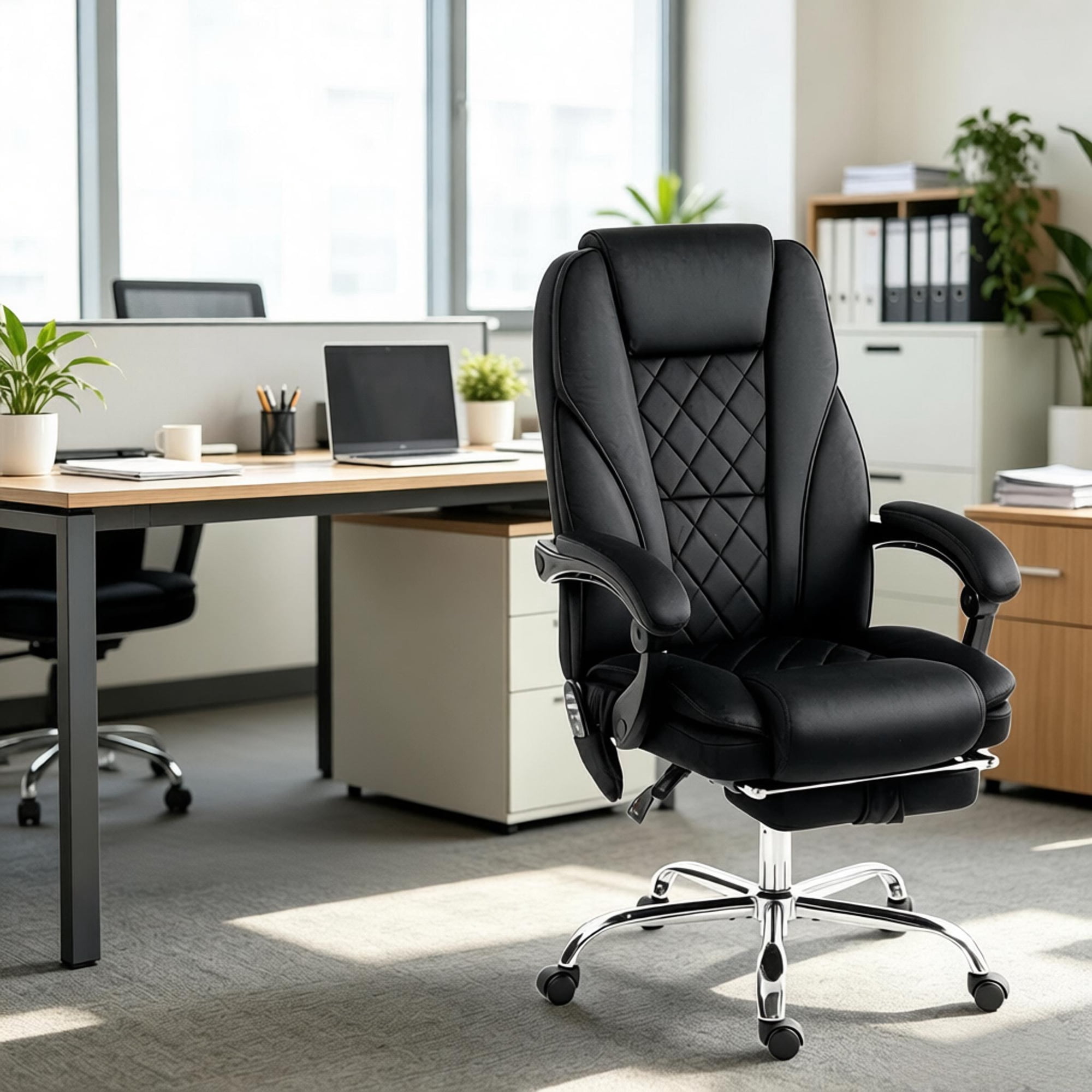
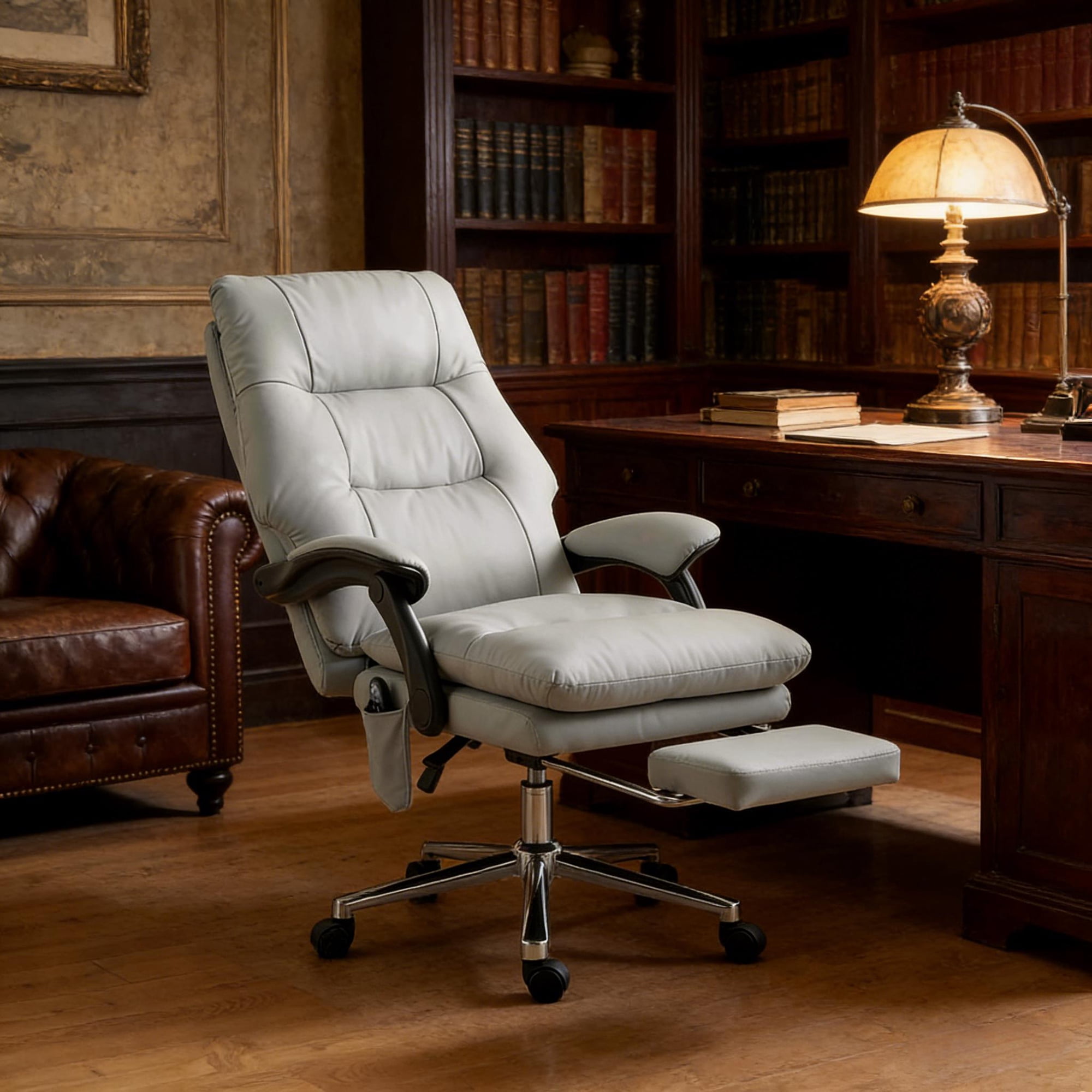
Imagine a chair that feels like it was made for you: the lumbar curve fits perfectly, the seat pan ends just before your knees, and the armrests support your elbows at 90 degrees. That's the goal. In our store collection, you'll find models from trusted names like Serta, Flash Furniture, and office-supply standards that have been vetted for at least basic ergonomics. Always cross-check the features we discussed.
6. Future-Proofing Your Purchase
Consider not just today's needs but tomorrow's. If you might change your workspace (e.g., standing desk), look for a chair with easy adjustability. If you anticipate weight fluctuation, choose a chair with a higher weight capacity. And if you value sustainability, some office chair stores now offer chairs made from recycled materials or with replaceable components — reducing landfill waste. Analogy: buying a chair is like buying a mattress — you'll spend a third of your day in it, so invest accordingly.
Frequently Asked Questions About Office Chair Stores
Conclusion: Your Next Step
Choosing an office chair store — and the right chair within it — doesn't have to be a gamble. By focusing on adjustability, build quality, and return policies, you set yourself up for years of comfortable and productive sitting. Remember: the best chair is the one that fits your body, not the one with the most features or the highest price tag. Browse our selection above, use the filters, and take advantage of the detailed specs. Your back will thank you.