
Why Small Space Office Chairs Are Revolutionizing Home Workspaces
The modern workforce has evolved, and so has the demand for intelligent space utilization. With 42% of Americans now working from home at least part-time (according to a 2023 Pew Research study), the need for office chairs for small spaces has skyrocketed. Whether you're furnishing a city apartment, a converted closet office, or a multi-purpose room, your chair shouldn't consume all your precious square footage.
Space Efficiency Insight: The average home office in urban areas is just 50-70 square feet. Traditional office chairs can consume up to 15% of this space when not in use. Compact chairs reduce this footprint by 30-40%, giving you back valuable room for movement and storage.
Think of a small space office chair like a piece of IKEA furniture—it's designed to maximize functionality while minimizing footprint. These chairs are engineered with the same ergonomic principles as their full-sized counterparts but packaged in a more space-conscious design. They're the difference between feeling cramped and feeling comfortably productive.
Critical Features of Space-Saving Office Chairs
When shopping for an office chair for tight quarters, these specific features make all the difference:
- Compact seat width: Typically 18-22 inches versus the standard 20-24 inches, allowing fit between narrow desk openings
- Reduced seat depth: 16-19 inches accommodates smaller spaces and shorter users proportionally
- Flip-up or removable arms: Enables the chair to slide completely under the desk when not in use
- Lower back height: Mid-back designs (18-22 inches) fit under wall-mounted cabinets or shelves
- Lightweight construction: Under 30 pounds makes it easy to move around or store when needed
- Smaller wheel base: 22-24 inch diameter versus 26-28 inch standard for tighter turning radius
Dimensions Matter: What to Measure Before Buying
Before purchasing a compact office chair, grab a measuring tape. Like a tailor measuring for a suit, precise measurements ensure your chair fits both you and your space perfectly. Here's what to measure:
| Measurement Area | What to Measure | Ideal Range for Small Spaces |
|---|---|---|
| Desk Clearance Width | Space between desk legs or walls where chair sits | At least 2-4 inches wider than chair seat |
| Desk Height | Floor to underside of desk | Standard: 29-30 inches, compact chairs: 16-20 inches when compressed |
| Room Depth | Desk edge to wall behind | Minimum 36 inches for comfortable movement |
| Seat Height Range | Lowest to highest seat position | 16-21 inches accommodates most desk heights |
| User Height | Your height for proportion assessment | Compact chairs ideal for users under 5'10" |
Types of Office Chairs for Small Spaces
Not all compact chairs are created equal. Here's a breakdown of the main categories you'll encounter:
🪑 Armless Task Chairs
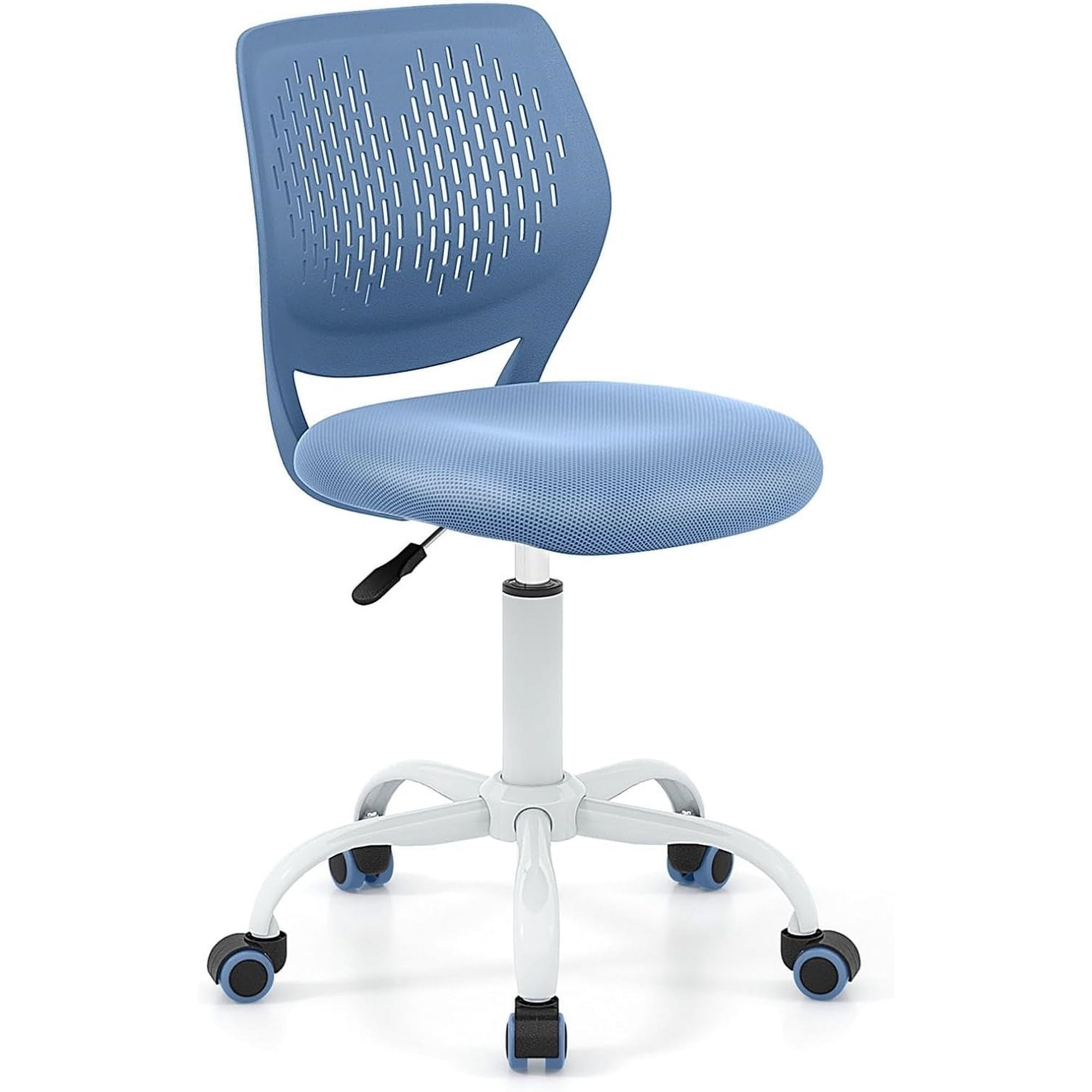
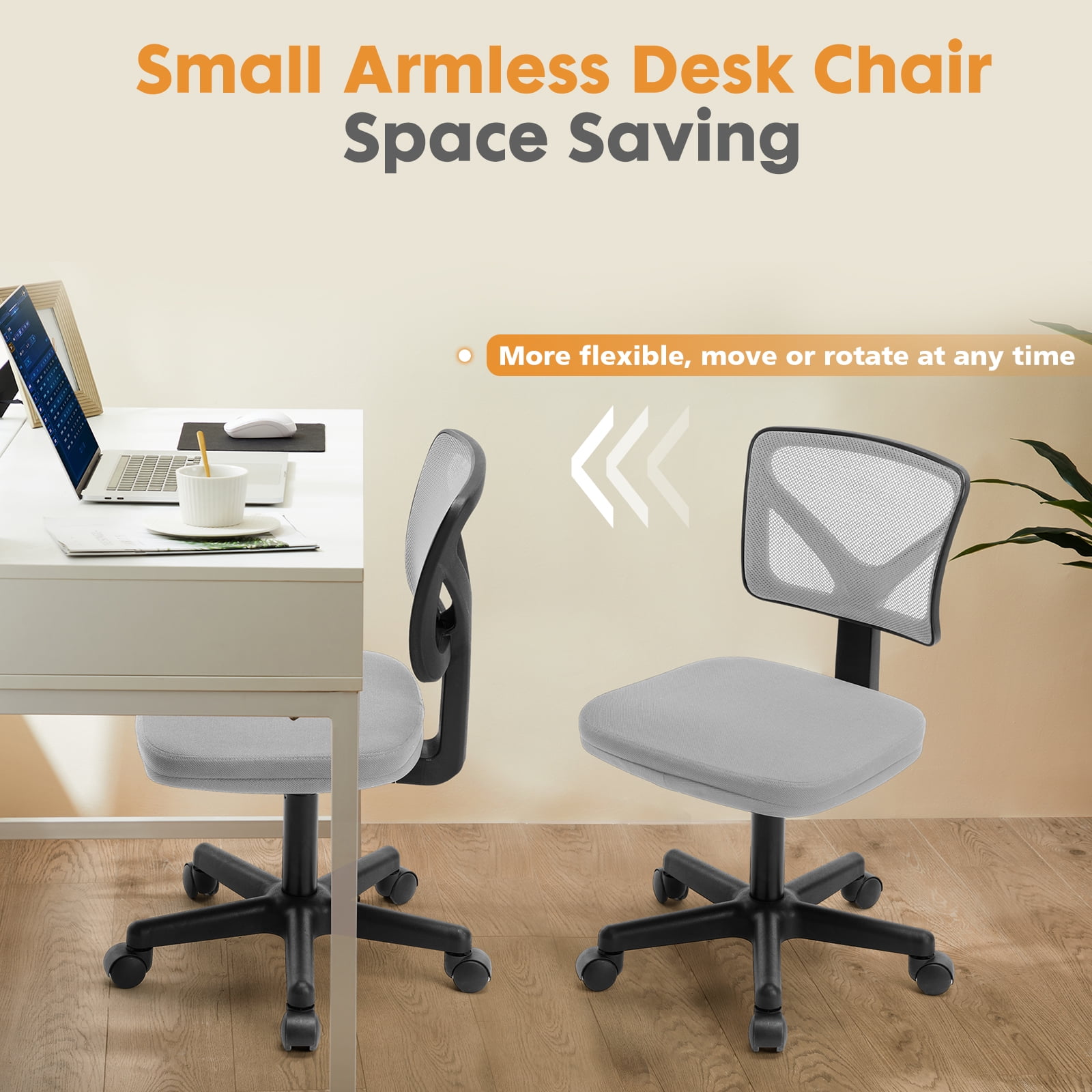
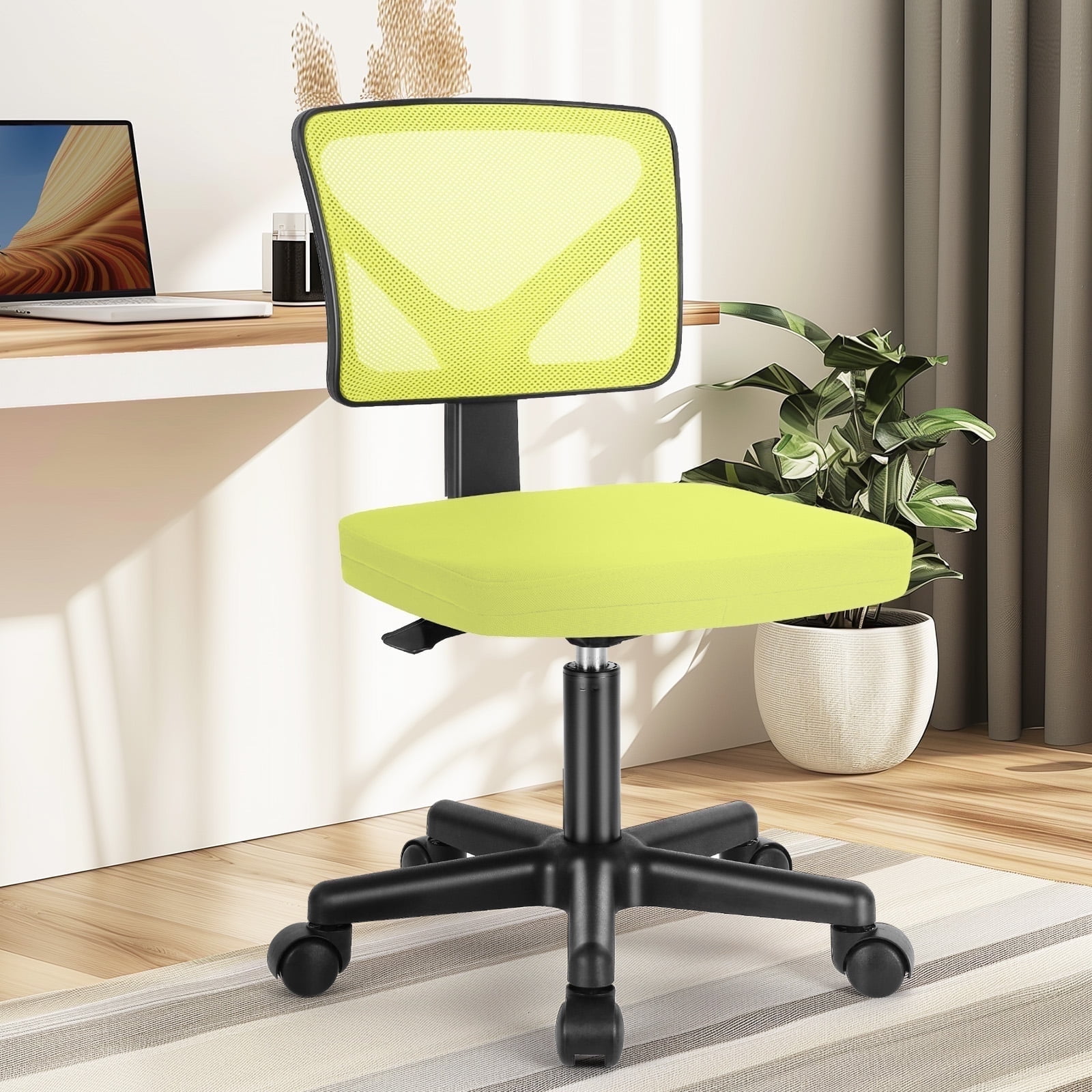
Best for: Ultra-tight spaces where every inch counts. Without arms, these chairs are 4-6 inches narrower and slide completely under desks. They're also more affordable and lighter weight. The trade-off? Less arm support during long typing sessions.
↔️ Flip-Up Arm Chairs
Best for: Those who want arm support sometimes but need to tuck the chair away other times. Flip-up arms offer the best of both worlds—ergonomic armrests when working, and space savings when storing. Look for chairs with arms that lift to 90 degrees.
📏 Narrow Profile Chairs
Best for: Fitting between built-in desks or tight corner setups. These chairs maintain full arm support but slim down the overall width to 20-22 inches. Perfect for users who need ergonomic features but have width restrictions.
🔄 Backless/Saddle Chairs
Best for: Standing desk users or those who prefer active sitting. These chairs have minimal footprint (often under 18 inches wide) and can be stored under desks or in corners. They promote better posture but lack traditional back support.
Ergonomics in Small Packages: It IS Possible
A common misconception is that compact chairs can't be ergonomic. This is like saying a smartwatch can't be as functional as a desktop computer—technology has evolved. Modern compact office chairs incorporate these ergonomic features in space-efficient designs:
- Hidden lumbar mechanisms: Built into the backrest without adding bulk
- Gas lift height adjustment: Standard feature even on the smallest chairs
- Tilt tension control: Allows rocking motion without increasing chair size
- Waterfall seat edges: Promote circulation without requiring deeper seats
- Breathable mesh backs: Provide support while visually disappearing
Ergonomic Fact: A study in the Journal of Ergonomics found that properly fitted compact chairs reduced reported discomfort by 67% compared to standard chairs that were too large for the user's space, simply because users could position themselves correctly relative to their work surfaces.
Material Choices for Visual Space Optimization
The materials you choose can make a small space feel larger. Here's how different chair materials affect perception of space:
| Material | Visual Impact | Best Small Space Application |
|---|---|---|
| Mesh | Minimal - recedes visually, allows light through | Small rooms, dark corners, multi-purpose spaces |
| Clear Acrylic | Nearly invisible - almost no visual footprint | Modern decor, rooms needing illusion of space |
| Light Fabric (Beige, Grey) | Moderate - reflects light, doesn't dominate | Home offices, bedrooms, light-colored rooms |
| Dark Leather | Heavy - anchors the space visually | Large rooms, accent pieces, traditional offices |
| Metal/Chrome | Light - reflects surroundings, minimal mass | Industrial decor, small modern apartments |
Multi-Functional Small Space Solutions
In a small space, every piece of furniture should earn its keep. Consider these multi-functional chair options:
Convertible Chairs
Some compact chairs transform into step stools or have built-in storage compartments
Stackable Designs
Perfect for home offices that double as guest rooms—chairs stack when not needed
Foldable Frames
Like camping chairs but office-grade, fold to just 4-6 inches thick for storage
Wall-Saver Mechanism
Chairs that tilt forward, allowing you to sit closer to the desk without bumping walls
The 5-Step Small Space Chair Selection Guide
Follow this systematic approach to find your perfect compact companion:
- Map your space: Draw a floor plan including door swings, traffic paths, and desk position. Mark the exact area where the chair will live.
- Measure twice, buy once: Record width, depth, and height clearances. Don't forget to account for recline space if you lean back.
- Consider usage patterns: Do you sit for 2 hours or 8? Do you need to move the chair to another room? This determines feature priorities.
- Test weight and mobility: In small spaces, you'll move the chair more often. Lighter chairs (under 25 lbs) are easier to reposition.
- Check storage position: Ensure the chair tucks completely under your desk or fits in its designated storage spot when not in use.
Small Space, Big Productivity
Living with less square footage doesn't mean compromising on comfort or productivity. The right office chair for small space design can actually enhance your work experience by:
- Encouraging better posture through proper fit (no more perching on the edge of an oversized chair)
- Reducing clutter by fitting neatly into your space rather than protruding into walkways
- Creating a dedicated work zone even in multi-purpose rooms through intentional, appropriately-scaled furniture
- Improving workflow by allowing you to position the chair exactly where needed without space constraints