


Beyond Basic Beige: Why Grey is the New Power Color for Office Chairs
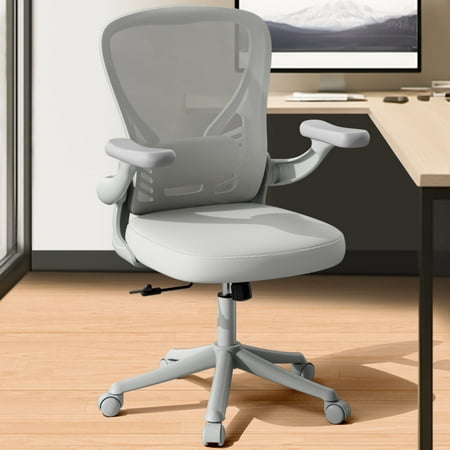
Choosing an office chair is a decision that impacts your daily comfort, productivity, and even the aesthetic of your workspace. While bold colors have their place, there's a quiet revolution happening in office design, and its name is grey. A grey office chair with arms has emerged as the top choice for professionals who want a space that feels both sophisticated and serene. It's the "little black dress" of office furniture—timeless, versatile, and always in style.
Think of your office chair not just as a tool, but as the anchor of your room. A grey chair acts like a chameleon. In a minimalist, modern office with white walls and glass desks, a light grey fabric chair softens the space and adds a layer of texture. In a traditional office with rich wood tones, a charcoal grey leather chair grounds the room and adds a touch of modern gravitas. It's this incredible adaptability that makes grey the smart, strategic choice.
The Psychology of Grey in the Workplace
Color psychology suggests that grey evokes feelings of composure, stability, and neutrality. Unlike the high energy of red or the cool detachment of stark white, grey provides a balanced backdrop that promotes focus and calm. For executives and employees who spend hours making critical decisions, this calming influence can be a subtle but powerful tool for maintaining mental clarity throughout the day.
More Than Just a Pretty Shade: The Crucial Role of Arms
While the color grey sets the stage for a stylish workspace, the 'with arms' specification is where function takes center stage. Office chair arms are not just a place to rest your elbows; they are a fundamental component of an ergonomic setup. Imagine trying to hold a book with your arms outstretched for hours—fatigue would set in quickly. Your shoulders and neck would ache from the constant strain.
That's precisely what happens when you work in a chair without arms or with poorly designed ones. Your arm muscles are constantly engaged to stabilize your upper body. A good grey office chair with arms provides a dedicated resting place, allowing your shoulders to relax, your neck muscles to loosen, and your upper body to maintain a neutral, strain-free position. It's the difference between actively holding yourself up and being comfortably supported.
The Anatomy of a Perfect Grey Office Chair: Decoding the Features
Choosing the right chair can feel overwhelming with so many technical terms thrown around. Let's break down the anatomy of a high-quality grey office chair with arms into simple, understandable parts. By understanding what each component does, you'll be empowered to make a choice that perfectly suits your body and work style.
1. The Upholstery: Fabric, Mesh, or Leather?
The material of your chair dictates its feel, breathability, and maintenance. In the grey spectrum, each material offers a unique personality.
Grey Fabric
- Vibe: Warm, cozy, and textured (e.g., tweed, wool blend).
- Best For: Home offices, creative spaces, long-duration comfort.
- Key Feature: Look for high-abrasion resistance (100,000+ double rubs) for durability.
Grey Mesh
- Vibe: Modern, breathable, and sleek.
- Best For: Warm climates, task-oriented work, those who run hot.
- Key Feature: The mesh should be taut and supportive, not saggy.
Grey Leather/Faux Leather
- Vibe: Luxurious, executive, and easy to clean.
- Best For: Corner offices, client-facing roles, a classic professional look.
- Key Feature: Bonded leather can peel; opt for top-grain or high-quality PU for longevity.
2. The Armrests: Your Upper Body's Best Friend
Not all arms are created equal. This is arguably the most important part of a grey office chair with arms. Here’s what to look for, from basic to best:
- Fixed Arms: The most basic type. They offer some support, but cannot be adjusted to fit your body or desk height, which can lead to poor posture.
- Height-Adjustable Arms: A significant step up. You can raise or lower them so your elbows form a comfortable 90-degree angle while typing. This is the minimum you should aim for.
- 2D and 3D Arms: These offer width adjustment (2D) or width and pivot adjustment (3D), allowing you to bring the armrests closer to your body or angle them to support your forearm naturally.
- 4D Arms: The gold standard. These adjust in height, width, depth, and pivot angle. They offer ultimate customization, ensuring perfect support for any body type or task. A true hallmark of a premium grey office chair with arms.
Expert Tip: When testing armrests, try typing at your normal desk height. Your arms should be able to rest lightly on the armrests without hunching your shoulders or splaying your elbows out wide.
3. The Lumbar Support: Your Spinal Guardian
A chair without proper lower back support is like a car without seatbelts. It's a risk you don't want to take. For a grey office chair with arms, look for these lumbar support types:
- Built-in Contour: A fixed curve in the backrest. It's better than nothing, but may not align with your spine's natural curve.
- Adjustable Lumbar (Height): Allows you to move the support pad up or down to fit the curve of your lower back. This is a highly desirable feature.
- Adjustable Lumbar (Depth): The holy grail. This allows you to increase or decrease how much the support pushes into your back. You can dial in the exact amount of pressure needed for perfect spinal alignment.
4. The Seat and Mechanism: The Foundation of Comfort
The seat pan should be comfortable for hours. Look for high-density foam that won't break down quickly. Two key features here are:
- Seat Depth Adjustment: This allows you to slide the seat pan forward or backward. The goal is to have a 2-3 finger gap between the back of your knee and the edge of the seat. This prevents pressure on your thighs that can cut off circulation.
- Tilt Mechanism and Tension Control: A good chair allows you to rock or recline. The tension control knob lets you adjust how easy or hard it is to recline, so you can find the perfect balance between support and movement, which is vital for dynamic sitting.
5. The Base and Casters: The Unsung Heroes
A stable base is non-negotiable. A five-point base made of aluminum or heavy-duty nylon ensures the chair won't tip over. The casters (wheels) should match your floor type—soft rubber casters for hardwood or tile, and standard hard casters for carpet. This ensures smooth rolling and protects your flooring.
Frequently Asked Questions About Grey Office Chairs With Arms
Final Verdict: Making Your Seating Choice
Selecting the right grey office chair with arms is an investment in your daily well-being and the overall look of your workspace. It's about finding the perfect intersection of aesthetic appeal and ergonomic function. The calming neutrality of grey provides a stylish foundation, while well-designed, adjustable armrests and lumbar support build the framework for a healthy and productive workday.
Don't just see a chair as a piece of furniture. See it as a partner in your work. A partner that supports you through long projects, welcomes you at the start of the day, and helps you maintain the energy and focus to perform at your best. By prioritizing features like 4D armrests, adjustable lumbar support, and quality upholstery in a versatile grey tone, you're not just buying a chair—you're crafting a better work experience. Use this guide, explore the top picks above, and take the next step toward a more comfortable, stylish, and productive you.