
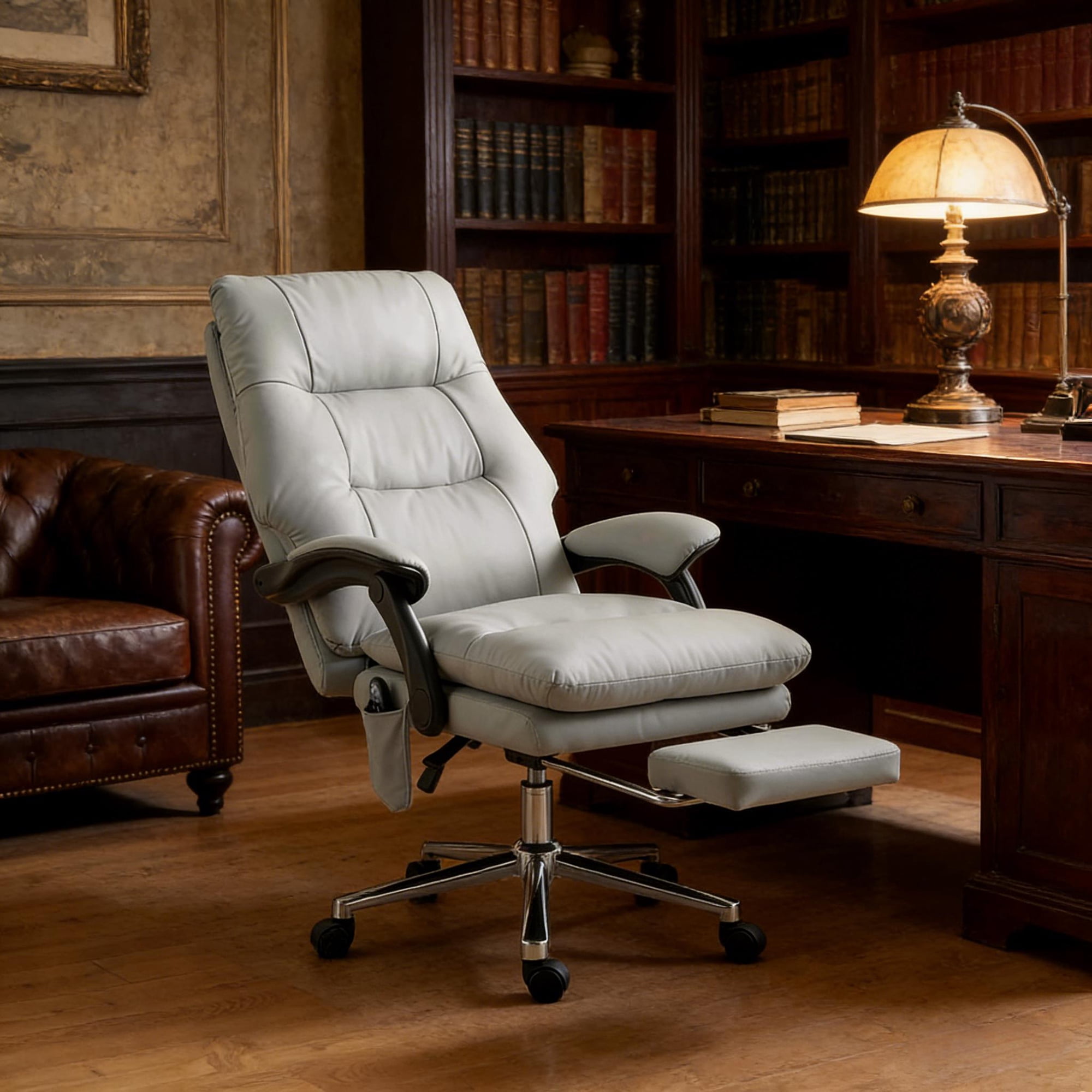


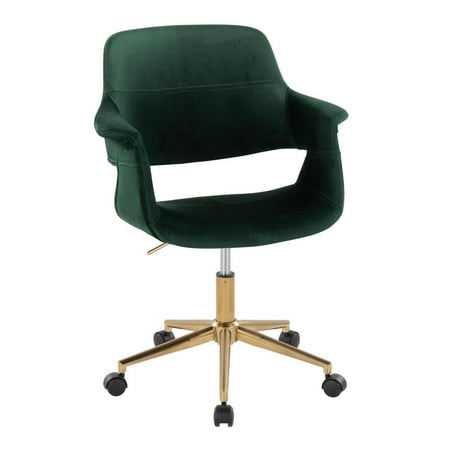
Why Premium Office Chairs Command Higher Prices
When you see price tags exceeding $1,500 or even $3,000 for an office chair, it's natural to wonder: what justifies this investment? The answer lies in a combination of superior materials, advanced engineering, handcrafted construction, and longevity that budget chairs simply cannot match.
Industry Insight: According to ergonomic research from Cornell University, executives spend an average of 42 hours per week seated. A high-quality chair amortized over 10 years costs approximately $0.40 per hour — a fraction of what most professionals spend on coffee, yet it directly impacts spinal health and daily focus.
The Anatomy of an Expensive Office Chair
Understanding what makes premium chairs expensive helps you evaluate whether the investment aligns with your needs:
Full-Grain European Leather
Unlike bonded leather (leather scraps glued together), full-grain leather uses the entire hide, maintaining natural markings and durability. Italian-tanned leather can last 20+ years, developing a beautiful patina over time.
Cold-Cured Foam
High-density foam that's molded, not cut, maintains its shape for decades. Budget chairs use polyurethane foam that compresses permanently within 2-3 years.
Aluminum & Steel Construction
Precision-cast aluminum bases and steel mechanisms provide stability for 300-500 pounds. Budget chairs use plastic bases that can crack under stress.
German-Engineered Gas Lifts
Premium chairs use Class 4 gas lifts rated for 30,000+ cycles (10+ years of daily use). Budget lifts often fail after 2-3 years.
The True Cost of Cheap Office Chairs
Before dismissing expensive chairs as unnecessary, consider the hidden costs of budget alternatives:
- Replacement Cycle: A $200 chair typically needs replacement every 2-3 years ($600-$900 over 10 years) versus one $1,800 chair lasting 10-15 years
- Health Costs: The American Chiropractic Association reports that office workers spend $50 billion annually on back pain treatment — much of it preventable with proper seating
- Productivity Loss: Discomfort reduces focus by up to 20%, according to a study in the Journal of Occupational Health Psychology
- Environmental Impact: Multiple disposable chairs generate more waste than one sustainable, long-lasting chair
Investment Tiers for Premium Office Chairs
Entry Luxury ($800-$1,500)
Premium mesh or top-grain leather, good adjustability, 5-8 year warranties. Ideal for executives wanting quality without the ultimate premium.
High-End ($1,500-$3,000)
Full-grain leather, advanced ergonomics, 4D armrests, 10-12 year warranties. The sweet spot for long-term investment.
Ultra-Luxury ($3,000-$8,000+)
Bespoke customization, exotic materials (carbon fiber, rare woods), hand-stitched upholstery, and limited edition designs from prestigious brands.
Top Brands in the Premium Office Chair Market
Several manufacturers have established themselves as leaders in high-end office seating, each with distinct philosophies:
| Brand | Price Range | Signature Feature | Warranty | Best For |
|---|---|---|---|---|
| Herman Miller | $1,200-$2,500 | Aeron and Embody models with PostureFit technology | 12 years | Ergonomic purists, tech executives |
| Steelcase | $1,100-$2,300 | Gesture and Leap chairs with LiveBack technology | 12 years | Corporate leaders, all-day comfort |
| HÅG | $1,300-$2,800 | Norwegian design with movement-promoting mechanisms | 10 years | Dynamic sitting, active executives |
| Humanscale | $1,000-$2,200 | Freedom and Diffrient models with self-adjusting mechanisms | 15 years | Minimalist design, intuitive ergonomics |
| Knoll | $1,400-$3,500 | Designer collaborations (Mies van der Rohe, Florence Knoll) | 10 years | Aesthetic-focused executives, design-forward offices |
When an Expensive Office Chair Makes Financial Sense
The decision to invest in premium seating depends on your specific circumstances. Consider these scenarios where higher-priced chairs provide the best value:
Scenario 1: You Work 8+ Hours Daily
If you're at your desk 40+ hours weekly, a premium chair pays for itself in back pain prevention alone. Calculate your hourly rate × hours seated × 10 years — even a small productivity gain justifies the investment.
Scenario 2: You Have Existing Back Issues
According to the Mayo Clinic, proper lumbar support can reduce chronic back pain recurrence by up to 60%. Compare this to ongoing chiropractic visits ($65 per session) or physical therapy.
Scenario 3: You Host Clients in Your Office
Your office chair is part of your professional brand. A luxury chair communicates success and attention to detail — intangible but valuable in client relationships.
Scenario 4: You're Building a Home Office for the Long Term
With remote work becoming permanent for many professionals, investing in one high-quality chair for 10+ years is more economical than replacing budget chairs every 2-3 years.
Key Features That Justify Higher Prices
When evaluating expensive office chairs, look for these specific features that correlate with quality:
- Adjustable Lumbar Support: Not just a pad, but mechanical support that adjusts in height and depth to match your spine's natural curve
- 4D Armrests: Armrests that adjust up/down, forward/back, left/right, and pivot angle — critical for preventing shoulder tension
- Seat Depth Adjustment: Allows the seat pan to move forward/backward, ensuring proper thigh support without pressure behind knees
- Synchronized Recline: The backrest and seat move together proportionally, maintaining proper ergonomics throughout the recline range
- Tension Control: Adjustable resistance so the chair supports you without feeling too loose or too stiff
- Material Quality: Look for "full-grain" or "top-grain" leather specifications, not "genuine leather" or "bonded leather"
The 10-Year Test: When evaluating an expensive office chair, ask yourself: "Will this still look professional and function perfectly in 2034?" Quality chairs should pass this test easily, while budget chairs will have flattened cushions, squeaky mechanisms, and worn upholstery.
Leather Quality in Premium Chairs
Understanding leather grades is essential when investing in an expensive office chair:
| Leather Grade | Description | Durability | Found In |
|---|---|---|---|
| Full-Grain | The entire hide, with natural markings preserved. Most durable, develops patina over time. | 20+ years | Ultra-luxury chairs ($2,500+) |
| Top-Grain | The top layer sanded and finished. Very durable but less natural character. | 10-15 years | High-end chairs ($1,500-$2,500) |
| Genuine Leather | Lower layers of the hide, sanded and embossed. Can peel over time. | 3-7 years | Mid-range chairs ($500-$1,200) |
| Bonded Leather | Leather scraps mixed with polyurethane. Will crack and peel. | 1-3 years | Budget chairs (under $500) |
Financing Your Investment
Given the upfront cost, many premium chair manufacturers offer financing options:
- 0% APR Financing: Many authorized dealers offer 6-12 month financing with approved credit
- Health Savings Accounts (HSA): In some cases, ergonomic chairs may be HSA-eligible with a doctor's recommendation
- Employer Reimbursement: Some companies offer home office stipends that can cover ergonomic seating
- Refurbished Options: Authorized refurbishers offer premium chairs at 30-50% off with similar warranties
Testing Before Buying
When spending over $1,000 on a chair, testing becomes critical:
1. The 20-Minute Test
Sit in the chair for at least 20 minutes, simulating your actual work (typing, reading, thinking). Note any pressure points or discomfort.
2. Adjustment Exploration
Try all adjustments while seated. Can you reach them easily? Do they lock securely? Premium chairs make adjustments intuitive.
3. Recline and Movement
Lean back fully, rock gently, swivel. Listen for squeaks. Premium mechanisms operate silently and smoothly.
4. Material Feel
Run your hands over the upholstery. Quality leather feels supple, not plasticky. Mesh should be tight and supportive, not saggy.