
Why Every Office Needs a Quality Plastic Mat for Their Chair
Imagine investing thousands in beautiful hardwood floors or plush carpeting, only to watch them deteriorate within months under your office chair. The constant micro-movements—the rolling, swiveling, and shifting—act like sandpaper on your flooring. A plastic mat for office chair isn't just an accessory; it's a protective barrier that preserves your flooring investment while improving your daily work experience.
Floor Protection Fact: According to flooring industry data, office chairs cause approximately $2,300 in floor damage over a 5-year period in commercial settings. A quality plastic mat eliminates 98% of this wear, paying for itself within the first 6 months of use.
The Science Behind Chair Mat Protection
Understanding how a plastic mat protects your floors helps you appreciate why it's a non-negotiable office investment:
- Weight Distribution: A mat spreads your body weight plus the chair's weight (typically 150-300 lbs) across a wider surface area, reducing pressure on flooring by up to 85%
- Abrasion Prevention: Chair wheels contain hard plastics or rubber compounds that act like tiny grinding tools—mats provide a smooth, sacrificial surface that takes the abrasion instead of your floor
- Static Load Protection: On carpet, chair casters create "divots" or permanent indentations—mats prevent this by distributing weight and providing a rigid rolling surface
- Moisture Barrier: Quality mats prevent spills from reaching your floor, protecting against staining and warping (especially crucial for hardwood)
Types of Plastic Mats by Floor Surface
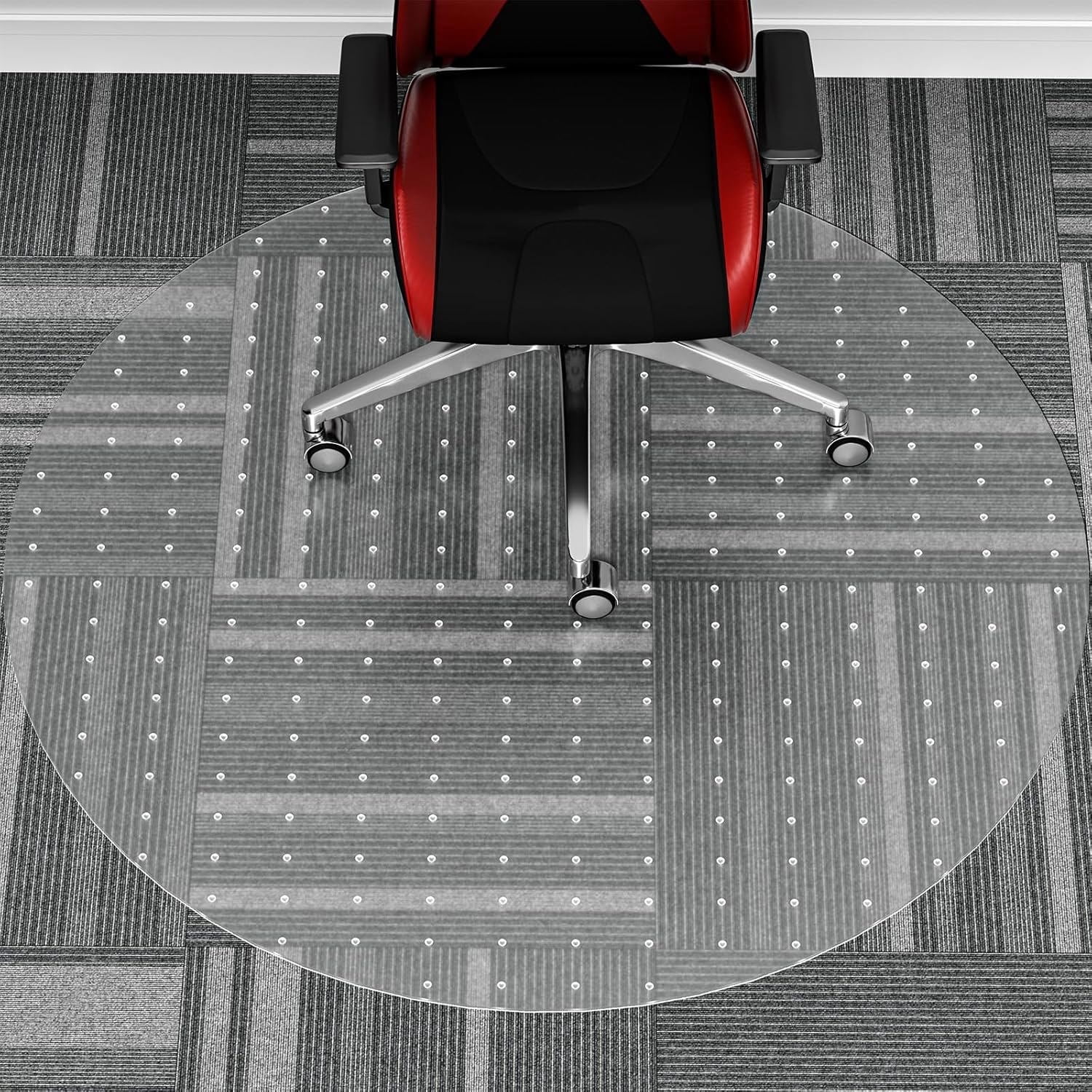
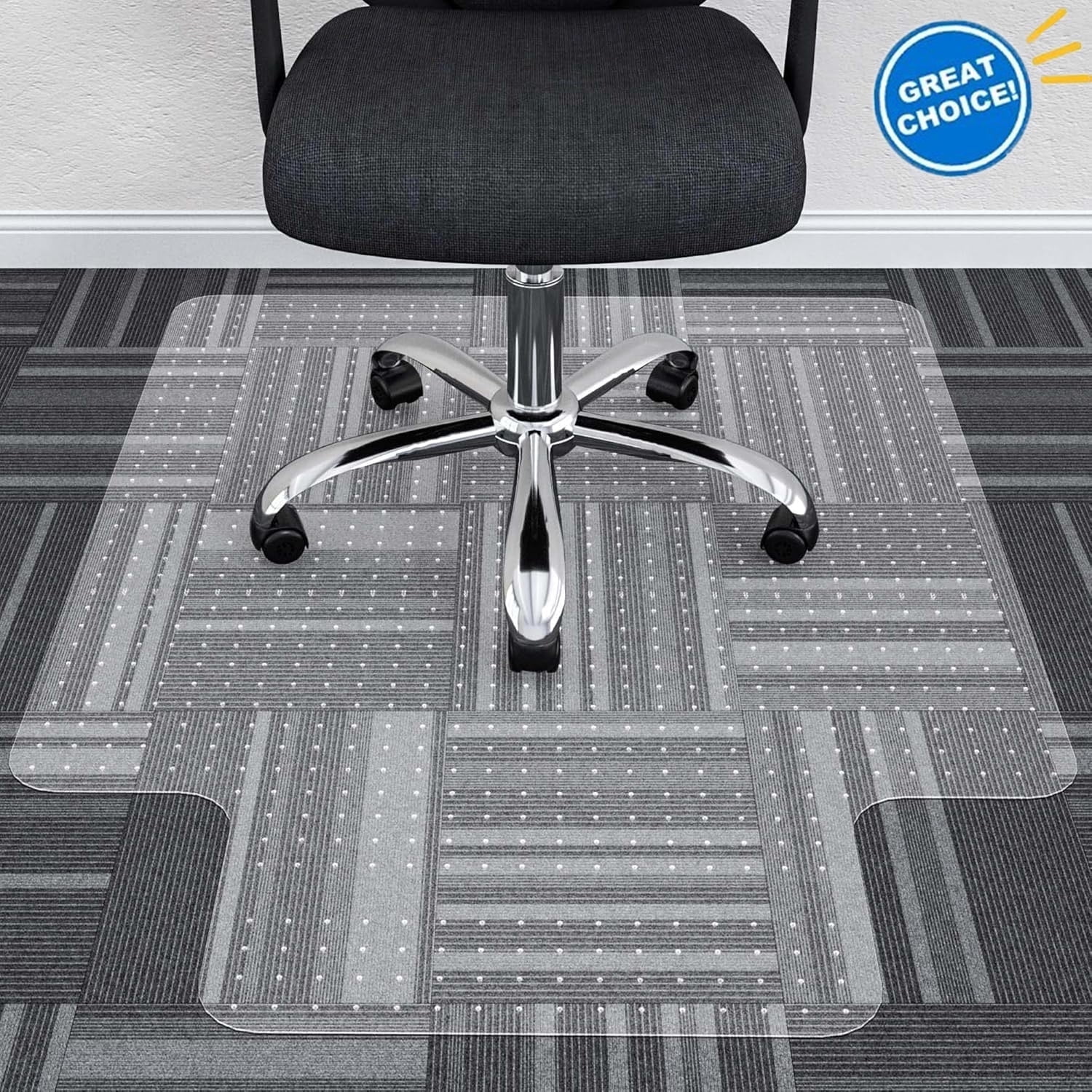
🏢 Carpet Chair Mats
Design: Thicker construction (3-5mm) with gripper spikes or textured backing
Best For: Low to medium-pile carpet (most home offices)
Key Feature: Cleats grip carpet fibers to prevent mat movement
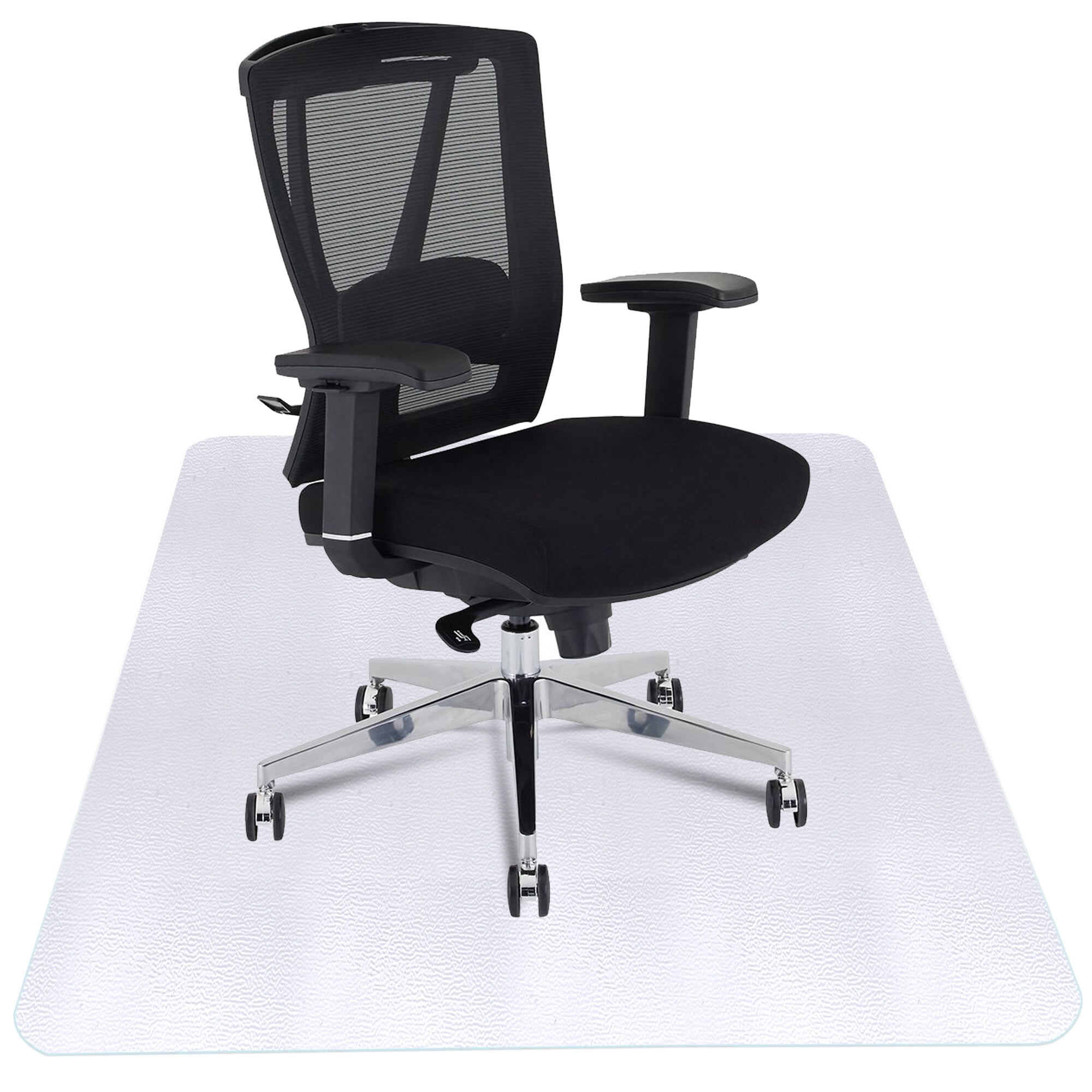
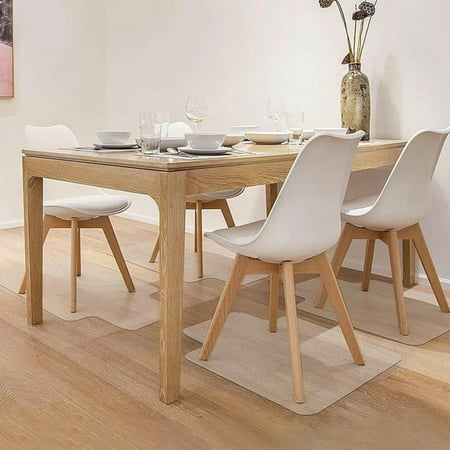
Berber Plush CommercialHard Floor Chair Mats
Design: Smooth, non-slip backing (2-3mm thickness)
Best For: Hardwood, laminate, tile, vinyl, concrete
Key Feature: Anti-slip surface without damaging adhesives
Oak Tile Laminate🔄 Dual-Purpose Mats
Design: Medium thickness (3mm) with reversible sides
Best For: Offices with mixed flooring or future moves
Key Feature: One side for carpet, flip for hard floors
Versatile RentalMaterial Comparison: PVC vs. Polycarbonate
Not all plastic mats are created equal. The material composition dramatically affects durability, clarity, and longevity:
| Feature | PVC (Standard) | Polycarbonate (Premium) |
|---|---|---|
| Durability | 3-5 years before cracking | 10-15 years, virtually unbreakable |
| Clarity | Can yellow over time, may be cloudy | Crystal clear, maintains transparency |
| Temperature Resistance | Becomes brittle in cold, soft in heat | Stable from -20°F to 140°F |
| Initial Odor | Strong "plastic smell" (off-gassing) | Minimal to no odor |
| Price Range | $30-$80 | $80-$200 |
| Best For | Budget-conscious, temporary setups | Permanent installations, premium offices |
📏 Chair Mat Thickness Guide: What's Right for You?
Thickness matters more than most realize. Here's how to choose:
Best for: Low-pile carpet or hard floors, light daily use, budget offices
Best for: Most home offices, medium-pile carpet, standard rolling chairs
Best for: High-pile carpet, heavy users (250lbs+), commercial use, 24/7 rolling
Best for: Warehouse offices, industrial settings, extreme durability needs
The Hidden Costs of Skipping a Chair Mat
Many office workers discover too late that skipping a $50-100 mat leads to much larger expenses:
✅ With Chair Mat
- Floors last 10-15+ years
- Smooth, effortless rolling
- Protects chair wheels (last longer)
- Prevents carpet "tracking"
- Easier cleaning underneath
- Professional appearance
❌ Without Chair Mat
- Carpet replacement: $800-$2,500
- Hardwood refinishing: $1,500-$4,000
- Chair wheel replacement annually
- Permanent floor indentations
- Difficult rolling (40% more effort)
- Decreased property value
How to Choose the Perfect Size Mat
Size selection is critical—too small and you'll constantly roll off; too large and it becomes awkward. Follow this professional sizing guide:
| Desk Configuration | Recommended Mat Size | Dimensions (W x D) | Typical Users |
|---|---|---|---|
| Small Desk / Home Office | 36" x 48" | 3ft x 4ft | Basic workstations, limited movement |
| Standard Rectangular Desk | 45" x 53" | 3.75ft x 4.4ft | Most common size, good rolling range |
| Large Executive Desk | 60" x 78" | 5ft x 6.5ft | Full range of motion, multiple work areas |
| L-Shaped Desk | 72" x 60" (L-shape) | Custom corner fit | Corner desks, dual monitor setups |
| Standing Desk Users | 48" x 60" (with lip) | Includes front extension | Standing/sitting transitions |
Installation Guide: Getting It Right the First Time
Proper installation ensures your mat stays put and performs optimally. Follow these steps:
- Prepare the floor: Vacuum or sweep thoroughly. For new mats, unroll and let flatten for 24-48 hours at room temperature (70°F+) to remove shipping curls.
- Position correctly: Place the mat with the lip extending under your desk front. You should have at least 12 inches of clearance behind your chair for full recline.
- For carpet mats: Press firmly to engage gripper spikes into carpet fibers. Walk across the entire surface to ensure proper engagement.
- For hard floor mats: Ensure the underside is completely clean and dry before placing. The anti-slip backing will grip once weighted.
- Weight it down: Place your desk and chair on the mat immediately. Heavy furniture helps flatten and secure the mat.
- Final check: Ensure the mat lies flat with no curled edges (tripping hazard). If edges curl, apply double-sided carpet tape or use weight overnight.
Maintenance Tips for Longevity
Proper maintenance extends mat life by up to 95%
- Daily: Quick sweep or dust mop to remove grit that can scratch
- Weekly: Damp mop with mild soap (dish soap works well) and water
- Monthly: Lift and clean underneath—debris trapped under mat causes scratches
- Avoid: Harsh chemicals, abrasive scrubbers, steam cleaners
- For spills: Blot immediately, never rub which spreads the stain
- Temperature: Keep away from direct heat sources (space heaters, registers)
Specialty Mats: Beyond Basic Protection
The market has evolved to offer specialized mats for specific needs:
Anti-Fatigue Chair Mats
Combine floor protection with ergonomic cushioning. Ideal for standing desk users who alternate between sitting and standing. The cushioned surface reduces leg fatigue by up to 30% during standing periods.
Glass Mats (Crystal Clear)
Premium tempered glass mats offer unparalleled clarity and modern aesthetics. They're scratch-resistant, easy to clean, and make a stunning visual statement—but are heavier and more expensive.
Roll-Up / Portable Mats
Designed for frequent movers or shared workspaces. These flexible mats roll up for transport but may not lay as flat as rigid options. Great for students or remote workers who relocate.
Eco-Friendly / Recycled Mats
Made from recycled plastics or sustainable materials. These appeal to environmentally conscious buyers while still providing excellent floor protection. Often BPA-free and phthalate-free.
Common Mistakes to Avoid
- ❌ Using carpet mats on hard floors: Gripper spikes can permanently damage hardwood
- ❌ Choosing too-small size: You'll constantly roll off, defeating the purpose
- ❌ Ignoring thickness requirements: Thin mats on thick carpet buckle and crack
- ❌ Placing furniture legs on mat: Heavy desk legs can crack or warp the mat
- ❌ Skipping the "flattening" period: Curled edges are tripping hazards
- ❌ Using on wet floors: Trapped moisture damages both mat and floor
Frequently Asked Questions About Plastic Mats for Office Chairs
Conclusion: Your Floor's Best Friend
A plastic mat for your office chair is one of the most cost-effective investments you can make for your home or corporate office. For a modest upfront cost ($40-$150 typically), you're protecting thousands of dollars in flooring while simultaneously improving your daily work experience through smoother chair movement and reduced rolling effort.
Quick Selection Summary
Choose 3-5mm PVC or polycarbonate mats with gripper backing. Ensure the lip extends under your desk front.
Select 2-3mm smooth-back mats with non-slip surfaces. Polycarbonate offers the best clarity to show off your beautiful floors.
Invest in polycarbonate—it costs more upfront but lasts 3x longer than PVC and maintains crystal clarity.
Remember: your office chair and floor work as a system. The chair provides ergonomic support, and the mat ensures that support doesn't come at the expense of your flooring. Together, they create a workspace that's both functional and protective—allowing you to focus on your work without worrying about the damage happening beneath you.
Browse our selection of top-rated plastic mats above to find the perfect match for your office setup. With the right mat, you'll wonder how you ever worked without one.