
The Enduring Appeal of Old Fashioned Office Chairs
In an era of mass-produced, disposable furniture, there's something profoundly satisfying about sitting in a well-crafted old fashioned office chair. These aren't just places to sit—they're statements of permanence, quality, and respect for tradition. Like a well-worn leather armchair in a private library, a vintage-style office chair transforms a workspace from purely functional to genuinely inspiring.
Design Heritage Insight: According to furniture historians, the golden age of office chair craftsmanship spanned from 1880 to 1960, when pieces were built by hand using traditional joinery techniques. Today's resurgence in vintage-style office seating reflects a growing appreciation for quality that outlasts trends—surveys indicate that 68% of professionals prefer workspaces with character over sterile modern environments.
The psychology of your workspace affects your work. Just as a tailored suit commands respect in a boardroom, an old fashioned office chair communicates stability, experience, and attention to detail. It tells clients and colleagues that you value substance over flash—a message that resonates powerfully in traditional industries like law, finance, academia, and executive leadership.
The Anatomy of Authentic Old Fashioned Office Chairs
Understanding what makes an old fashioned office chair authentic helps you distinguish between genuine craftsmanship and mere imitation. Let's explore the key components that define these classic pieces.
1. Wooden Elements: The Foundation of Character
The most distinctive feature of traditional office chairs is prominent woodwork. Unlike modern chairs that hide structure under upholstery, vintage styles celebrate the framework.
- Hardwood Species: Genuine old fashioned chairs use solid hardwoods—oak for strength and prominent grain, mahogany for rich reddish tones, walnut for chocolate-brown elegance, and cherry for warm hues that deepen with age. Avoid chairs labeled "wood finish" or "engineered wood"; these lack the weight and durability of solid timber.
- Joinery Techniques: Quality pieces feature mortise-and-tenon joints, dovetailing, or dowel construction rather than staples or hidden screws. These traditional methods allow chairs to be disassembled and repaired—a hallmark of furniture built to last generations.
- Armrest Design: Classic old fashioned office chairs often feature sculpted wooden armrests that follow the natural curve of the forearm. Some designs incorporate leather armrest caps for added comfort while maintaining the wooden aesthetic.
- Base Variations: You'll find four-legged stationary bases (authentic to pre-1930s designs), cast iron spider bases with wooden trim, or wooden sled bases. Swivel mechanisms on traditional chairs were originally manual, though modern versions often hide hydraulics within wooden shrouds.
Master Craftsman Insight: "A properly constructed wooden office chair should feel substantial when you lift it—typically 40-60 pounds for a quality piece. The wood should have visible grain variation (no two pieces identical), and joints should be tight with no visible glue squeeze-out. These indicators separate heirloom-quality chairs from mass-market reproductions." — James Whitmore, Furniture Restorer (35 years experience)
2. Leather Upholstery: The Soul of Vintage Seating
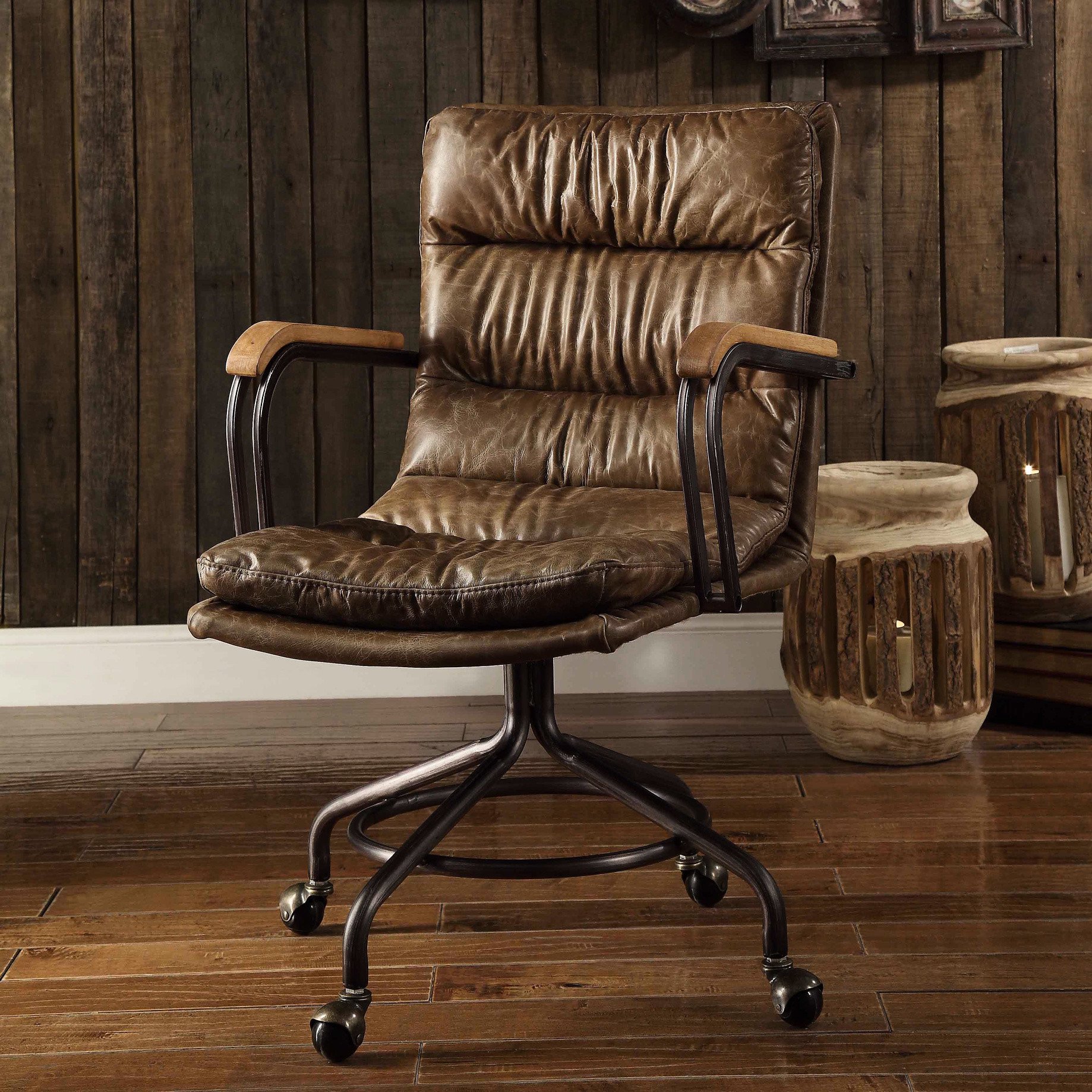
Leather and old fashioned office chairs are inseparable. The material's natural patina development over years of use creates a personalized character impossible to replicate.
Full-Grain Leather
The highest quality, using the entire hide with natural markings intact. Develops beautiful patina over 10-20 years. Breathes well and molds to body contours. Investment grade: $800-$2,000+ for chair upholstery.
Top-Grain Leather
Sanded and corrected for uniformity. More affordable than full-grain while maintaining durability. Good choice for daily-use office chairs. Shows less natural variation but still ages well.
Bonded Leather
Leather fibers mixed with polyurethane. Less expensive but won't develop patina and may peel after 3-5 years. Not recommended for authentic vintage style or long-term investment.
Traditional upholstery techniques distinguish authentic old fashioned office chairs:
- Button-Tufting (English Roll): Deep buttons create diamond patterns that add visual richness and prevent cushion shifting. Each button is hand-tied through the upholstery—a time-intensive process that signals quality.
- Nailhead Trim: Brass or antique-bronze nailheads along edges provide both decorative accent and practical reinforcement. Authentic chairs use individually applied nailheads, not pre-made strips.
- Traditional Color Palette: Burgundy, forest green, dark brown, black, and oxblood are period-correct colors. Avoid modern brights or two-tone combinations if authenticity matters.
- Leather Thickness: Quality vintage-style chairs use 1.2-1.4mm thick leather for durability. Thinner leather may look correct initially but won't develop the rich character of proper hides.
3. Hardware and Mechanisms: Form Meets Function
Hardware details separate thoughtful reproductions from generic imitations. Authentic old fashioned office chairs incorporate metal elements that are both functional and decorative.
- Casters: Traditional designs used brass or cast iron casters—often with leather or rubber treads to protect wood floors. Modern versions may hide contemporary casters within period-appropriate housings. Look for solid metal wheels rather than plastic.
- Swivel Mechanisms: Pre-1950s chairs used manual swivels on bearings. Today's best reproductions conceal smooth-rotation mechanisms within traditional-looking bases while maintaining the chair's authentic appearance.
- Tilt Controls: Classic executive chairs featured simple rocking mechanisms or fixed positions. Modern vintage-style chairs may include hidden tension adjustment while preserving the external vintage look.
- Pull Handles: Many old fashioned office chairs include leather pulls or brass handles on the backrest—originally designed for moving the heavy chairs, now appreciated as authentic detail.
Five Distinct Eras of Old Fashioned Office Chair Design
Understanding historical periods helps you select a style that resonates with your personal aesthetic and workspace character.
Victorian Office Chairs
Ornate carved wood, button-tufted leather, often stationary (non-swivel). Dark mahogany or walnut with brass accents. Seat heights fixed—desks were standing height originally.
Early Swivel Designs
Cast iron bases with wooden trim introduced. Manual swivel mechanisms. Higher backs with more pronounced lumbar curves. Arts & Crafts influence with simpler lines.
Art Deco Influence
Streamlined forms, geometric patterns in wood and leather. Introduced pneumatic adjustments in high-end models. Chrome or nickel hardware alongside traditional brass.
Mid-Century Executive
Iconic high-back executive chairs. Thicker cushioning, integrated headrests. Teak and rosewood alongside traditional hardwoods. Tilt mechanisms become standard.
Contemporary Vintage
Hidden ergonomics within classic forms. Height adjustment, lumbar support, and smooth casters while maintaining period aesthetics. Best of both worlds approach.
Old Fashioned vs. Modern Office Chairs: A Balanced Comparison
Neither style is inherently superior—the right choice depends on your priorities. Here's an honest assessment of how old fashioned chairs compare to contemporary designs.
Durability & Longevity
Old Fashioned: Built with solid wood, traditional joinery, and thick leather. With proper care, these chairs often outlast their owners—50+ years is common. Repairable by any skilled furniture craftsman.
Modern: Engineered for 5-10 year lifespans. Plastic components and foam cushions degrade. Repairs often impossible due to proprietary parts and molded construction.
Comfort & Ergonomics
Old Fashioned: Traditional designs prioritized posture and presence. Modern vintage reproductions often incorporate hidden lumbar support and adjustable mechanisms. Original antiques may lack ergonomic features.
Modern: Highly adjustable with targeted support zones. Better for users with specific back conditions. Mesh offers superior breathability. More customizable to individual body types.
Professional Image
Old Fashioned: Communicates authority, tradition, and permanence. Ideal for law offices, executive suites, academic settings, and client-facing professionals who want to project stability.
Modern: Suggests innovation, efficiency, and contemporary thinking. Better suited for tech companies, creative agencies, and startups where cutting-edge image matters.
How to Choose Your Perfect Old Fashioned Office Chair
Selecting the right vintage-style chair requires considering several factors beyond mere appearance.
Step 1: Assess Your Workspace Character
Your chair should harmonize with existing furniture and architectural details. Consider these questions:
- Does your office have traditional wood paneling, built-in bookshelves, or antique furniture? A Victorian or early 20th-century style will feel cohesive.
- Is your space more transitional—mixing traditional and contemporary elements? Mid-century or simple traditional designs bridge eras effectively.
- What's your desk material? Mahogany chairs pair beautifully with cherry or mahogany desks; oak chairs complement oak furniture; walnut works with most woods.
- Consider your floor—wooden casters suit hardwood, while rubber treads work on carpet or tile.
Step 2: Determine Usage Intensity
How many hours will you spend in this chair daily?
- Occasional use (1-3 hours/day): Authentic antique or standard reproduction works well. Fixed height acceptable if chair matches desk.
- Regular use (4-6 hours/day): Seek modern reproductions with hidden ergonomic features—adjustable lumbar, improved cushion density, and pneumatic height adjustment.
- Intensive use (7+ hours/day): Prioritize chairs with upgraded foam (high-density, memory foam layers), adjustable tilt tension, and breathable leather. Some manufacturers offer "executive comfort" packages in vintage styles.
Step 3: Evaluate Construction Quality
Before purchasing, inspect these quality indicators:
- Lift the chair: Quality old fashioned chairs are heavy—typically 45-65 pounds. Lightweight chairs indicate hollow construction or engineered wood.
- Check wood grain: Solid wood shows consistent grain patterns across surfaces. Veneer may repeat patterns or show perfectly matched grain (too perfect).
- Examine joints: Look for visible joinery—mortise-and-tenon should show as end grain on horizontal surfaces. Stapled or glued-only joints indicate lower quality.
- Test the swivel: Should be smooth with minimal lateral play. Quality mechanisms use sealed bearings.
- Press the cushions: Foam should recover quickly without leaving impressions. Sit for 5-10 minutes to assess comfort—don't rush this step.
- Inspect leather: Natural markings (scars, grain variation) indicate genuine full-grain or top-grain leather. Perfectly uniform surfaces suggest bonded leather or vinyl.
- Check nailhead trim: Individually applied nailheads show slight variation in spacing and depth. Pre-made strips appear perfectly uniform.
Step 4: Consider Investment vs. Budget
Old fashioned office chairs vary dramatically in price. Here's what different budget tiers typically deliver:
| Price Range | What to Expect | Best For |
|---|---|---|
| $200-$400 | Vintage-inspired styling with modern materials. Bonded leather or vinyl, engineered wood frames, visible hardware often plastic. Limited lifespan (3-5 years). | Occasional use, home offices, budget-conscious shoppers wanting the look without long-term investment. |
| $400-$800 | Better materials—top-grain leather seats with vinyl elsewhere, solid wood in visible areas, improved mechanisms. Good entry-level quality for regular use. | Daily home office use, professional offices with moderate expectations, those wanting authentic appearance on budget. |
| $800-$1,500 | All top-grain or full-grain leather, solid hardwood construction throughout, quality casters and mechanisms. Hidden ergonomic features. 10-15 year expected life. | Executive offices, professional practices, serious home offices, long-term investment seekers. |
| $1,500-$3,500+ | Heirloom quality—full-grain leather, premium hardwoods, hand-applied nailhead trim, custom options. May be genuine antiques restored or museum-quality reproductions. | Executive suites, historic properties, collectors, those wanting true heirloom pieces. |
Caring for Your Old Fashioned Office Chair
Proper maintenance ensures your vintage-style chair develops beautiful character over decades rather than deteriorating prematurely.
Leather Care Routine
- Weekly: Dust with soft, dry cloth. Vacuum crevices with brush attachment to prevent dirt accumulation in tufting.
- Monthly: Wipe with slightly damp (not wet) cloth, then dry immediately. Use leather-safe cleaner for spots—test in inconspicuous area first.
- Quarterly: Apply quality leather conditioner. This prevents drying and cracking, especially important in climate-controlled offices with dry air.
- Avoid: Direct sunlight (fades and dries leather), heating vents (causes cracking), harsh cleaners, and soaking the leather.
Wood Maintenance
- Dust wooden elements weekly with soft cloth.
- Apply quality furniture polish every 3-4 months—use products matching your wood type.
- Watch for finish wear on armrests; touch up promptly to prevent moisture damage.
- Maintain indoor humidity between 40-50% to prevent wood cracking or swelling.
Mechanism Care
- Lubricate swivel mechanism annually with white lithium grease if accessible.
- Tighten visible hardware (caster stems, armrest attachments) every 6 months.
- Clean casters regularly—hair and debris cause uneven rolling and floor damage.
- For pneumatic models, avoid full extension/compression cycles; maintain mid-range heights when not adjusting.
Where to Place Your Old Fashioned Office Chair
The right setting enhances both the chair's beauty and your enjoyment of it.
Executive Corner Office
Position facing the door with back to wall—classic power positioning. Dark leather with mahogany or walnut complements traditional executive aesthetics.
Home Library or Study
Pair with matching wooden desk, brass reading lamp, and bookshelves. Medium-brown leather works well with most wood tones and creates warm, scholarly atmosphere.
Law Office or Professional Practice
Burgundy or forest green leather with mahogany frame projects traditional professionalism. Position to create welcoming client consultation area.
Frequently Asked Questions About Old Fashioned Office Chairs
Conclusion: The Timeless Value of Old Fashioned Office Chairs
Choosing an old fashioned office chair is more than selecting a place to sit—it's embracing a philosophy of quality, permanence, and thoughtful design that transcends passing trends. In a world of disposable furniture, these chairs stand as monuments to craftsmanship, offering daily reminders that some things truly are built to last.
The right vintage-style chair becomes a companion through years of work, developing character alongside your career. Its leather develops a patina that tells your story—the slight wear on the right armrest from your mouse hand, the gentle curve molded to your posture, the brass that's polished to a warm glow through decades of use.
Final Thought: The most expensive chair isn't the one with the highest price tag—it's the one you replace every few years. A quality old fashioned office chair, properly maintained, costs less per decade than three or four disposable alternatives while providing immeasurably more satisfaction, comfort, and professional presence.
Whether you choose a faithful reproduction with hidden ergonomics or restore a genuine antique, your old fashioned office chair will serve not just as furniture, but as a legacy piece—something that might one day furnish your child's first office, carrying forward the story of work well done.
Your Next Steps
- Measure your workspace and desk height before shopping
- Decide on your preferred era and wood/leather combination
- Set a realistic budget based on usage intensity
- Test chairs in person when possible—sit for extended periods
- Inspect construction details using the checklist above
- Plan for proper maintenance from day one