
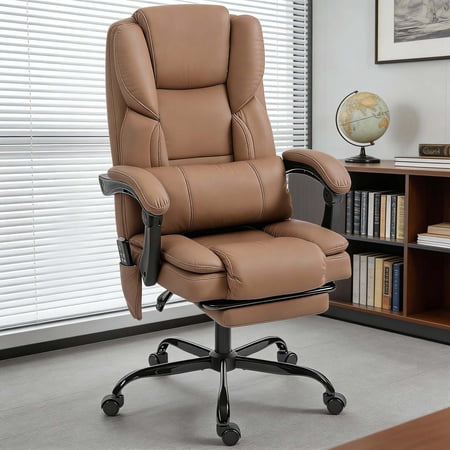
Why an Office Leather Chair is More Than Just Furniture
Imagine the feeling of settling into a well-crafted leather chair at the end of a long day—the subtle scent, the smooth texture, the way it seems to welcome you. In the professional world, an office leather chair is not just a place to sit; it's a statement. It signals that you value quality, tradition, and your own comfort. But beyond the aesthetic appeal, a genuine leather chair can be a cornerstone of a productive and healthy work life. This guide will walk you through everything you need to know to find the perfect leather companion for your office.
Did You Know? A survey by the American Chiropractic Association found that individuals who use high-quality, supportive seating report 32% less end-of-day fatigue. Pairing that support with the durability of leather means your investment pays dividends in both health and longevity.
The Anatomy of a Superior Office Leather Chair
To choose wisely, you must look beneath the surface. A beautiful chair that fails to support you is just an expensive decoration. Let's dissect the key components that define a top-tier leather office chair.
1. The Foundation: Frame and Base
- Frame Material: The best chairs feature frames made of hardwood or reinforced metal. This ensures the chair withstands years of use without warping or cracking. Avoid chairs with frames made entirely of plastic or particleboard.
- Base Construction: A five-point base is standard, but the material matters. Polished aluminum or heavy-duty nylon bases offer excellent stability. For higher weight capacities, look for a base made entirely of metal.
- Gas Lift Mechanism: This is the hydraulic cylinder that allows height adjustment. Look for chairs that specify a Class 3 or Class 4 gas lift, which are tested for higher cycles and durability, ensuring your chair won't sink unexpectedly.
2. The Heart of Comfort: Cushioning and Support
The leather is the skin, but the cushion is the muscle. Manufacturers use different densities of foam, which drastically affect comfort and longevity.
- High-Density Foam: This is the gold standard. It resists sagging and maintains its shape for years. Think of it like a firm, supportive mattress.
- Memory Foam: Often used in combination with high-density foam, memory foam conforms to your body's unique shape, relieving pressure points on hips and thighs. It's like having a chair custom-molded to you.
- Layered Foam: Many premium chairs use a combination—a firm core for support and a softer top layer for immediate comfort. This "zoned" cushioning provides both stability and plushness.
3. The Skin: Understanding Leather Grades
Not all leather is created equal. In fact, the term "leather" can refer to a wide range of materials. Here's a simple breakdown for the office chair buyer:
- Bonded Leather: Made from leather fibers bonded with polyurethane. It's the most affordable but least durable, often peeling after a few years. Best for light, occasional use.
- Genuine Leather: Despite its name, this is a mid-tier product made from the lower layers of the hide. It's durable, has a natural feel, and is a very popular choice for executive chairs. It offers excellent value.
- Top-Grain Leather: The top layer of the hide, sanded and finished to remove imperfections. It's incredibly durable, resistant to stains, and has a uniform, luxurious appearance. This is the preferred choice for high-end, long-lasting office chairs.
- Full-Grain Leather: The highest quality, using the entire grain layer with all its natural markings. It develops a beautiful patina over time but is less common in office chairs due to its premium cost and more rustic look.
4. The Science of Ergonomics in a Leather Chair
A leather chair must be an ergonomic tool. Look for these specific adjustments to ensure it works for your body:
- Adjustable Lumbar Support: This is non-negotiable. The lower back's curve is unique to you. The chair should allow you to move the lumbar support up/down and in/out to fill the gap in your spine.
- Seat Depth Adjustment: You should be able to slide the seat pan forward or backward. This ensures there's a 2-3 finger gap between the back of your knee and the seat edge, promoting healthy circulation.
- 4D Armrests: The best armrests adjust in height, width, depth, and angle. This allows you to keep your shoulders relaxed and your elbows at a 90-degree angle while typing.
- Tilt Mechanism and Tension Control: A synchronous tilt mechanism allows the seat and back to move in a natural ratio (e.g., 2:1 or 3:1) as you recline. Tension control lets you adjust how much force is needed to recline, accommodating your weight and preference.
Why These Details Matter: A Quick Look at the Impact
📊 Durability
Top-grain leather chairs can last 15+ years with proper care, compared to 3-5 years for bonded leather.
💺 Pressure Relief
High-density foam with memory foam reduces peak sitting pressure by up to 30%, according to materials science studies.
⚙️ Productivity
Ergonomic adjustments like proper lumbar support can improve focus and reduce work-related musculoskeletal discomfort by over 50% (Cornell University Ergonomics Web).
🧼 Maintenance
Leather requires cleaning only 2-4 times per year (with conditioning), far less than fabric which often needs professional cleaning.
Your 4-Step Leather Chair Selection Process
Step 1: Define Your "Leather Persona"
Are you the Traditional Executive (who needs a high-back, tufted, dark leather chair to command respect)? The Modern Professional (who prefers a sleek, minimalist design in a lighter cognac or black)? Or the Ergonomics Enthusiast (who prioritizes advanced adjustments and might choose a leather + mesh hybrid)? Your style dictates your search.
Step 2: Match the Leather to Your Usage
Consider your environment. For a home office with no heavy traffic, genuine leather is a fantastic choice. For a high-use corporate office or if you have pets, top-grain leather is worth the investment for its superior scratch and stain resistance. If you're on a strict budget, high-quality bonded leather can work for a guest chair.
Step 3: Test the "Ergonomic Fit" (In-Store or Virtually)
If shopping online, look for detailed spec sheets. Key measurements to check: seat width (18-22" is standard), seat depth (16-21"), and back height (21-26" for mid-back, 27"+ for high-back). If possible, sit in the chair. Does the lumbar hit the right spot? Can you adjust it? Do your feet rest flat with your thighs parallel to the floor?
Step 4: Assess the "Big Three" for Longevity
Before buying, verify: 1) The warranty (look for at least 5 years on parts and 2 years on leather). 2) The weight capacity (aim for at least 300 lbs for a standard, well-built chair). 3) The return policy (a 30-day minimum is essential to ensure it works for your body).
The Modern Marvel: Leather-Mesh Hybrid Chairs
Can't decide between the premium look of leather and the breathability of mesh? Enter the hybrid. These chairs typically feature a leather seat and leather exterior on the back, with a mesh back panel. This design offers the best of both worlds: the professional appearance and comfort of leather where you sit, and the cooling airflow of mesh where your back rests. It's an increasingly popular choice for executives in warmer climates or those who simply run warm, proving you don't have to sweat to look cool.