
Beyond the Basic Swivel: The Rise of the Knee Rest Office Chair
Imagine coming home after a long day and putting your feet up. That feeling of relief, of releasing pressure from your lower body, is exactly what an office chair with a knee rest aims to bring to your 9-to-5 (or 5-to-9). We spend countless hours tethered to our desks, and traditional chairs often force us into a static position that can leave our legs feeling heavy and our backs aching by mid-afternoon.
This is where the innovation of an integrated leg support system comes in. Think of it as the difference between sitting on a park bench and lying in a hammock. One is purely functional; the other supports you in a state of gentle repose. An office chair with a built-in knee rest—sometimes called a chaise lounge chair for the office—allows you to recline safely and ergonomically, giving your legs the support they deserve while you power through emails, join a webinar, or simply brainstorm your next big idea. It's not about sleeping on the job; it's about working smarter by letting your body find its most comfortable, sustainable position.
The Ergonomics of Elevation: How a Knee Rest Transforms Your Sitting Experience
To understand the benefit, let's look at what happens when you sit in a standard office chair. Your feet are flat on the floor, your knees are at a 90-degree angle, and your thighs are parallel to the ground. While this is the ergonomic baseline, holding this exact position for hours can create static load on your muscles and compress your spine. An office chair with a knee rest introduces a new variable: leg elevation.
1. The Cascade Effect of Leg Support
When you extend your legs and rest your calves or knees on a padded support, a cascade of positive effects occurs. First, it tilts your pelvis slightly forward, which naturally encourages the lower spine to maintain its inward curve. This reduces the tendency to slump. Second, it takes the pressure off the back of your thighs. According to principles of vascular health, relieving this pressure allows for better blood circulation, which can reduce the risk of deep vein thrombosis and that 'pins and needles' feeling you get after sitting too long. It's like giving your circulatory system a gentle green light to keep moving.
Did you know? A study on seated postures found that opening the hip angle from 90° to 120° (which a knee rest facilitates) can reduce pressure on intervertebral discs by as much as 15-20%, offering significant relief for those with chronic lower back discomfort.
2. Dynamic Sitting: From Static to Fluid
The best office chairs are those that encourage movement. A chair with a knee rest is inherently dynamic. It invites you to shift between an upright working posture and a relaxed, semi-reclined posture. This constant, subtle movement is key to musculoskeletal health. Your intervertebral discs act like sponges; they need to be compressed and decompressed to absorb nutrients. By changing your position throughout the day—using that knee rest to recline for 20 minutes while on a call—you're essentially 'wringing out' and 're-soaking' those discs, keeping them healthy and hydrated.
3. Types of Knee Rest Mechanisms
Not all knee rests are created equal. When shopping, you'll typically find two main types:
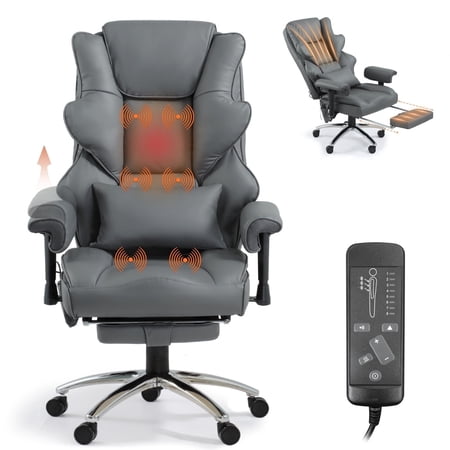
- Integrated & Articulating: This is the most common type. The knee rest is built into the chair's frame and moves with you. As you lean back, the rest rises to support your legs. It often locks into multiple positions, giving you control over the angle. Think of it like a recliner for your office, but with the precise engineering to keep you aligned with your desk.
- Slide-Under Ottoman: Some chairs feature a separate ottoman that slides out from under the seat. While effective, this design can sometimes require more floor space in front of the chair and may not be as seamlessly integrated when not in use. It's more like a traditional footstool that's built into the chair's base.
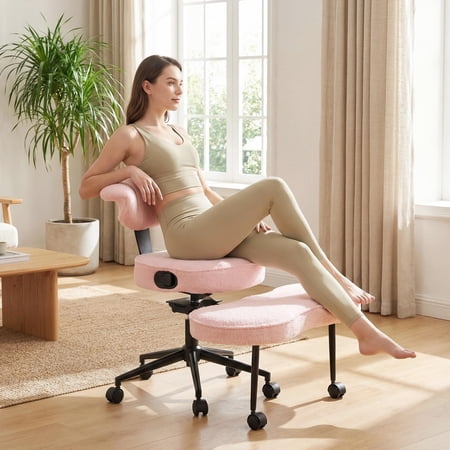
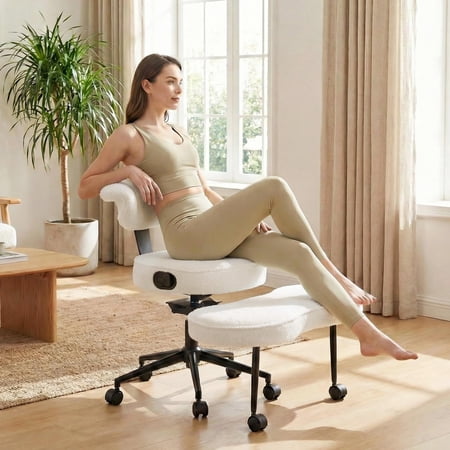
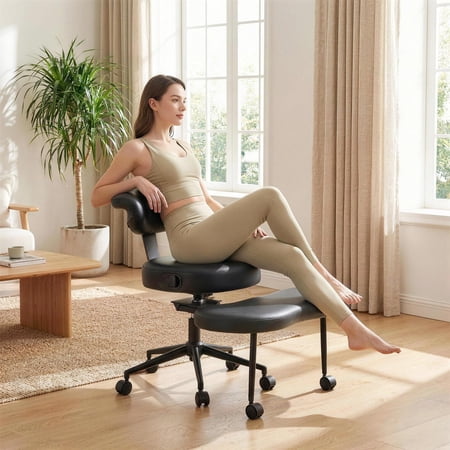
- Fixed Padded Bar: A less common design, this features a fixed, padded bar at the front of the chair where you can rest your shins or knees. This style promotes a more specific, almost 'kneeling chair' posture, which can be excellent for core engagement but may take some getting used to.
4. Who Benefits Most from This Feature?
While almost anyone can appreciate the comfort, this chair type is a game-changer for specific groups:
- The Multi-Tasker: The executive who spends hours in meetings, often leaning back to think or listen, will find the knee rest provides a perfect, supported perch.
- The Creative Professional: For designers, writers, or strategists who need to shift between intense focus and reflective thinking, the ability to recline with leg support helps get into that 'flow state'.
- Individuals with Circulation Issues: People prone to swollen ankles or leg fatigue will find the elevated position helps fluid drain more effectively, reducing discomfort.
- Gamers and Long-Haul Workers: For anyone logging 10+ hour days, the option to safely and ergonomically recline is a sanity-saver.
5. Key Features to Look For: A Buyer's Checklist
Before you click 'add to cart', consider this checklist to ensure you're getting a quality piece of equipment:
- Sturdy Base and Gas Lift: A chair with a knee rest will be used in reclined positions. You need a heavy-duty, 5-star base (preferably metal) and a class 3 or 4 gas lift to ensure stability and safety.
- Padded Knee Rest Comfort: The rest itself should be generously padded with high-resilience foam. Look for upholstery that is breathable (like mesh or quality fabric) to prevent sweating.
- Locking Recline Mechanism: You want control. Ensure the chair has a mechanism that allows you to lock the recline angle and the knee rest position at multiple points, not just fully upright or fully reclined.
- Adjustable Tension: The ability to adjust how much force is needed to recline is crucial. A tension knob lets you tailor the rocking/reclining motion to your body weight.
- Material Durability: Since the knee rest will be in contact with your legs, opt for materials that are easy to clean and durable. Bonded leather can peel over time, while high-quality PU leather or performance fabric offers better longevity.
Frequently Asked Questions About Office Chairs With Knee Rests
Conclusion: Invest in the Freedom to Move
Choosing an office chair with a knee rest is an investment in your daily well-being. It's a conscious decision to reject the tyranny of the static 90-degree angle and embrace a more fluid, human way of working. It acknowledges that focus isn't a rigid state—it ebbs and flows, and your seating should support that rhythm.
Whether you're closing a deal, diving deep into code, or sketching out a new concept, having the option to recline with full leg support can make the difference between a draining workday and an invigorating one. Use the checklist provided, consider your unique needs, and take the step toward a workspace that truly works with your body, not against it. Your legs—and your back—will thank you.