
Why “Office Chair Cross Legged” Is a Game Changer for Flexible Workers
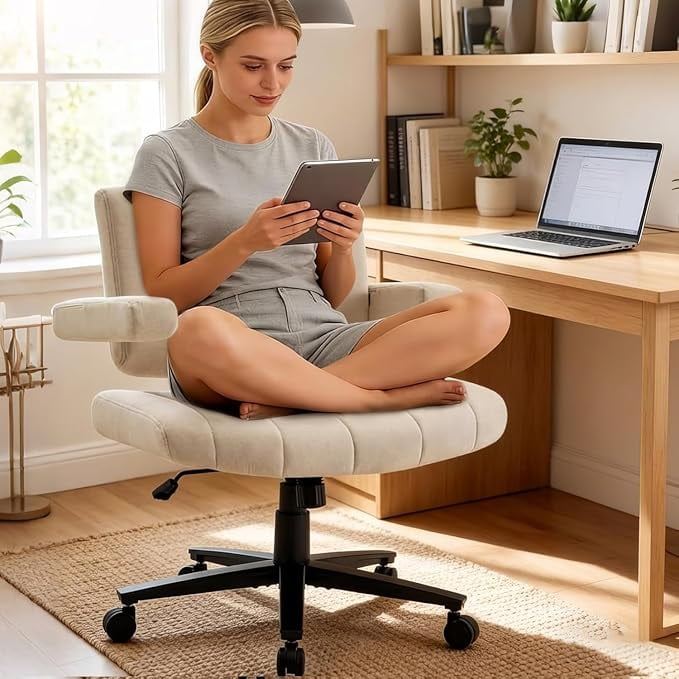
Have you ever pulled your legs up into the chair while deep in thought, only to feel the hard plastic edge dig into your thighs? You are not alone. Millions of people — especially those from cultures where floor sitting is common — instinctively sit cross-legged in their office chairs. The problem? Most traditional office chairs are designed for the “90-90-90” posture (feet flat, knees at 90°). This creates a discomfort gap. The solution? A new wave of office chairs for cross-legged sitting that combine ergonomics with freedom.
In this guide, we explore chairs that welcome flexible postures. We’ll look at design features, material choices, and health considerations — all aimed at helping you find a chair that supports both focus and fidgeting.
The Art of Sitting Differently: What Makes a Chair Cross-Legged Friendly?
A standard office chair is like a pair of tailored trousers: perfect if you stand still, restrictive if you move. A cross-legged friendly chair is more like yoga pants — it adapts. Here are the non-negotiable design elements.
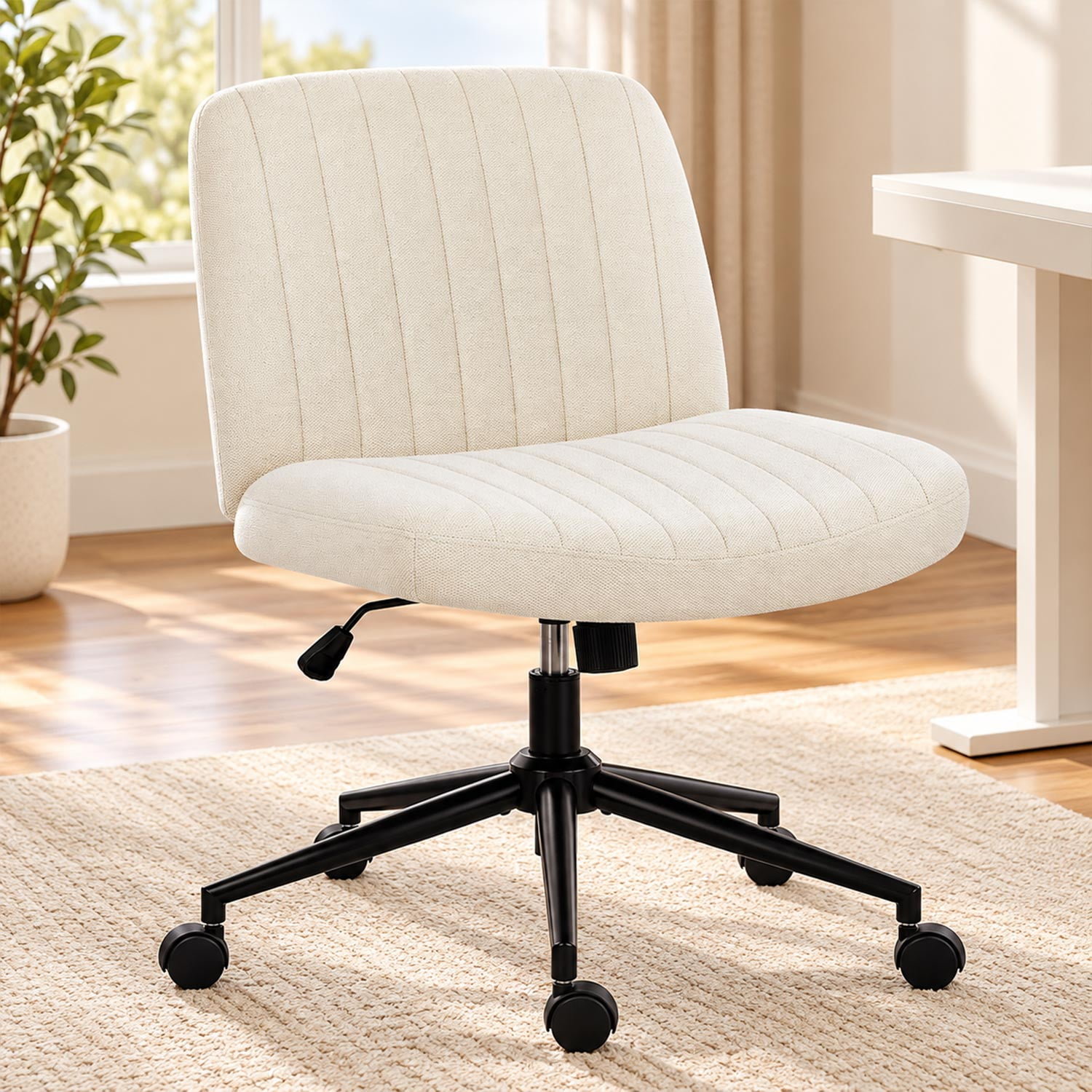
🪑 Wide Seat Pan
Minimum 22 inches width. Gives your knees room to drop without hitting armrests or the chair frame. Look for seats with contoured foam that doesn't slope too aggressively.
✨ Waterfall or Soft Front Edge
A hard front edge cuts off circulation when you cross your legs. A waterfall edge (gently sloping) or plush padding prevents numbness and allows legs to rest comfortably.
🌬️ Breathable Upholstery
Leather can get sweaty when legs are folded. High-quality mesh or stretchy fabric allows air flow and moves with you. Some microfiber or performance fabric also works well.
1. Seat Depth and Foam Density: The Foundation
Imagine trying to sit cross-legged on a park bench — the edge hits right behind your knees. The same happens with shallow seats. For cross-legged sitting, you need a seat depth of at least 19-20 inches. This allows you to shift forward or back. But depth alone isn't enough. High-density foam (2.5 lbs or more) resists bottoming out when you place all your weight on a smaller area. According to materials engineers at a leading foam producer, memory foam hybrids with support core reduce pressure points by up to 37% compared to standard polyfoam.
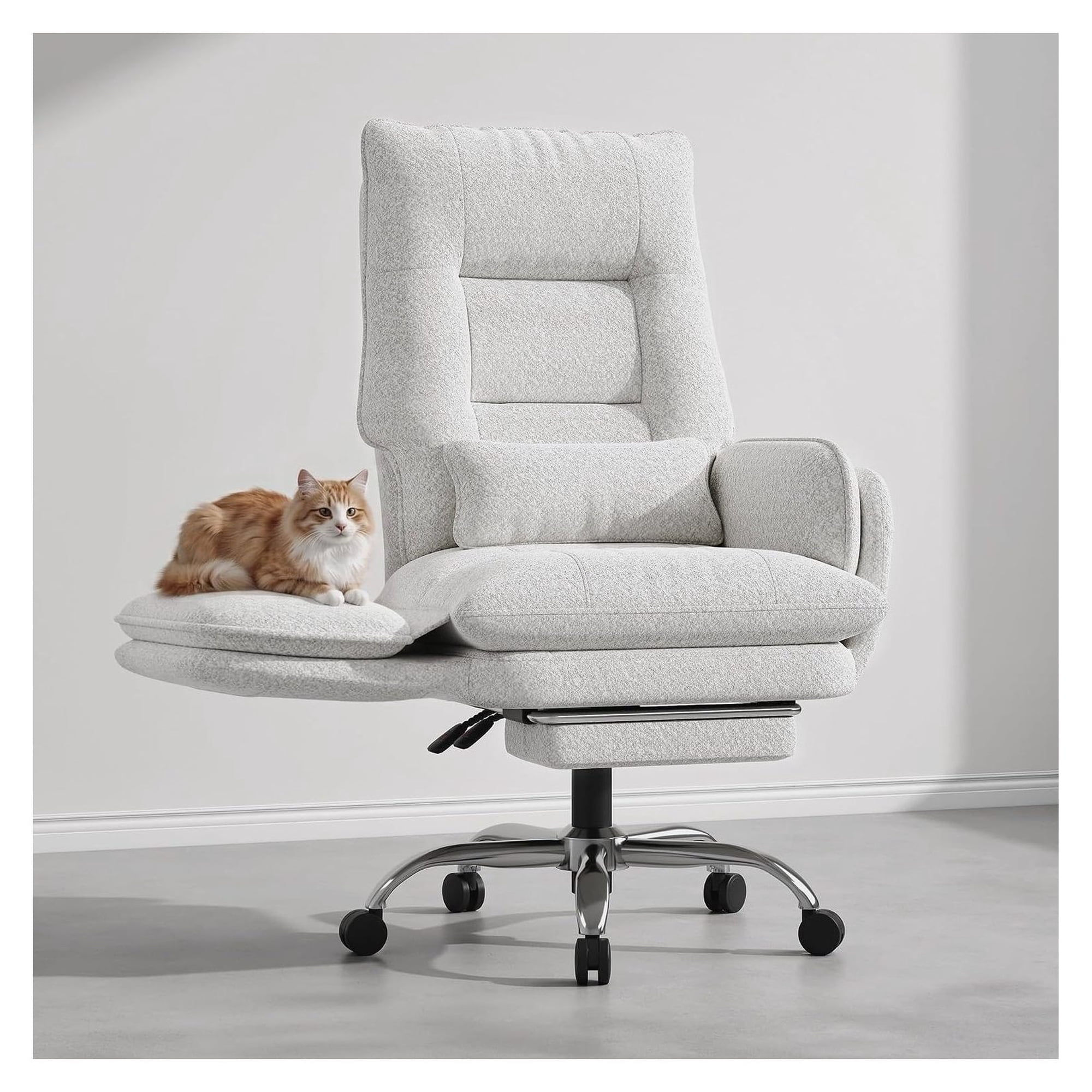
2. Armrests: Friend or Foe?
Fixed armrests are the enemy of cross-legged sitting. They block your knees. The best chairs for flexible sitting offer:
- Flip-up armrests – pivot out of the way when you want to tuck your legs.
- Width-adjustable armrests – move outward to create a wider “cocoon”.
- Fully removable arms – some users take them off for a throne-like experience.
If your dream chair has fixed arms but a huge seat, you might still manage. However, for optimal freedom, choose chairs with adjustable or retractable armrests.
3. Material Science: Fabric vs. Leather vs. Mesh
Leather looks executive but can be slippery and hot. For cross-legged posture, you want grip without friction burn. Here’s a quick material breakdown:
✅ Best for cross-legged: Performance fabric / mesh
- Stretch: Allows legs to spread naturally.
- Breathability: Reduces sweat between thighs.
- Durability: Modern solution-dyed fabrics resist pilling.
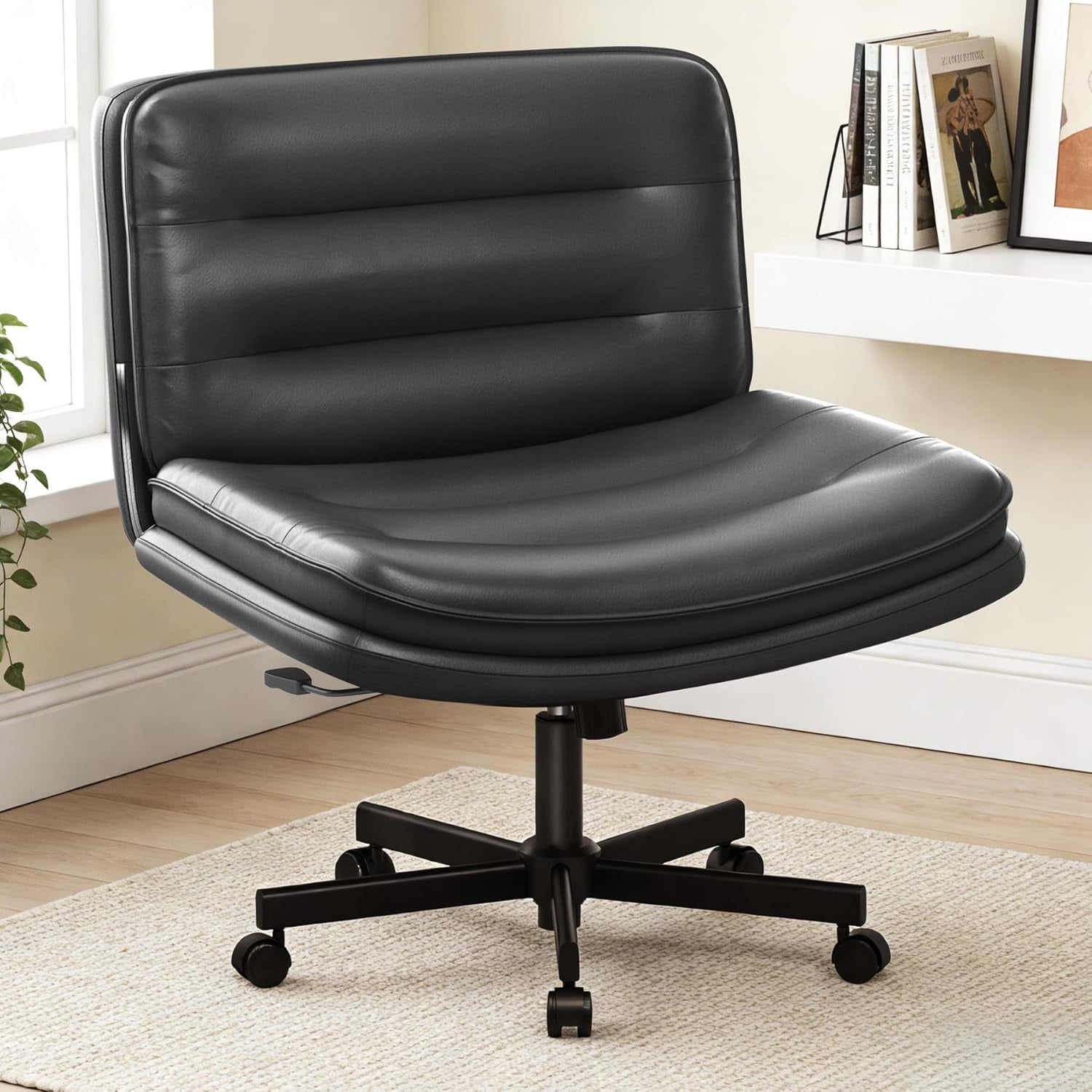
⚠️ Leather / bonded leather: proceed with caution
- Can be hot and sticky.
- May crack if stretched repeatedly.
- Often has hard edges that dig in.
4. Gas Lift Height Range: Low to the Ground?
When sitting cross-legged, your feet are off the floor, so the ideal seat height changes. Some people prefer the chair slightly lower so they can rest ankles on the seat edge. Others keep it at standard height. Look for chairs with a wide pneumatic range (at least 4-5 inches of adjustment) so you can experiment. A footrest or ottoman can also help if your legs dangle.
Health & Posture: What Physical Therapists Say
You might wonder: “Is sitting cross-legged in an office chair bad for my back?” The answer: it depends. Dr. Emily Lawson, DPT, explains: “Alternating postures throughout the day is actually beneficial — it shifts loads on spinal discs. The key is to avoid staying in any one position for too long. A chair that allows cross-legged sitting gives you options, which is ergonomically sound.” However, she warns against chairs that force you to hunch or don’t provide lumbar support when you shift.
Therefore, even when sitting cross-legged, maintain a neutral spine. Use a chair with adjustable lumbar that moves with you, or add a small cushion behind your lower back.
5. Stability and Base: Five-Star Safety
When you sit cross-legged, your center of gravity changes. A wobbly base is dangerous. Ensure the chair has a wide, heavy-duty aluminum or steel base (not plastic) and large casters. For carpet, soft casters grip; for hard floors, rubber wheels prevent sliding. The chair should feel planted even when you lean sideways.
Real-World Use Cases: Who Benefits Most?
- Designers & writers – often curl up to think creatively.
- Meditation practitioners – want a work chair that doubles for short breaks.
- People with hip stiffness – sitting cross-legged can maintain mobility.
- Petite individuals – standard chairs are too deep; a cross-legged position uses the seat better.
Comparison: Ideal Dimensions for Cross-Legged Comfort
| Feature | Minimum Requirement | Preferred |
|---|---|---|
| Seat width | 21" (53 cm) | 24"+ (61 cm) |
| Seat depth | 19" (48 cm) | 21" (53 cm) with slider |
| Armrest type | Flip-up / removable | 4D adjustable with wide range |
| Foam density | 2.0 lb/ft³ | 2.5-3.0 lb/ft³ + memory foam top |
| Weight capacity | 300 lbs | 400 lbs (reinforced) |
Conclusion: Your Comfort, Your Rules
Finding an office chair for cross-legged sitting doesn't mean sacrificing ergonomics. Today's market offers chairs that blend support with flexibility. Prioritize a wide seat, breathable fabric, and armrests that get out of the way. Test the chair if possible — sit in your favorite “criss-cross” position for five minutes. Does the edge dig? Is the foam supportive? Remember: the best chair adapts to you, not the other way around. With the right choice, you can work comfortably, whether your legs are crossed, tucked, or firmly on the ground.