
Why Your Office Chair Needs Proper Lumbar Support
For the modern professional, the office chair is the command center. But a chair that lacks proper lower back lumbar support can quickly turn your workspace into a source of chronic pain. Sitting for extended periods places immense pressure on your spinal discs and the muscles of your lower back. Without adequate support, you're likely to slouch, which can lead to a condition known as "sitting disease," characterized by back pain, poor posture, and reduced focus.
Did You Know? According to the American Chiropractic Association, back pain is one of the most common reasons for missed work, and it is a leading cause of disability worldwide. In fact, 80% of the population will experience a back problem at some point in their lives. Office workers who sit for long periods are particularly at risk, making lumbar support for office chairs not just a luxury, but a necessity.
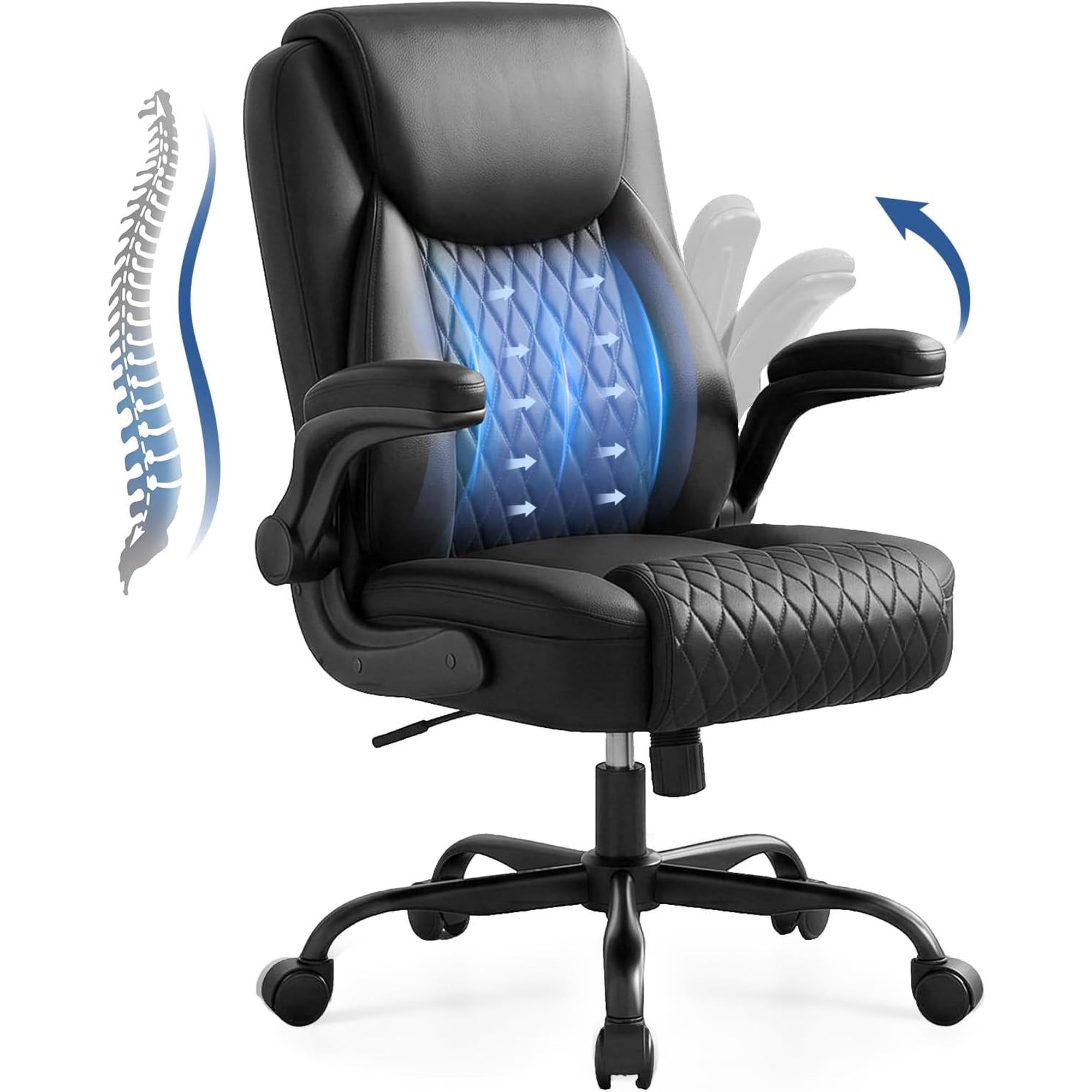
Investing in a quality lumbar support solution is a proactive step towards preventing these issues. Think of your spine like a suspension bridge. The lumbar region is its main support cable. When that cable is unsupported and dips under stress, the entire structure is compromised. A good lumbar support acts as a reinforcing girder, keeping the natural curve of your spine intact, distributing your weight evenly, and reducing the strain on your muscles and ligaments.
Key Types of Lumbar Support Solutions
When looking for the perfect lower back support, you have several options. Each offers a unique way to achieve the correct posture and comfort.
Memory Foam Cushions
- Best for: Comfort and affordability. These are the most common and popular choice.
- Features: Conforms to your body shape, provides even pressure distribution, and is easily portable.
- Material: Made of viscoelastic foam, often with a breathable mesh or fabric cover.
Adjustable Ergonomic Backrests
- Best for: Users who want a personalized fit. Ideal for existing ergonomic chairs.
- Features: Can be adjusted for height and depth to perfectly target the lumbar curve.
- Consideration: These often require a chair with a compatible backrest or a specific mounting system.
Inflatable Air Support
- Best for: Users who want to customize the firmness. Great for travel.
- Features: Allows you to inflate to your exact pressure preference, offering a firm or soft support.
- Benefit: Provides dynamic support that can be adjusted as needed during the day.
Posture-Correcting Rigid Supports
- Best for: Those with chronic pain or who need to correct severe slouching.
- Features: A firm, often plastic shell that forces the back into an upright, proper posture.
- Goal: To retrain your muscles and prevent slouching over time.
Health Benefits of Quality Lumbar Support
Adding the right lumbar support to your office chair offers a multitude of health benefits that extend beyond just feeling better.
Alleviates Lower Back Pain
Directly reduces pressure on the lumbar spine and surrounding muscles, providing immediate and long-term pain relief.
Improves Posture
Encourages you to sit up straight, training your core muscles and reducing the risk of developing a hunched back.
Increases Energy & Focus
When you're not in pain, your body can focus on the task at hand. Proper posture also allows for better breathing and circulation.
Prevents Future Spine Issues
Long-term use helps maintain the natural "S" curve of your spine, preventing degenerative disc disease and other chronic conditions.
Reduces Fatigue
Muscles don't have to work overtime to hold you up, leading to less physical and mental tiredness at the end of the day.
Enhances Workplace Productivity
A comfortable, pain-free employee is a productive one. Simple changes to seating can lead to significant performance gains.
How to Choose the Right Lumbar Support for Your Office Chair
Selecting the ideal lower back lumbar support can feel overwhelming with so many options available. However, by breaking it down into a few key factors, the decision becomes much simpler.
Step 1: Assess Your Current Chair
- Is your backrest flat or contoured? A flat backrest will need a more pronounced cushion, while a contoured one might only need a small pad.
- What is the backrest height? This determines how much support you need from an external cushion.
- Do you need a portable solution or a permanent fixture? Consider if you use multiple chairs or want a permanent upgrade.
Step 2: Define Your Comfort and Support Needs
Needs Assessment Matrix
Step 3: Match the Material to Your Preference
Just like with a mattress, the material of your lumbar support dictates the feel and durability:
- Memory Foam: The most popular choice for its comfort and ability to contour to your shape.
- Gel-infused Foam: Provides similar support but with better cooling properties.
- Polyester Fiberfill: A cheaper option that is fluffy but may not offer the same level of firm support.
- Mesh: Often used for the backing of the support for breathability and a firm, structural base.
Step 4: Test and Evaluate
When you receive your new support, spend some time adjusting it. The goal is to feel a gentle, even pressure that fills the gap in your lower back. You shouldn't feel pushed forward or forced into an unnatural arch. A good support feels like a natural extension of the chair that you almost forget is there.
Common Misconceptions About Lumbar Support
When it comes to office chair lumbar support, several myths can lead to choosing the wrong solution or neglecting it altogether. Let's set the record straight.
- Myth 1: "Lumbar support is only for people with back pain." This is like saying seatbelts are only for people who crash. Lumbar support is a preventative measure that maintains healthy spinal alignment for everyone.
- Myth 2: "The firmer the support, the better." While some firmness is needed, overly hard supports can create pressure points and be just as uncomfortable as no support.
- Myth 3: "Any cushion will do." Not all cushions are created equal. A poorly designed one can push your hips forward, exacerbating the problem.
- Myth 4: "Lumbar support will fix my posture overnight." It is a tool for your muscles to learn from, but it works best with conscious effort and regular movement.