
Your Ultimate Guide to Choosing a Home Office Swivel Desk Chair
Imagine this: you're on a video call, and you need to grab a notebook from the credenza behind you. With a stiff, stationary chair, you'd have to get up or awkwardly twist your spine. But with a quality home office swivel desk chair, you just pivot smoothly, grab what you need, and return—all without interrupting your flow or straining your back. That's the quiet magic of a well-designed swivel mechanism. It's not just about mobility; it's about creating a fluid, efficient workspace where everything is within reach.
Did you know? The average work-from-home professional shifts positions over 50 times a day. A chair with a responsive swivel function and flexible armrests accommodates this natural movement, reducing static muscle fatigue by an estimated 30% compared to fixed seating.
Beyond 360°: The Anatomy of a Great Home Swivel Chair
While all swivel chairs rotate, not all rotations are created equal. A premium home office swivel desk chair features a robust gas lift mechanism integrated with a ball-bearing swivel. This ensures the rotation is silent, smooth, and stable, even when you lean forward to type or recline to think. But the swivel is just one part of the equation. Let's break down the essential components that make a chair truly home-office-ready.
- The Swivel Mechanism: Look for chairs with class-3 or class-4 gas lifts. These are tested for thousands of rotation cycles. A wider base (usually 27-28 inches) provides stability during swiveling, preventing the chair from tipping when you turn quickly.
- Floor-Friendly Casters: Home floors vary: hardwood, laminate, tile, or low-pile carpet. Standard hard plastic casters can scratch wood. Many modern swivel chairs now offer soft rubber or polyurethane casters that are safe for all floor types. Some even offer interchangeable casters in the box.
- Seat Edge Design: A "waterfall" front edge (where the seat curves downward slightly) is critical for home workers. It relieves pressure on the back of your thighs, promoting healthy blood circulation during those long hours of sitting.
Ergonomics Meets Aesthetics: Finding Your Style
Your home office isn't a sterile corporate cubicle. Your chair should complement your decor while supporting your body. Here's how different styles stack up:
🖥️ Modern Mesh Swivel
- Best for: Warm climates, those who run hot.
- Pros: Breathable back, sleek look, often lighter.
- Cons: Mesh can lack plush comfort; less formal.
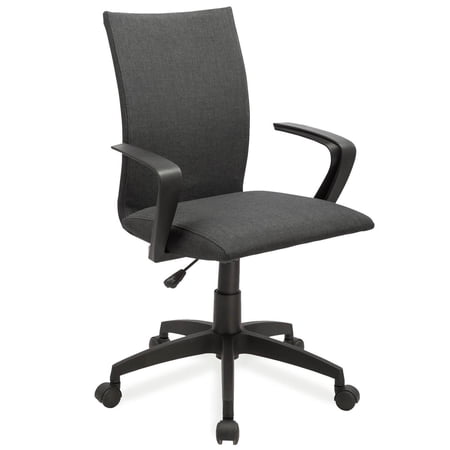
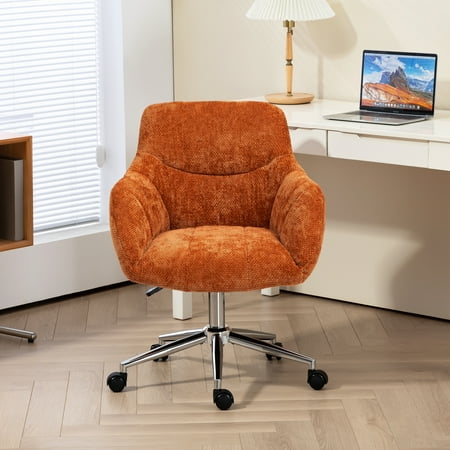
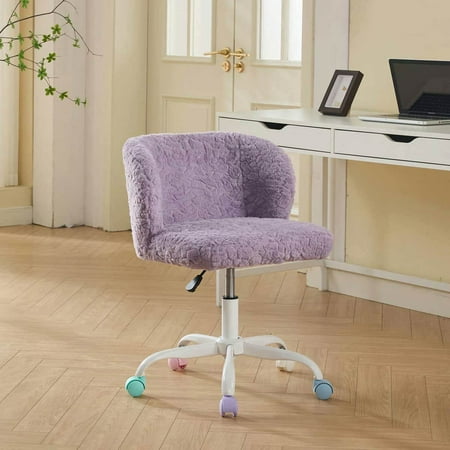
🛋️ Upholstered Fabric Swivel
- Best for: Living room offices, cozy aesthetics.
- Pros: Soft, warm, available in many colors (velvet, linen).
- Cons: Can stain; may trap pet hair.
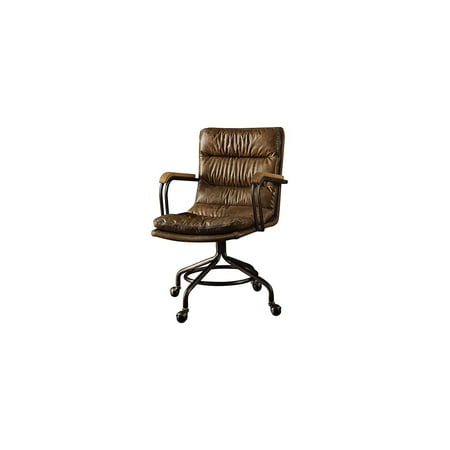
💼 Leather/Leather-Like Swivel
- Best for: Executive home offices, easy cleanup.
- Pros: Wipes clean, professional look.
- Cons: Can be sticky in summer; cheap faux leather may peel.
The "Sit-Swivel-Reach" Efficiency Test
To evaluate a chair, try this simple home test: Sit in the chair at your desk. Without moving your feet, try to reach for items on your left, right, and behind you. A good home office swivel desk chair should allow you to rotate at least 45 degrees in either direction with minimal effort, and a full 360-degree turn should feel controlled, not jerky. Pay attention to:
- Smoothness: Does it rotate with a gentle push, or does it stick?
- Stability: When you rotate and lean, does the base lift on one side? It shouldn't.
- Noise: Squeaks are annoying. High-quality nylon or aluminum bases paired with precision bearings are silent.
Health Metrics: Why Swivel Matters for Your Spine
According to chiropractic experts, repetitive twisting while seated is a leading cause of lower back strain. A chair that swivels freely allows your entire body—hips, spine, shoulders—to move as a unit. This is called "thoracic-lumbar synchronization." In contrast, a non-swivel chair forces you to twist your torso independently of your hips, which torques the discs in your spine. A 2022 ergonomics report highlighted that workers using optimized swivel chairs reported 25% less mid-shift back fatigue.
Reduced Spinal Torque
Smooth swivel keeps hips and shoulders aligned during turns.
Dynamic Sitting
Easy movement encourages micro-movements, combating stagnation.
Peripheral Reach
Access files or devices without stretching and straining.
Improved Focus
Physical fluidity supports cognitive flow—fewer interruptions.
Space-Saving Swivel: Solutions for Small Home Offices
Not everyone has a dedicated 10x10 office. Many home workers use a corner of the living room or a nook in the bedroom. For tight spaces, consider these swivel chair adaptations:
- Compact Base: Look for chairs with a smaller footprint (25-inch base diameter) but still stable.
- Armless Swivel Chairs: These can be tucked completely under a desk when not in use, maximizing floor space.
- Chairs with Locking Casters: If your chair is on a slightly sloped floor (common in older homes), locking casters prevent it from rolling away when you stand up, but you still get full swivel function.
Frequently Asked Questions: Home Office Swivel Desk Chairs
Final Verdict: Invest in Movement
Your home office should work for you, not against you. A home office swivel desk chair is more than a place to sit—it's a tool that enables fluidity, protects your body from awkward strains, and adapts to the way you actually work. Whether you prioritize a mesh back for breathability, a plush fabric for comfort, or a compact design for small spaces, ensure the swivel action is smooth and the casters match your flooring. A little attention to this detail transforms your workspace from static to dynamic.