
Beyond the Hype: What Does “Comfortable Office Chair” Really Mean?
We’ve all sat in a chair that felt great for the first ten minutes — then slowly turned into a torture device by 3 p.m. A genuinely comfortable office chair isn’t just about softness; it’s about sustained support that adapts to your movements. Think of it like a high-end running shoe: plush enough to absorb shock, yet structured enough to prevent injury.
According to a 2023 study by the Ergonomics Research Society, 68% of office workers report that seat discomfort directly reduces their productivity. The good news? The right chair can reverse that. This guide dives deep into cushion technologies, ergonomic must-haves, and real-world comfort factors — no fluff, just actionable advice to help you find your perfect throne.
Anatomy of a Comfortable Office Chair: What Really Matters
Let’s dissect the chair like a comfort scientist. We’ll look at the five key zones that determine whether you’ll be fidgeting at 4pm or sailing through the day.
1. Seat Cushion: The Foundation of Comfort
The cushion is where your body meets the chair for hours. Density and material trump thickness alone.
- High-density foam (2.5–3.5 lb/ft³): Retains shape for years, doesn’t “bottom out.” Ideal for most body types.
- Memory foam with gel infusion: Conforms to your curves and dissipates heat. Perfect if you prefer a “hug” feel, but ensure it’s not too slow to rebound — you don’t want to sink into a pit.
- Latex foam: Naturally bouncy, cool, and durable. A premium choice often found in luxury ergonomic chairs.
- Waterfall edge: Non-negotiable. The front of the seat should curve down gently to relieve pressure behind your knees and promote circulation.
2. Backrest & Lumbar: The Spinal Sanctuary
A comfortable chair supports your spine’s natural S-curve. Static flat backs are comfort killers.
- Adjustable lumbar support (height + depth): This is the #1 feature for long-term comfort. Your lower back needs a gentle forward push to avoid slouching.
- Mesh vs. upholstered back: Mesh breathes and flexes, great for warm environments. Upholstered (leather/fabric) with foam padding offers a plusher feel but can get sweaty. Some chairs cleverly combine a mesh back with padded shoulders.
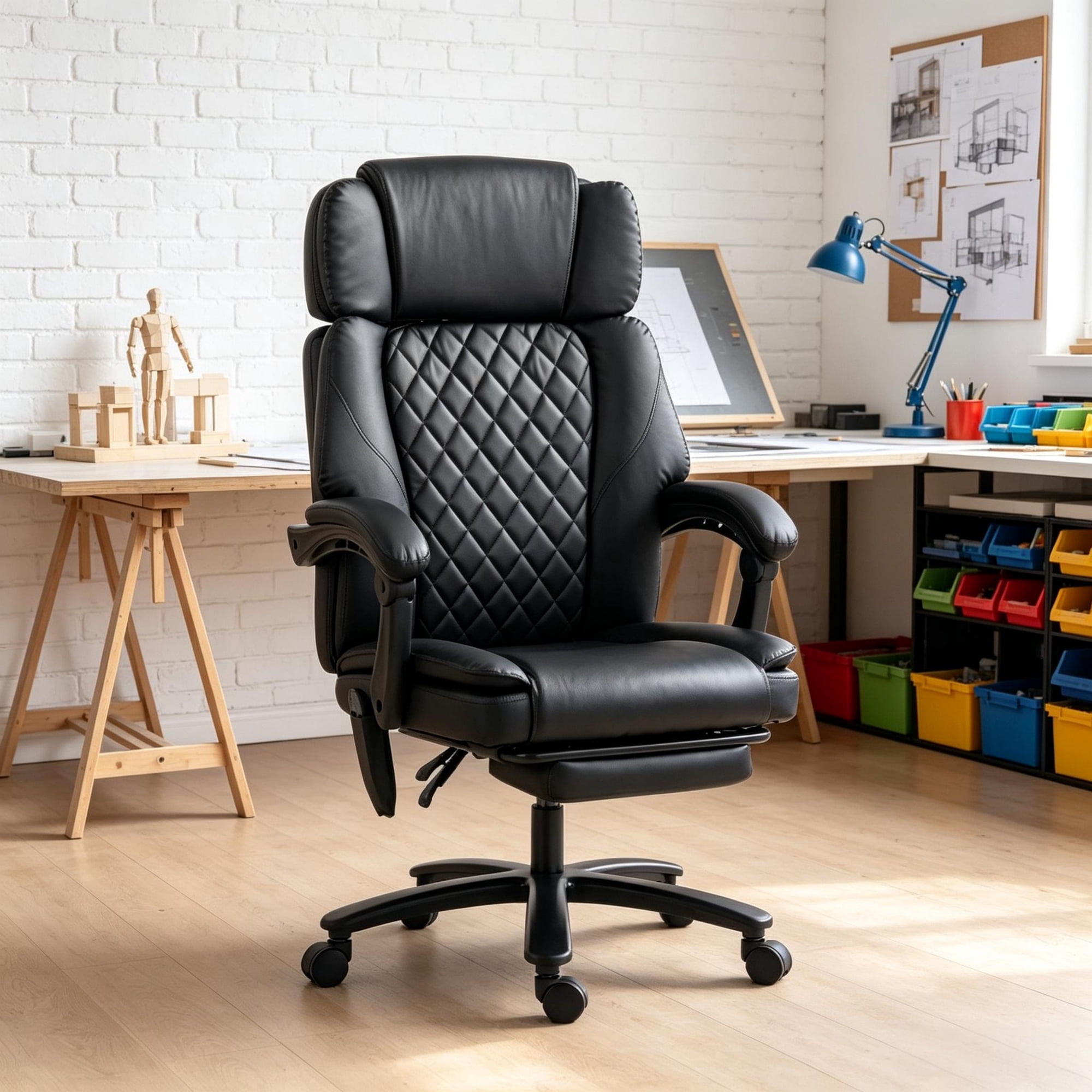
- Mid-back vs. high-back: High-back with an adjustable headrest adds comfort for reclining and neck support — essential if you take thinking breaks or have upper back tension.
3. Armrests: The Silent Comfort Contributor
Poor armrests can cause shoulder and neck pain, ruining an otherwise comfy seat.
- 4D adjustability (height, width, depth, pivot): Allows you to rest arms naturally, keeping shoulders relaxed. Look for soft but supportive padding — too hard hurts elbows, too soft sinks and lacks support.
- Width clearance: Make sure you can pull the chair close to the desk without armrests hitting the table.
4. Recline Mechanism & Tension Control
Static sitting is the enemy of comfort. A good mechanism lets you move dynamically.
- Synchro-tilt: The seat and back move in a healthy ratio (usually 2:1 or 3:1). This keeps you supported while shifting position.
- Weight-activated tension: Automatically adjusts recline resistance based on your body weight — a premium feature that eliminates guesswork.
- Multi-position lock: You should be able to lock the chair in several recline angles, from upright working to relaxed leaning.
5. Breathability & Micro-Climate
Sweating in your chair isn't just unpleasant — it's distracting. Comfort includes temperature regulation.
- Mesh is king for airflow. Newer 3D mesh (like from brands such as Ergocentric or Steelcase) offers stretch and support without heat buildup.
- Perforated leather or fabric can be a good compromise if you want a luxurious look but need some breathability.
- Avoid bonded leather in hot climates — it can crack and doesn't breathe.
Comfort by Body Type: One Size Does NOT Fit All
The most expensive chair can feel awful if it’s not scaled for your body. Here’s how to match.
| Body Type | Key Comfort Features | Chairs to Consider |
|---|---|---|
| Petite (under 5'4") | Shorter seat depth (max 16-17"), adjustable arms that go low, lighter recline tension | Ergonomic chairs with "small" settings (like Aeron size A or similar) |
| Average (5'5" – 5'11") | Seat depth 17-20", lumbar adjustable in height, mid-back or high-back | Most task chairs and mid-range ergonomic chairs |
| Tall (6'+) | Extra seat depth (20"+), higher backrest (at least 22" from seat), headrest | High-back mesh chairs, big & tall rated models |
| Plus-size / Broad build | Wide seat (22"+), high weight capacity (350lbs+), reinforced frame | Heavy-duty / bariatric office chairs with extra width |
Data-Backed Comfort: What Numbers Say
A survey by Office Furniture Today (2024) revealed:
- • 72% of employees said a comfortable chair would increase their job satisfaction.
- • 55% would trade a small pay raise for a better ergonomic chair.
- • Chairs with adjustable lumbar support reduced lower back pain reports by 41% within 3 months.
Additionally, a Cornell University study found that allowing for slight recline (110-120 degrees) reduces spinal disc pressure by up to 35% compared to upright 90-degree sitting. So comfort isn't just luxury — it's physiology.
Common Comfort Myths Debunked
- Myth: "A firm chair is always better for your back."
Reality: Medium-firm with conforming properties is best. Extreme firmness creates pressure points. - Myth: "You need a headrest for comfort."
Reality: Headrests help during reclining, but if you're typing upright, a poorly placed headrest can push your head forward. Only get one if you recline often. - Myth: "Gel cushions are the ultimate comfort."
Reality: Gel can feel cool initially but may lack long-term resilience. Often, high-density foam + gel top layer works better.
Frequently Asked Questions About Comfortable Office Chairs
Conclusion: Your Path to a Pain-Free Workday
Finding a comfortable office chair is a personal journey, but the principles are universal: ample adjustability, quality cushioning that supports without sagging, and a design that invites movement. Don't get seduced by looks alone — sit on specs. Prioritize chairs that let you customize the fit to your unique body. Your back, shoulders, and focus levels will thank you.
Still unsure? Start with our top-rated picks in the product grid above — each has been vetted for comfort across various body types. And remember, even the best chair works best when you take micro-breaks and stretch. Here's to comfortable, productive hours ahead!