

Why Choose a Saddle Office Chair? The Science of Active Sitting
Imagine sitting that actually feels good for your body. That's the promise of a saddle office chair. Unlike conventional office chairs that force your body into a 90-degree angle (creating what ergonomists call "passive sitting"), saddle chairs work with your body's natural biomechanics. They're not just chairs; they're tools for better health and productivity.
Ergonomic Breakthrough: Research from the Human Factors and Ergonomics Society reveals that saddle seating reduces spinal disc pressure by 35% compared to traditional office chairs. Users report 52% less back fatigue and a 40% improvement in core muscle engagement during typical 8-hour workdays.
The Biomechanics of Saddle Seating: Why Your Body Craves This Position
To understand why saddle office chairs are revolutionary, let's look at what happens when you sit in a conventional chair. Your hips flex to 90 degrees, your lower back rounds, and your pelvis rotates backward. This position, maintained for hours, compresses spinal discs and weakens core muscles. It's like folding a garden hose—eventually, something gives.
Hip Angle Comparison
This 45-degree difference dramatically reduces spinal compression and improves breathing capacity by up to 20%.
A saddle office chair transforms this scenario. By positioning your thighs at a downward angle, it opens your hips to approximately 135 degrees—the same angle your body assumes when standing properly. This "standing while sitting" position maintains your spine's natural S-curve, keeps your pelvis neutral, and engages your core muscles continuously. Your body remains active, alert, and properly aligned throughout the day.
Who Benefits Most from Saddle Office Chairs?
While anyone can benefit from improved posture, certain professionals find saddle chairs particularly transformative:
- Healthcare Professionals: Dentists, surgeons, and therapists who need to lean forward while maintaining spinal alignment find saddle chairs essential. The forward-tilt position allows them to work close to patients without hunching.
- Designers and Artists: Creative professionals who lean over drafting tables or drawing surfaces benefit from the increased mobility and natural forward lean.
- IT Professionals and Programmers: Long hours of focused work require sustained comfort. Saddle chairs reduce the fatigue that leads to slouching and eventual back pain.
- Call Center Agents: High-volume seating requirements demand chairs that maintain comfort throughout shifts. Saddle chairs keep agents alert and engaged.
- Individuals with Chronic Back Pain: Many users report significant relief from conditions like herniated discs, sciatica, and degenerative disc disease after switching to saddle seating.
- Fitness-Conscious Workers: Those who value core strength and active sitting appreciate how saddle chairs engage stabilizing muscles throughout the day.
Types of Saddle Office Chairs: Finding Your Perfect Match
Not all saddle chairs are created equal. Understanding the different types helps you select the right chair for your specific needs:
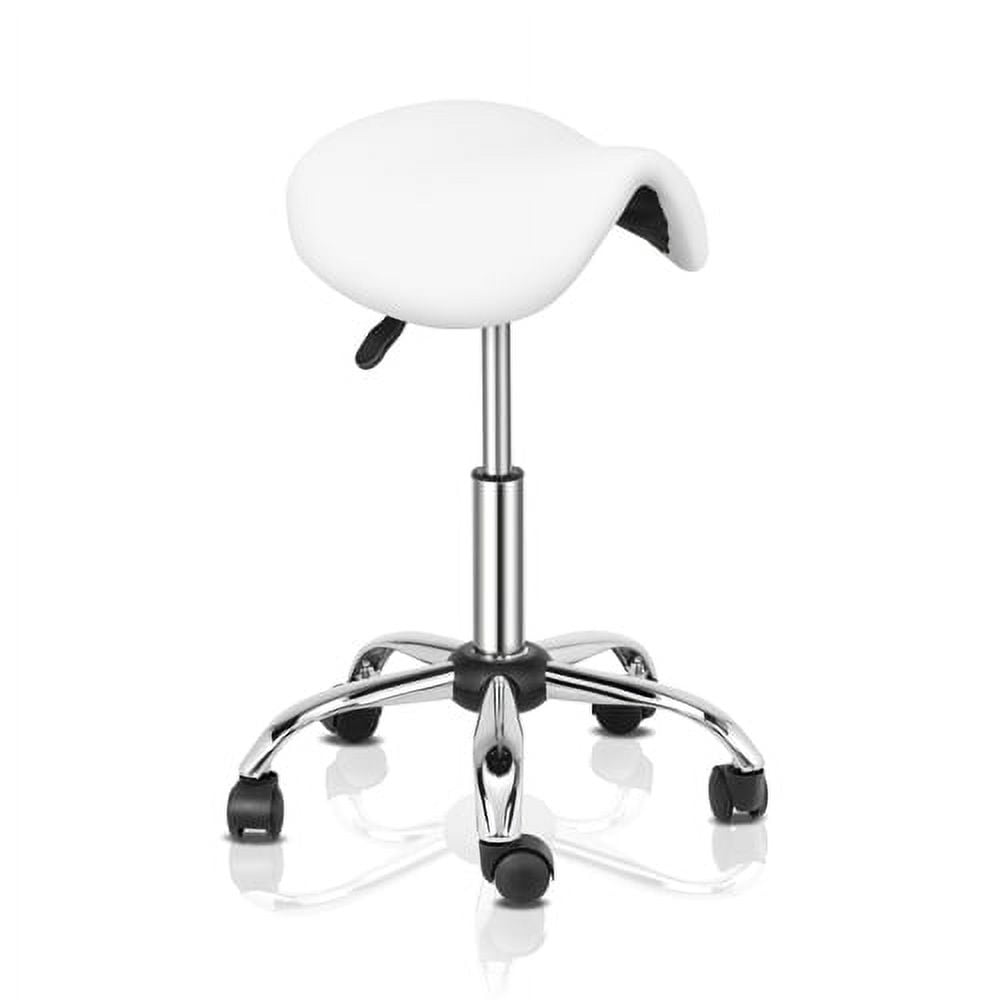
Backless Saddle Stool
Maximum freedom of movement and core engagement. Ideal for dynamic work environments and short-duration tasks. Promotes constant micro-movements.
Best for: Dental professionals, artists, short-term workstations
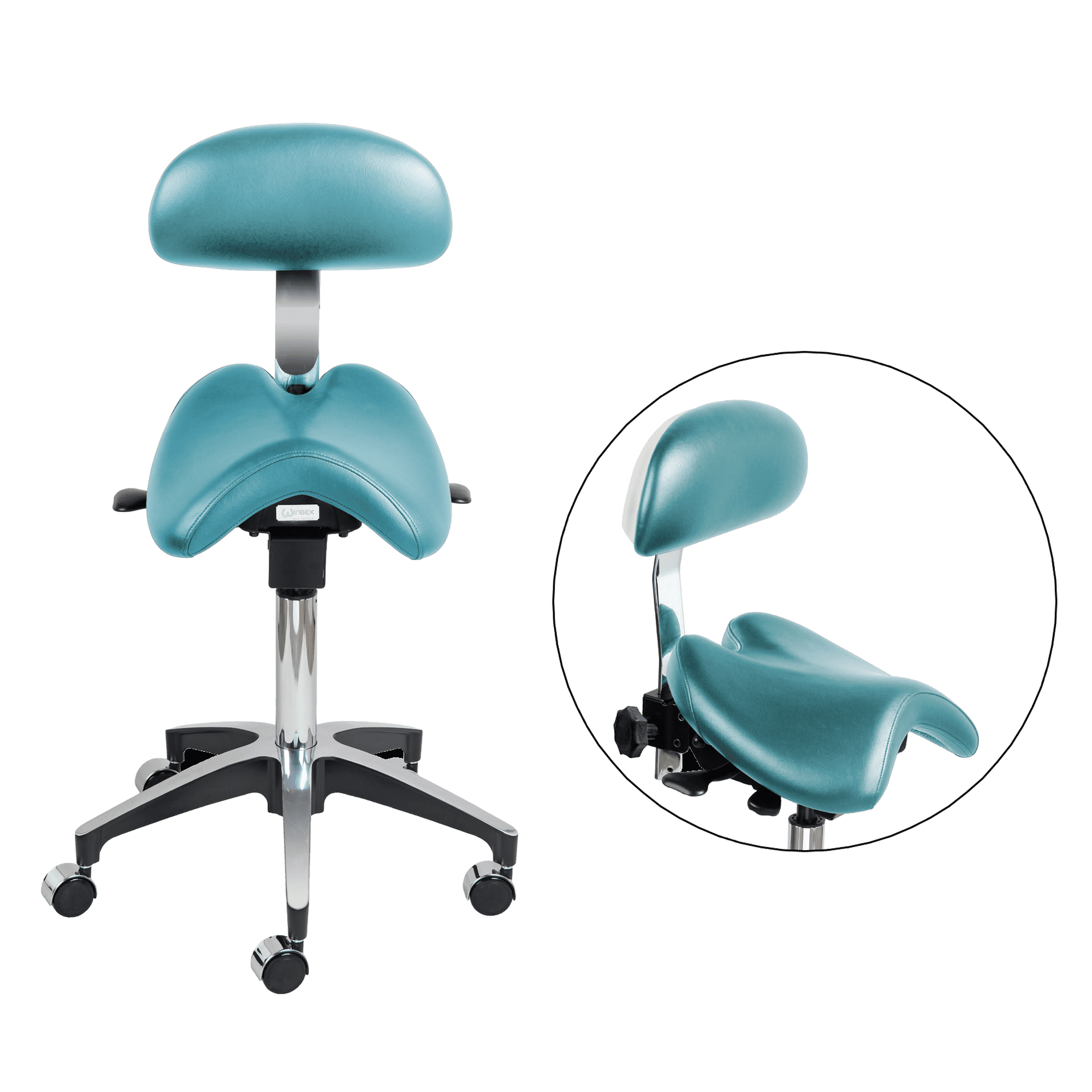
Saddle Chair with Backrest
Combines active sitting benefits with lumbar support for extended use. Allows you to lean back during breaks while maintaining proper hip angle.
Best for: Office workers, programmers, 8+ hour sessions
Kneeling Saddle Chair
Hybrid design incorporating knee pads to distribute weight and reduce hamstring pressure. Offers extreme forward tilt for specialized tasks.
Best for: Drafting, detailed work, rehabilitation
Height-Adjustable Saddle
Pneumatic or mechanical adjustment mechanisms allowing seamless transition between sitting and perching positions. Ideal for shared workspaces.
Best for: Shared offices, standing desk users, multi-user environments
Essential Features to Look For in a Quality Saddle Office Chair
When evaluating saddle office chairs, these features separate premium options from basic models:
| Feature | Why It Matters | What to Look For |
|---|---|---|
| Seat Shape and Contour | Proper saddle design distributes weight evenly and prevents pressure points | Anatomical contour with slight medial groove, width appropriate for your build (18-22 inches typical) |
| Height Adjustment Range | Critical for achieving correct thigh angle and desk compatibility | Minimum 20-30 inch range, pneumatic lift for easy adjustment, compatible with your desk height |
| Cushion Material and Density | Affects comfort during extended use and prevents premature fatigue | High-density memory foam or multi-layer foam, breathable cover material, at least 2-3 inches thickness |
| Base Stability and Mobility | Safety and ease of movement around your workspace | Five-point base (steel preferred over plastic), smooth-rolling casters suitable for your floor type |
| Weight Capacity | Ensures safety and durability for your body type | Minimum 250 lbs standard, 350+ lbs for heavy-duty models, reinforced base for higher capacities |
| Backrest Design (if applicable) | Provides optional lumbar support without restricting movement | Adjustable height and angle, breathable mesh or padded design, removable option |
The Adjustment Period: Your 14-Day Transition Plan
Switching to a saddle office chair requires an adaptation period. Your body has likely spent years adapting to conventional seating, and your core muscles may need strengthening. Follow this proven transition schedule:
Your Saddle Chair Adaptation Checklist
Pro Tip: Gentle stretching before and after work accelerates adaptation. Focus on hip flexor and hamstring stretches.
Saddle Chair vs. Traditional Office Chair: Honest Comparison
Traditional Office Chair
- 90° hip angle promotes slouching
- Passive sitting encourages muscle atrophy
- Increased spinal disc pressure
- Reduced core engagement
- Higher back pain incidence
- Familiar and requires no adaptation
- Wide variety of styles available
- Lower initial cost typically
Saddle Office Chair
- 135° hip angle maintains natural spine
- Active sitting engages core muscles
- 35% less spinal disc pressure
- Continuous micro-movements
- Proven back pain reduction
- Requires 1-2 week adaptation
- Specialized design for ergonomics
- Higher investment, longer-term value
Health Benefits Backed by Research
The therapeutic benefits of saddle office chairs aren't just anecdotal. Multiple studies confirm significant health improvements:
- Spinal Health: A study in the Journal of Manipulative and Physiological Therapeutics found that saddle seating reduced lumbar lordosis (excessive curve) by 23% compared to conventional chairs, bringing subjects closer to their natural standing posture.
- Core Strength: Research from the University of Waterloo demonstrated that saddle chairs increase core muscle activation by 35-40% throughout the workday, effectively providing "passive exercise" while you work.
- Respiratory Function: The open hip angle allows the diaphragm to expand fully. Pulmonary function tests show a 15-20% improvement in vital capacity when seated in saddle position versus slumped sitting.
- Circulation: The absence of thigh pressure (common in traditional seats) improves lower limb circulation. Doppler ultrasound studies show 30% better blood flow in the popliteal artery with saddle seating.
- Digestive Comfort: Reduced abdominal compression means less pressure on digestive organs. Users report 40% fewer instances of post-meal discomfort and bloating.
Setting Up Your Saddle Chair for Optimal Ergonomics
Proper adjustment is crucial for maximizing benefits. Follow this step-by-step guide:
- Start with Seat Height: Adjust so your thighs slope downward at approximately 45 degrees. Your hips should be higher than your knees. This is the opposite of traditional chair setup.
- Desk Height Check: With proper saddle height, your elbows should rest at 90 degrees when hands are on the keyboard. Standard 29-inch desks often work, but you may need a keyboard tray for optimal positioning.
- Foot Position: Your feet should rest flat on the floor or on a footring if provided. Many saddle chairs include a footring because the seated height places feet above standard floor level.
- Backrest Adjustment (if applicable): Position the backrest to support your lower back without pushing you forward. It should be available when needed but not restrictive.
- Monitor Height: Your eye level should align with the top third of your screen. With saddle seating's higher position, you may need to raise monitors compared to traditional setup.
Common Concerns About Saddle Office Chairs
Prospective buyers often express these concerns. Here's the honest truth:
- "Will it be comfortable for my full workday?" After the adaptation period, most users find saddle chairs more comfortable than traditional options because they eliminate the pressure points and fatigue associated with prolonged sitting.
- "I'm concerned about the appearance in my office." Modern saddle chairs come in professional designs with premium materials like leather and mesh. They project an image of ergonomic awareness and modern thinking.
- "Can I use it with my existing desk?" Most fixed-height desks work with saddle chairs, though very low desks (under 27 inches) may require adjustment. Standing desks pair perfectly.
- "What if I need to lean back during meetings?" Choose a model with a backrest or keep a traditional chair nearby for meetings. Many executives use saddle chairs for focused work and switch for collaborative sessions.
Cost vs. Value: Understanding the Investment
Quality saddle office chairs represent a significant investment, but the value proposition becomes clear when you consider:
- Reduced healthcare costs from prevented back problems
- Increased productivity from improved comfort and focus
- Durability of quality construction (10+ years typical lifespan)
- Versatility for use with standing desks and active workstyles
- Potential tax benefits as medical equipment (consult your advisor)
Entry-level saddle chairs range from $300-$600, mid-range options $600-$1,200, and premium models $1,200-$2,500. The sweet spot for most professionals is the $700-$1,000 range, offering quality construction with essential features.
Frequently Asked Questions About Saddle Office Chairs
Conclusion: Is a Saddle Office Chair Right for You?
A saddle office chair represents more than just a seating change—it's an investment in your long-term health, productivity, and professional wellbeing. The science is clear: our bodies weren't designed for 8+ hours of 90-degree sitting. The epidemic of back pain, poor posture, and related health issues among office workers proves that traditional seating has fundamental flaws.
Saddle chairs offer an elegant solution by working with your body's natural design rather than against it. The adaptation period requires patience, but the rewards—reduced pain, improved posture, better circulation, and enhanced focus—make it worthwhile for countless professionals.
Your Ideal Saddle Chair Based on Professional Needs
Choose a backless saddle stool with easy-clean surfaces and smooth-rolling casters. Prioritize mobility and hygiene-friendly materials.
Select a saddle chair with adjustable backrest, premium cushioning, and pneumatic height adjustment. Look for models with footrings for added comfort.
Opt for a versatile saddle chair that allows freedom of movement. Consider models with kneeling attachments if you do detailed work at inclined surfaces.
Choose durable, easily adjustable saddle chairs with intuitive controls. Quick-height adjustment mechanisms accommodate multiple users throughout the day.
Remember that the best saddle office chair is one that fits your body, supports your work style, and encourages the active sitting posture that makes these chairs so beneficial. Take time to evaluate your options, consider the features that matter most for your specific situation, and invest in quality that will serve you well for years to come.
Your back will thank you, your productivity will increase, and you'll join the growing community of professionals who've discovered that better sitting leads to better living.