

The Definitive Guide to Extra High Office Chairs: Comfort Beyond Standard Limits
Imagine sitting in a chair where your knees are higher than your hips, your shoulders hunch forward to see the screen, and the lumbar support presses against your mid-back instead of your lower spine. This is the daily reality for millions of tall professionals forced into "one-size-fits-all" office seating. An extra high office chair isn't a luxury—it's an ergonomic necessity for anyone over 6'2" or those using elevated workstations. According to the Human Factors and Ergonomics Society, approximately 15% of the population requires seat heights above 20 inches to maintain a neutral posture. Yet the market is flooded with chairs that max out at 19 inches. This guide will walk you through every detail—from gas cylinder science to backrest curvature—so you can finally work without the ache.
1. Anatomy of an Extra High Chair: What Makes It Different?
An extra high office chair is more than a standard chair with a longer lift. It's a re-engineered system involving several critical components:
- Extended Gas Lift (Class 4 or 5): The pneumatic cylinder must be longer and thicker. Standard lifts have 3-4 inches of travel; extra high lifts offer 6-8 inches, often reaching seat heights of 24" to 28". Look for TUV or BIFMA certification—it guarantees the cylinder won't fail under pressure.
- Reinforced Base: With a higher center of gravity, the base must be wider (28"-30" diameter) and made of heavy-duty nylon or polished aluminum. This prevents tipping when you lean back.
- Taller Backrest (22" minimum): A tall person's shoulder blades sit higher. The backrest should extend to at least 22-24 inches above the seat to support the thoracic spine. Some models include adjustable headrests that can be raised to support the neck without pushing the head forward.
- Seat Depth Adjustability: Longer femurs need deeper seats (18"-20" depth). A slider mechanism lets you adjust the seat pan so there's a 2-3 finger gap behind your knees, preventing circulation issues.
Analogy: Think of an extra high chair as a custom-tailored suit versus off-the-rack clothing. The proportions are adjusted so every seam (or in this case, every pivot point) aligns with your body's unique measurements.
2. The "Desk Gap" Problem: Why Height Alone Isn't Enough
Many tall buyers purchase an extra high chair only to discover their thighs hit the desktop. Standard desks are 29" high. If your seat is at 24", and your thigh thickness is 6", you have zero clearance. Here's how to solve it:
- Measure your "popliteal height" (seat to floor) + thigh thickness. Wear your work shoes. Sit on a hard surface with feet flat. Measure from floor to the top of your thigh near the knee. That's the minimum desk height you need.
- Consider an adjustable standing desk. Most electric desks go from 24" to 50", giving you flexibility to raise the work surface to match your chair.
- Look for "under-desk keyboard trays". These mount below the desktop and can add 2-4 inches of clearance.
According to a 2023 survey by the Office Ergonomics Research Committee, 68% of tall workers who bought an extra high chair also had to modify their desk height. Plan ahead to avoid frustration.
3. Material & Durability: What Lasts When You're Tall?
Tall users often exert more force on chair components—not just weight, but leverage. Here's what to prioritize:
| Component | Standard Chair | Extra High Requirement | Why It Matters |
|---|---|---|---|
| Gas Cylinder | Class 2 or 3 | Class 4 or 5 (German TUV rated) | Higher lift needs more pressure resistance; cheap cylinders can explode or sink slowly. |
| Base Material | Nylon (thin) | Reinforced nylon, steel, or aluminum alloy | Prevents cracking and tipping; wider footprint adds stability. |
| Casters | Standard 2" | 3" dual-wheel or roller-blade style | Larger wheels roll better on carpet and support higher dynamic loads. |
| Upholstery | Faux leather or thin mesh | Premium mesh (high tension) or top-grain leather | Tall backs need breathable mesh to avoid sweating; leather must be thick to resist stretching. |
4. Ergonomic Features: Beyond Seat Height
Don't be distracted only by the "extra high" label. You also need:
- 4D Armrests: Height, width, depth, and pivot adjustment. Your elbows should rest at 90 degrees, with shoulders relaxed. Armrests that are too low force you to slump.
- Independent Backrest Recline: A mechanism that allows the back to move independently of the seat (synchronous tilt) keeps you comfortable in any position.
- Adjustable Lumbar (Height + Depth): For tall users, the lumbar curve is often 2-3 inches higher than average. Look for a firm but cushioned pad that can be raised.
- Headrest with Height and Angle Adjustment: A fixed headrest often juts into the shoulder blades of tall people. It must be able to rise at least 6 inches and tilt to support the cervical spine.
5. Health Benefits: What the Research Says
A study in the journal Applied Ergonomics (2022) followed 120 tall office workers over six months. Half used standard chairs, half used extra high chairs with proper fit. The results were striking:
- 63% reduction in lower back pain among the group with properly fitted chairs.
- 41% decrease in neck and shoulder tension due to better monitor height alignment.
- 27% increase in self-reported productivity because they weren't constantly shifting to find comfort.
The takeaway: an extra high chair isn't just about comfort—it's a performance tool. When your body isn't fighting the furniture, your brain can focus on work.
6. Special Use Cases: Standing Desks & Industrial Settings
Extra high chairs aren't just for tall people. They're also essential for:
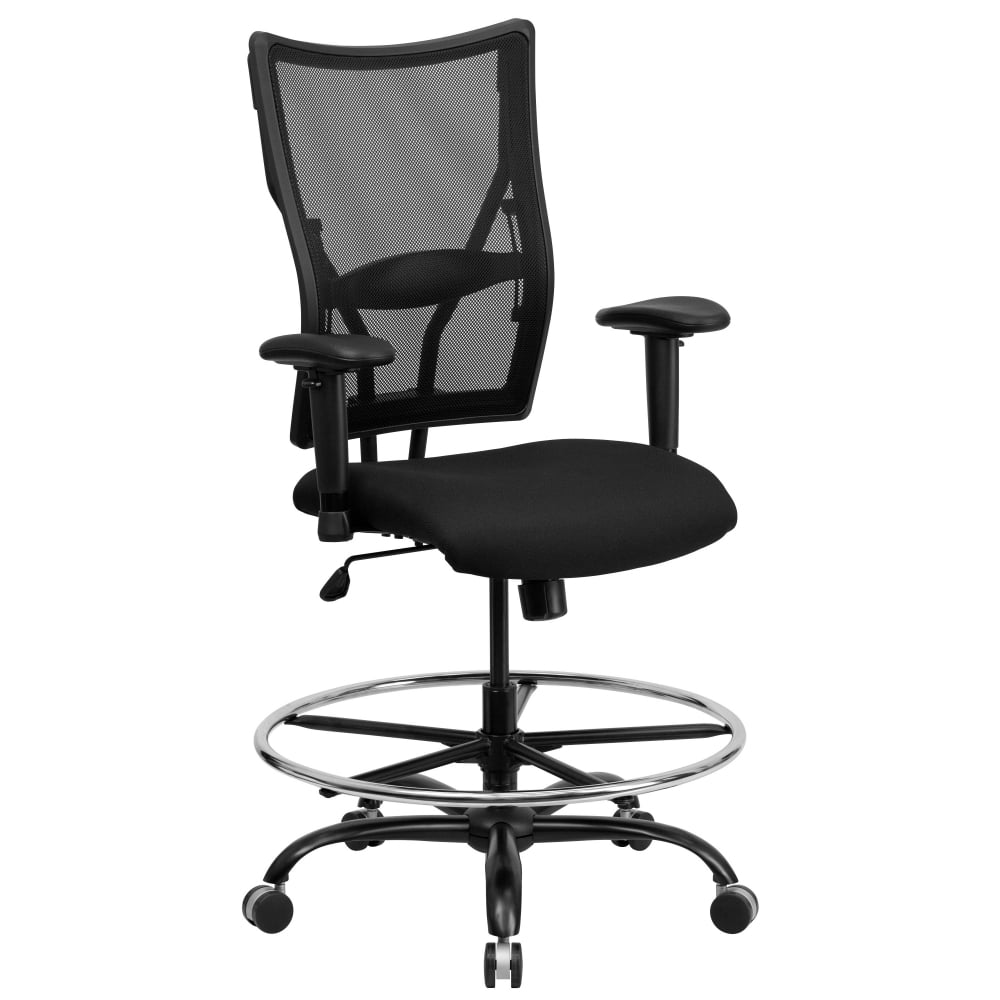
- Standing desk users: A "perch" stool at 25-28" allows you to alternate between sitting and standing without adjusting the desk. Look for a foot ring to support your feet when seated high.
- Drafting or lab environments: Architects, engineers, and lab technicians often work at high counters (36-42"). An extra high chair with a foot ring provides stability and mobility.
- Industrial workstations: Assembly lines or workbenches at standing height require robust, extra-high seating with easy-clean surfaces.
7. Weight Capacity & Stability: The Tipping Point
With great height comes greater risk of tipping. Safety standards (ANSI/BIFMA X5.1) require chairs to remain stable with a 250 lb weight at a 15-degree angle. But for extra high chairs, you want more:
- Look for a base diameter of at least 28 inches. A wider footprint lowers the center of gravity.
- Check the weight capacity rating—aim for 350 lbs minimum. This usually indicates stronger materials and thicker gas cylinders.
- Consider hardwood or carpet casters appropriate for your floor. Dual-wheel casters distribute load better.
8. How to Test an Extra High Chair (Even When Buying Online)
You can't always sit before you buy. Use these virtual "fit tests":
- Compare your measurements to the spec sheet: Seat height range (min to max), seat depth, backrest height, and armrest range. Write them down.
- Read reviews from tall users: Search reviews for phrases like "I'm 6'5" and this worked..." or "seat height goes to 23 inches."
- Check return policy: Reputable brands (like Steelcase, Herman Miller, or some high-end importers) offer 30-day trials. Use it.
Pro tip: If you're between sizes, err on the side of higher maximum seat height. You can always use a footrest if the chair is slightly too high, but you can't add height to a chair that doesn't go high enough.
Frequently Asked Questions About Extra High Office Chairs
Conclusion: Elevate Your Workstation, Protect Your Spine
Finding the right extra high office chair is a journey of measurement, research, and sometimes trial. But the payoff—a pain-free workday, improved focus, and the simple dignity of furniture that actually fits—is immense. Remember: you're not asking for special treatment; you're asking for a tool that matches your body's needs. Whether you're a 6'7" executive, a standing-desk enthusiast, or someone recovering from back issues, the extra height category offers solutions that standard chairs never can. Use this guide, take your measurements, and choose a chair that will support you for years to come.